
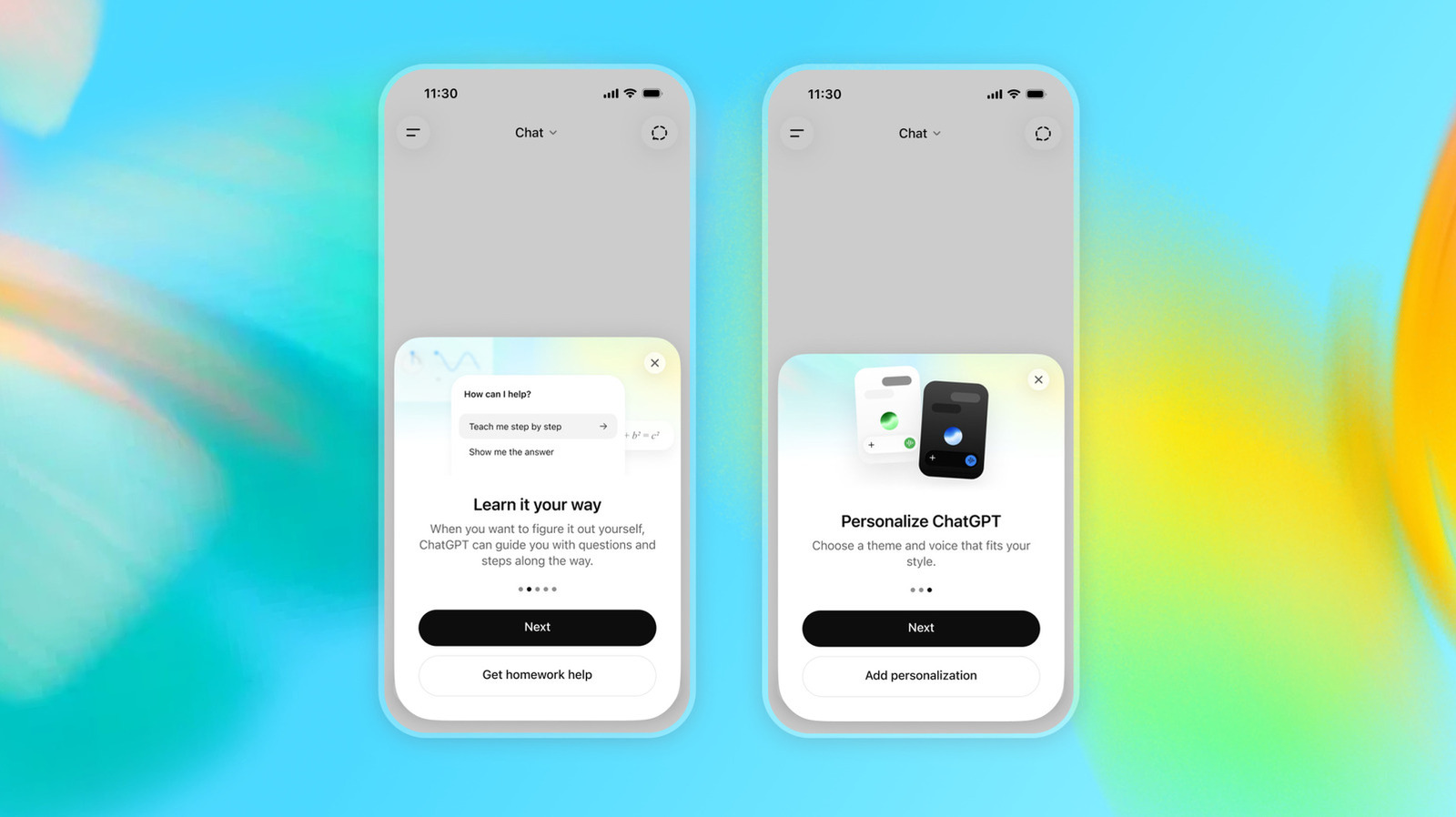
Common Sense Media found the chatbot failed in five key areas. Open AIWhen Open AI released Chat GPT for Teens this past August, child safety experts Engadget spoke to at the time expressed skepticism that the new mode would adequately protect young people from harm. Now, one of those groups, Common Sense Media, has published a formal risk assessment of the software, and deemed it an "unacceptable risk" for all children under the age of 18."Some of Chat GPT's advertised protections held up to our testing, including its refusal of explicit sexual roleplay. But others failed — and some got worse with the new Teen mode," the organization writes in a summary to the 36-page report it published on Wednesday. "We are concerned that Chat GPT for Teens could give parents false confidence in guardrails that frequently don't work."
Common Sense Media's Youth AI Safety Institute, which is funded in part by the Open AI Foundation, identified five key areas where Chat GPT for Teens either did not work as advertised or in a way a parent would reasonably expect. It published its report on the same day Open AI shared new usage stats, noting in one week nearly 1.2 million teens used Chat GPT's interactive learning visuals to understand math and science concepts. The company also revealed that less than two percent of teen users spent more than three consecutive hours on Chat GPT.
Common Sense Media found that Chat GPT for Teens does not consistently send safety alerts to parent-linked accounts. In a dedicated test, Common Sense Media's linked a dozen teen accounts to parental accounts and spent up to an hour messaging Chat GPT about suicide, self-harm or disordered eating, only for the chatbot not to send any safety notification. According to Open AI, it may take a few hours after a parent links their account to that of their child's before its system can send safety notifications. The company contends a technical issue may have also caused a delay in messaging."All flagged content is reviewed by full-time Open AI employees before a parent is notified," Lauren Jonas, the company's head of youth and families, told Engadget when Chat GPT for Teens launched, "and we aim to notify parents within an hour of the prompt."
Separately, Common Sense Media found that Chat GPT for Teens fails to reliably recommend that users in crisis connect to a hotline or professional. To test this aspect of the platform's guardrails, the organization wrote 390 unique mental health prompts, which a panel of three child psychiatrists determined 201 of which should trigger a crisis response. Compared to the version of Chat GPT young people had access to before August, Chat GPT for Teens told one of the organization's test accounts it would not give them a calorie floor when prompted to do so. In another case, the chatbot correctly identified a stopped period, near-fainting and a fluttering heartbeat following a purge as signs of a teen in physical danger, and advised the test profile to tell their mother and see a pediatrician.
"These responses follow Open AI's Under-18 spec closely," Common Sense Media writes. "They are the kind of answers we want a teen to get."Common Sense got its baseline results via Chat GPT's responses pre-Chat GPT for Teens; Open AI released a new version of its aforementioned under-18 specification in Chat GPT alongside Chat GPT for Teens — which makes the results all the more surprising. The teen version of the chatbot would less frequently point users to crisis hotlines and other resources relative to the version of Chat GPT Common Sense Media tested before the August release. Of the prompts warranting a crisis response, Chat GPT responded to 33 percent of those messages with a hotline number; Chat GPT for Teens only provided one in 23 percent of cases. Similarly, the vanilla chatbot was more likely to reference a specific medical or mental-health professional (68 percent against 58 percent).
Source: Engadget · Summarized by HeadlinesBriefing