
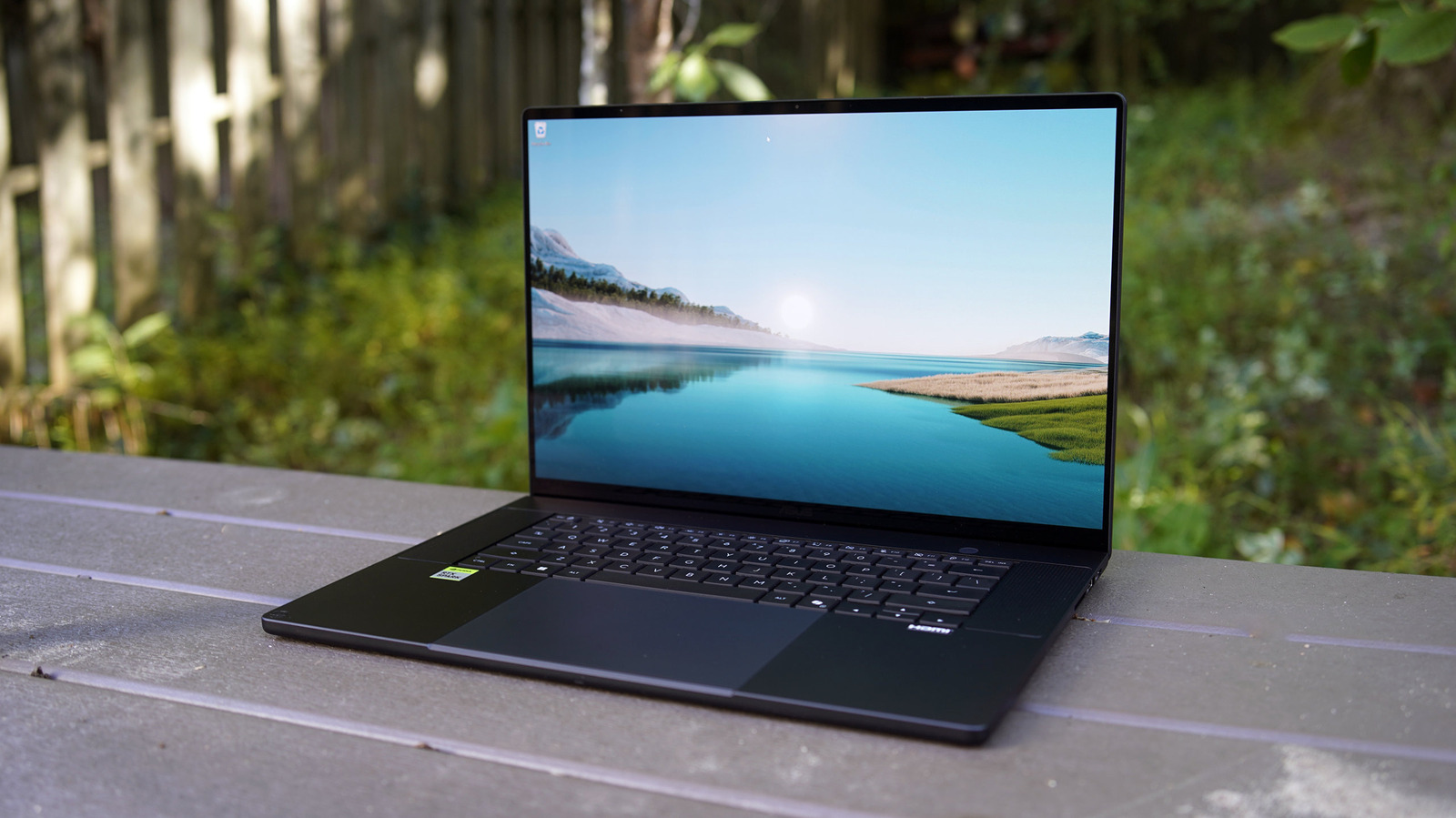
ASUS's first laptop built around NVIDIA's RTX Spark chip confirms that the platform isn't meant for everyone. The ProArt P16 is another premium notebook aimed at power-hungry creators, except this time it runs NVIDIA's first major PC chipset instead of an Intel or AMD processor. Beyond the hype from Microsoft and NVIDIA, who position RTX Spark as a complete "reinvention" of the PC, the ProArt P16 is simply a nice laptop. It is especially appealing for running local AI models, since it can fit up to 128GB of RAM into a relatively slim case.
The downsides are significant. It starts at $2,800, with steep increases as you add RAM. Engadget's review model costs $7,000, mostly due to its 128GB of memory. The laptop plays games well, but you pay far more than you would for a dedicated gaming laptop.
The design is strong. The laptop has a sturdy aluminum case, a bright 16-inch OLED screen, a roomy keyboard and a large haptic touchpad. At 3.9 pounds, it is lighter than the 16-inch MacBook Pro's 4.7 pounds. The hardware pairs a 20-core Arm CPU and a modern Blackwell GPU with unified memory, a configuration similar to Apple's M-series chips. RTX Spark will not replace x86 hardware from Intel and AMD. It is a new fork of PC design aimed at AI researchers and enthusiasts, and it will coexist with Qualcomm's Snapdragon X chips.
In daily use, the system feels extremely fast, much like the first M-series MacBook Pro. The port selection is generous, including three USB-C ports, USB Type-A, HDMI, a headphone jack and a full-size SD card reader, though Ethernet is missing. Competition from NVIDIA should push AMD, Intel and Qualcomm to improve, but RTX Spark is unlikely to lower PC prices amid the AI-driven memory shortage.
Source: Engadget · Summarized by HeadlinesBriefing