
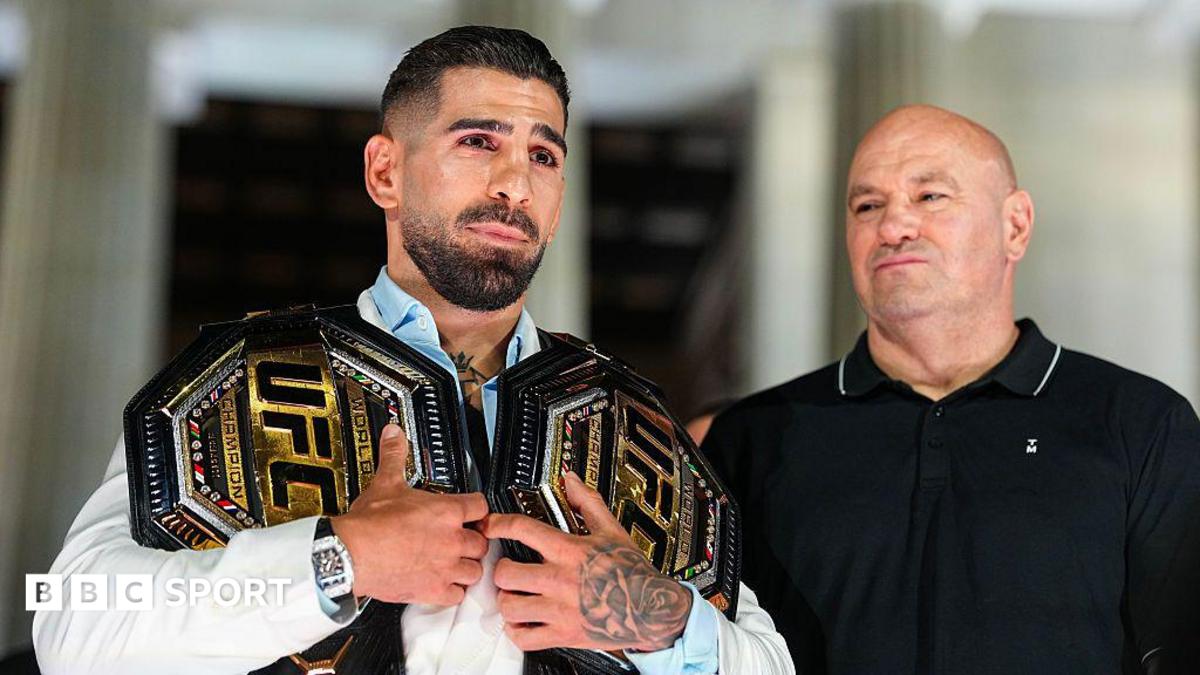
Ilia Topuria, the undefeated lightweight champion, is set to headline the UFC’s historic White House event celebrating America’s 250th anniversary. His potential victory over American interim champion Justin Gaethje could overshadow the festivities, turning a national celebration into a moment of global significance. Topuria, a 29-year-old Spaniard with Georgian roots, has dominated his career with 17 consecutive wins, including dethroning Alexander Volkanovski to claim the featherweight title. His journey—from Germany to Spain, where he earned citizenship—has made him a symbol of resilience and ambition. The UFC’s $60m (£44.3m) investment in the event underscores its ambition to merge sports with patriotic pageantry, but Topuria’s presence adds a layer of international intrigue.
Topuria’s story resonates beyond the octagon. Born in 2004, he moved to Spain at 15 amid political turmoil, pursuing MMA full-time with his brother’s support. His rise to UFC lightweight champion—while remaining undefeated—has already elevated MMA’s profile in Spain, prompting the UFC to plan its first event there. This White House appearance, coinciding with Trump’s 80th birthday, positions Topuria as a focal point for discussions on immigration. Trump, who has criticized migrant policies, is expected to rally behind Gaethje, his American ally. Topuria’s defiance—jesting about being called the ‘toughest test’—highlights the clash between national pride and global narratives. The event’s uniqueness lies in its scale and purpose, blending sports with political symbolism. For Topuria, victory would transcend sport, offering a platform to advocate for immigrant stories amid Trump’s hardline stance.
The implications extend to the UFC’s strategy and cultural impact. Hosting a live event at the White House is a bold move, blending athleticism with political spectacle. Topuria’s fight isn’t just about belts; it’s a microcosm of broader tensions. His Spanish heritage and Georgian roots challenge simplistic narratives about American identity, especially as immigration debates intensify. If he wins, it could redefine how sports intersect with politics, turning a celebratory event into a contest of ideologies. The $60m budget and Trump’s prediction of a record-setting audience suggest high stakes for both the UFC and Topuria. His success might also catalyze MMA’s growth in non-traditional markets, though the immediate focus remains on the fight’s outcome. This isn’t merely a title defense—it’s a cultural moment where personal triumph meets national discourse.
Topuria’s emphasis on hard work and heritage contrasts sharply with Trump’s celebration of American exceptionalism. His victory would symbolize a hybrid identity, challenging the notion that success in America requires erasing one’s origins. Yet, the event’s tone remains celebratory, with Trump framing it as a “highest-rated sports event.” The juxtaposition of Topuria’s global journey against the backdrop of American history underscores the UFC’s attempt to universalize its appeal. For fans, the fight promises drama and stakes beyond the octagon. A Topuria win could elevate his legacy, while a Gaethje upset might reinforce American narratives. Either way, the White House event risks becoming a flashpoint for debates about immigration, identity, and the role of sports in politics. The $60m investment and Topuria’s undefeated status make this a defining moment for both.
The White House UFC event will hinge on Topuria’s performance, but its true significance lies in what it represents. For Topuria, it’s a chance to redefine heroism in an era of polarization. For America, it’s a test of whether its celebrations can embrace diversity. The $60m spent on the spectacle contrasts with the $70bn allocated to immigration enforcement, highlighting conflicting priorities. Topuria’s story—rooted in migration and resilience—offers a counter-narrative to Trump’s policies. Whether he wins or loses, the fight will leave a lasting imprint on how sports intersect with national identity. This isn’t just about a belt; it’s about who gets to define America’s story next.
Source: BBC Sport · Summarized by HeadlinesBriefing