
There is a strange contradiction unfolding in global education. As technology makes learning cheaper and increasingly detached from place, conventional wisdom says the physical university campus is becoming redundant. India is doing almost the opposite. It is building more universities, expanding campuses, and attracting some of the world's leading institutions, including the Universities of Southampton, Liverpool, Bristol, and York in the U.K., and the University of New South Wales in Australia. The country already serves more than 43 million higher education students, with enrollment growing significantly over the past decade.
This is not simply a response to population scale, though scale is part of the story. India is projected to add hundreds of millions of urban residents by 2050, and its young population will continue to drive demand for education and opportunity. The more interesting question is what these campuses are being built for. As the market evolves, there is a growing need for strategic business and health-centric training disciplines through high-performing universities and centers of excellence.
For centuries, universities were organized around the delivery of knowledge. Classrooms, labs, and libraries existed because information was scarce. Today, the internet and AI have inverted that scarcity. A student no longer needs a building to access what a professor knows. But education has always been about more than information. It is about what happens between people once the facts are available: the unexpected conversation after a lecture, the argument in a corridor, the collaboration between students from different disciplines. Innovation tends to live in those intersections.
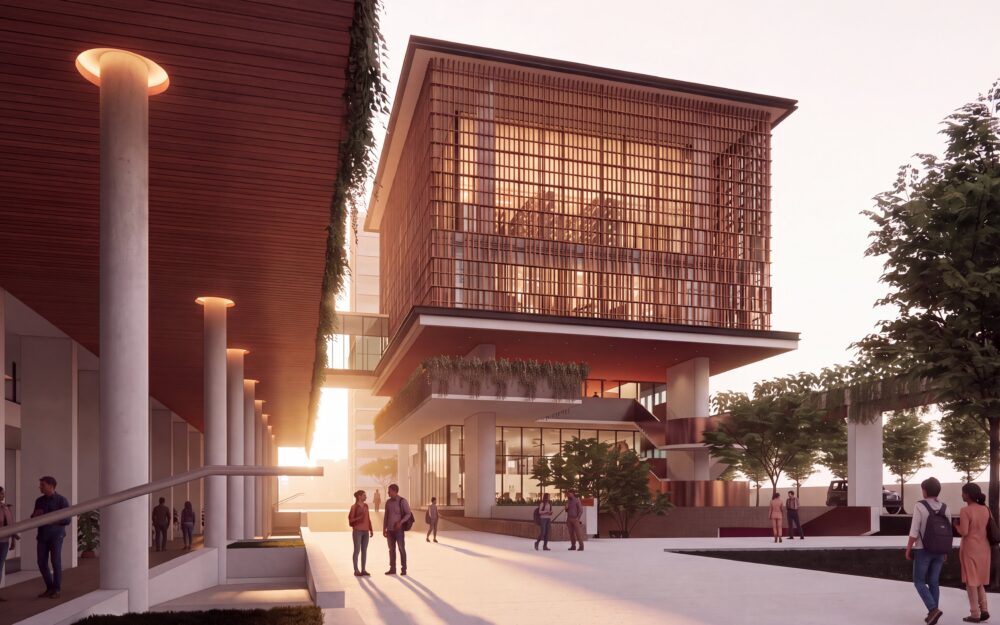
This reframes the architectural task. A campus must justify itself as something technology cannot replicate: a place built around belonging, mentorship, wellbeing, identity, and serendipity. Design decisions underway in India reflect this, from recreation buildings that share quiet study and active sport within one structure to academic buildings with open, expandable floorplates that let departments reconfigure space as disciplines evolve.
Source: Hacker News · Summarized by HeadlinesBriefing