
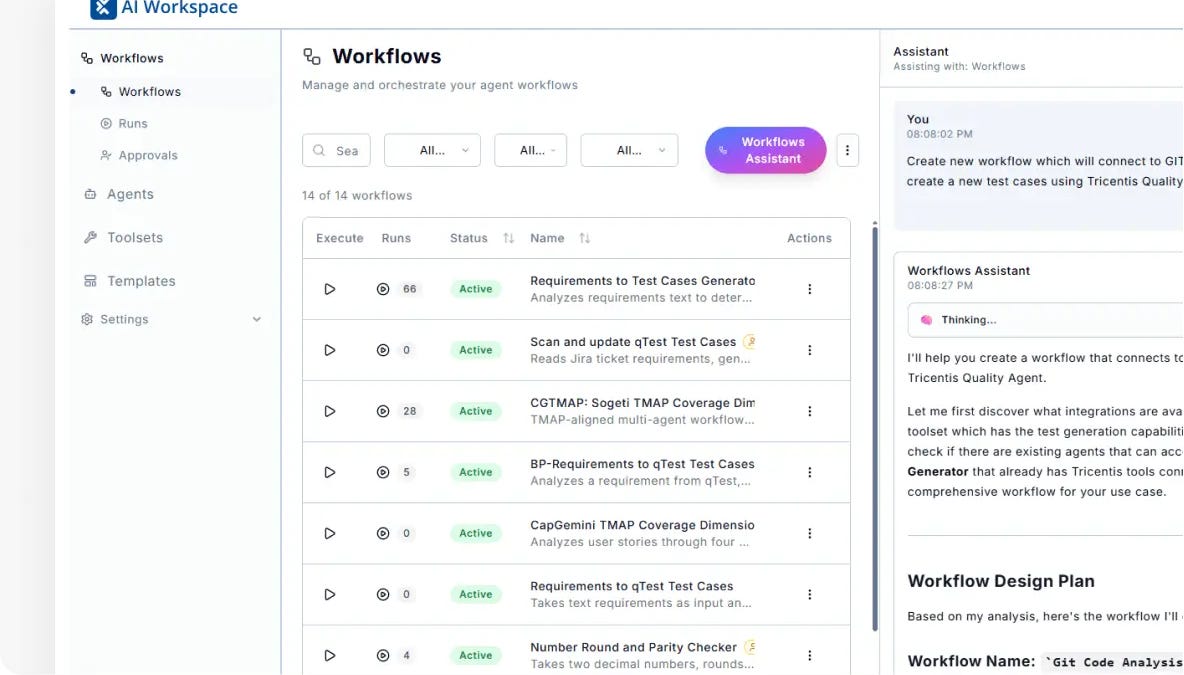
Tricentis AI Workspace gives quality engineering leaders a single pane to build, orchestrate and govern AI quality agents across the software development lifecycle. It handles code‑risk analysis, test automation and performance validation, turning AI‑generated code checks into a continuous process rather than a final gate. Teams report fewer bugs slipping into production and faster delivery without sacrificing confidence.
Small and large language models share the transformer decoder core but diverge because of three opposing constraints: deployment target, inference economics and training budget. On‑device models must fit within a gigabyte of memory, milliamps of battery and millisecond latency, while data‑center models enjoy generous RAM, batching and cost‑per‑request flexibility. These limits push small‑model teams toward efficient data, distillation and architecture tricks.
Architectural choices that shrink the KV cache dominate on‑device design. grouped-query attention lets several queries share a single key‑value pair, cutting cache size by up to four‑fold with minimal quality loss. Apple’s on‑phone model reuses the cache across decoder layers, while models like Gemma 2 blend sliding‑window attention to limit context length. Such tricks let sub‑billion‑parameter models run significantly smoothly on phones.
Source: ByteByteGo · Summarized by HeadlinesBriefing