
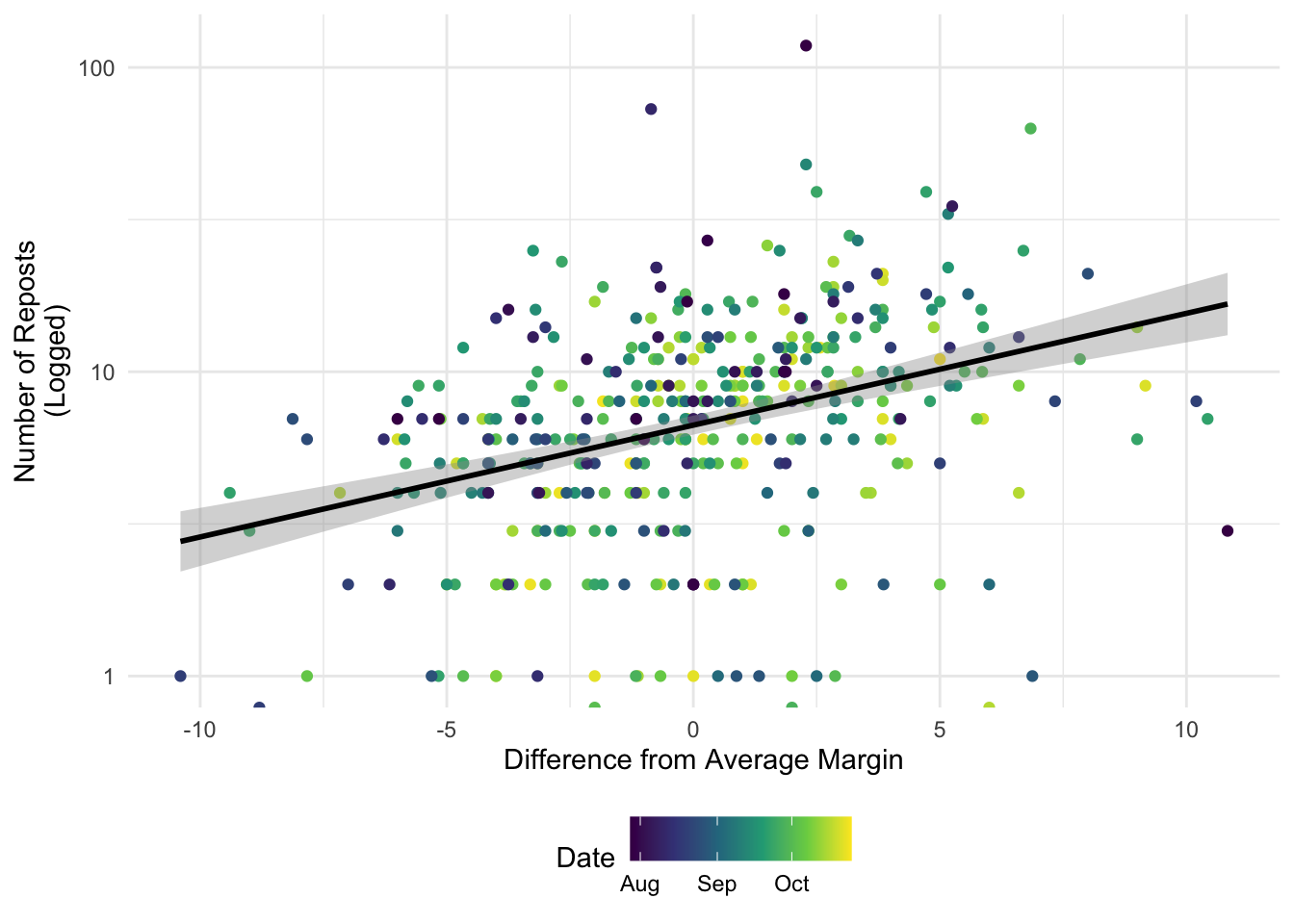
As the election nears, viral polls are driving public perception — but they aren’t representative. Kevin Reuning analyzed 90 days of posts from @usapolling.bsky.social on Bluesky, the most active polling-distribution account on the platform. Using an LLM to extract data and calculate margins (Dem-Rep), he found that polls favoring Democrats get reposted far more often than those aligning with the average margin in each race. Figure 1 shows a clear trend: as polls become more favorable for Democrats, repost counts rise. Figure 2 breaks this down by race, confirming the pattern across nearly all contests with 10+ polls, except the NC Senate race. A model predicting reposts based on the Dem-Rep margin, deviation from average margin, and date reinforces the finding. While Bluesky leans left and isn’t a fully representative sample, the results echo Reuning’s earlier Twitter research.
The analysis focuses only on posts with a single general election poll and filters out small-sample noise. The black line of best fit in both figures indicates a statistically meaningful relationship between Democratic-leaning results and viral spread.
Reuning notes that passive news consumers see what goes viral, not what’s representative — skewing public perception ahead of the vote.
His full methodology and code are available via the linked R scripts.
Source: Hacker News · Summarized by HeadlinesBriefing