
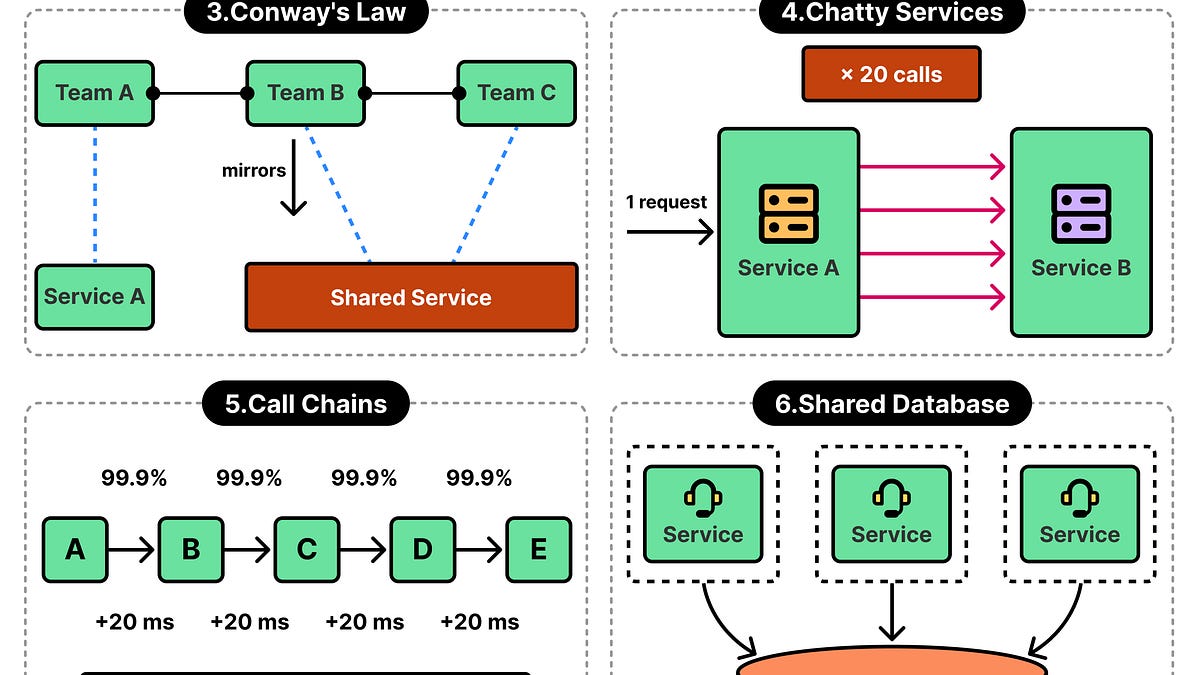
Microservices can transform into distributed monoliths that move slower and cost more than the original system they replaced. ByteByteGo explains that these failures rarely stem from single catastrophic decisions, but rather from many individually reasonable choices that compound over time. Teams split systems cleanly, deploy independently, and create new services whenever components feel distinct enough to stand alone.
Each service boundary introduces milliseconds of network latency compared to nanoseconds within a single program. Calls can timeout, succeed partially, or leave systems in inconsistent states. These fundamental differences between local and distributed operations generate most anti-patterns teams encounter, creating architectures no one would intentionally design.
The core issue lies in treating service decomposition as purely technical rather than considering operational complexity. When every team optimizes locally, the global system suffers from cascading failures, data inconsistency, and debugging nightmares that make rollback impossible.
Understanding these patterns helps architects recognize when distributed complexity outweighs benefits. The article examines specific anti-patterns and prevention strategies for teams navigating service architecture decisions.
Source: ByteByteGo · Summarized by HeadlinesBriefing