
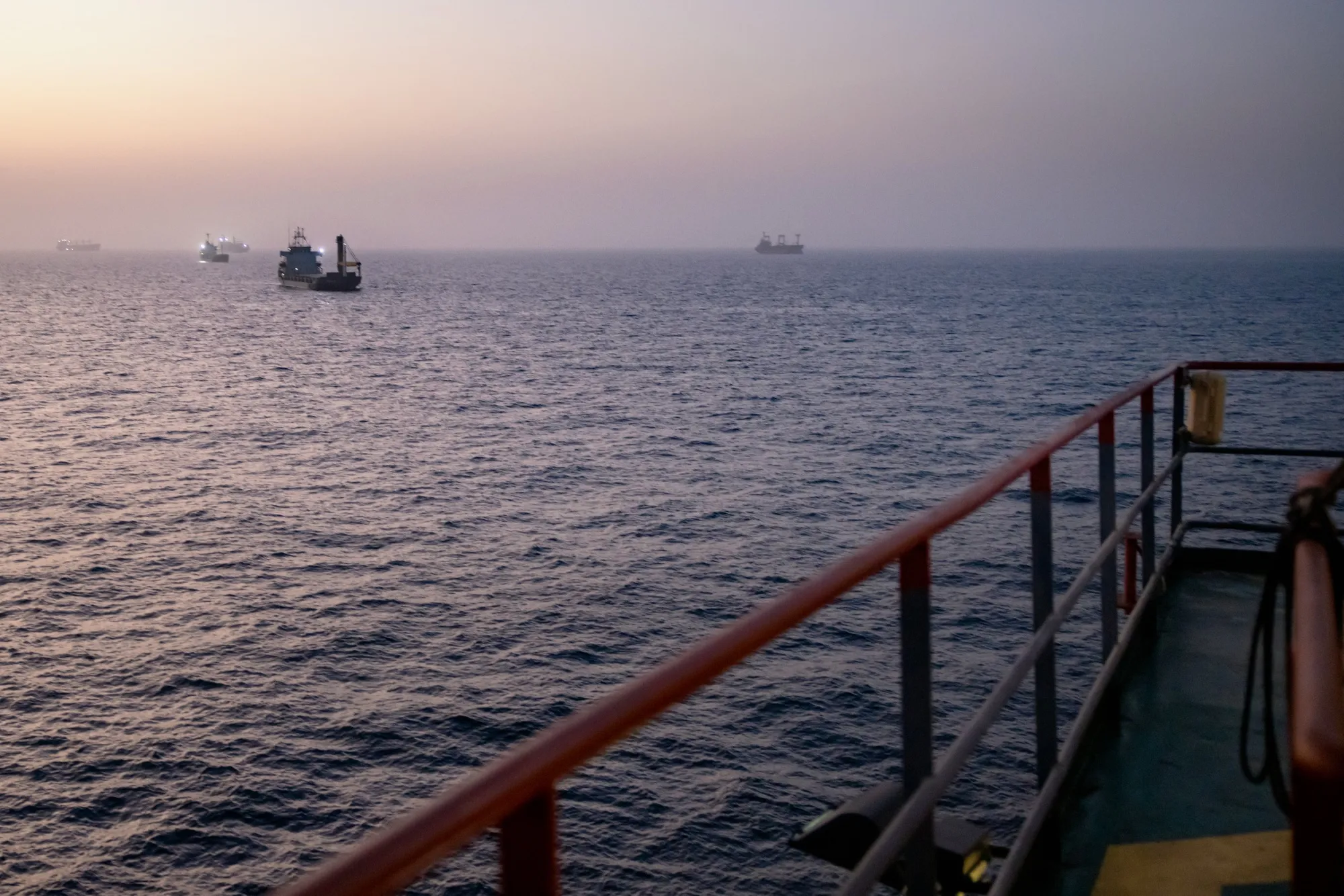
Getting oil and gas through the Strait of Hormuz remains a perilous job for ship captains, who navigate under strict conditions of radio silence and darkness to avoid Iranian drones and missiles. A tanker captain in his early 40s recounted veering his 300-meter-long ship from a blast ahead and contacting the US Navy during a recent transit. Operating with no lights, no phones, and only one radar, crews rely on coastal landmarks and lighthouses for navigation.
These shuttle runs, often conducted at night and within a mile of Oman’s coast in 100-meter-deep waters, are critical for maintaining Middle East energy flows. JPMorgan Chase & Co. and Goldman Sachs Group Inc. estimate crude oil flows through the Gulf have returned toward pre-war levels at 17.5 million barrels daily. US Central Command confirms coordinated protection has assisted thousands of ships, with military support visible overhead via jets and helicopters.
LNG carriers also transit the strait, masking AIS signals and barricading decks with sandbags amid drone and missile threats. Despite risks, shipping executives cite a roughly one-in-20 chance of being hit, with flows rising under US military oversight as diplomatic talks stall.
来源: Bloomberg Markets · 由HeadlinesBriefing整理摘要