
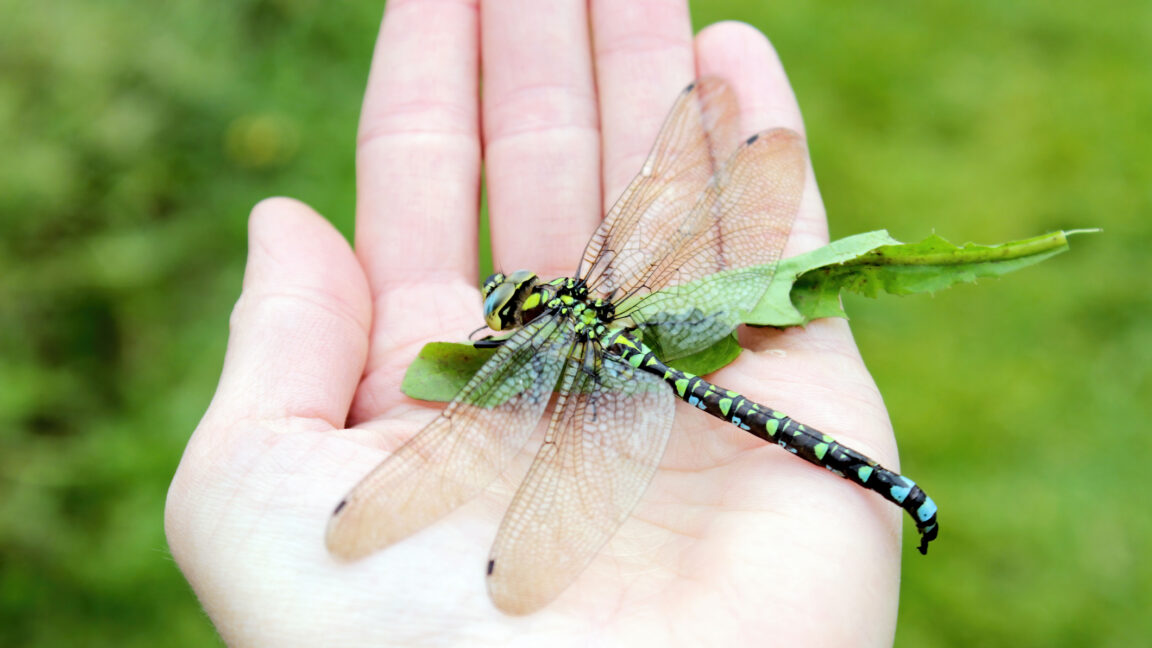
For decades, scientists believed giant insects like Meganeuropsis permiana vanished because lower oxygen levels couldn't support their massive bodies. The oxygen constraint hypothesis suggested that as atmospheric oxygen dropped from 30 percent to today's 21 percent, these prehistoric behemoths simply couldn't breathe efficiently enough to survive. It was an elegant explanation for why we don't see two-foot-long dragonflies anymore.
But new research led by Edward Snelling at the University of Pretoria has turned this theory on its head. His team examined 44 insect species ranging from 0.334 milligrams to 7.74 grams, using electron microscopes to measure how much flight muscle volume was occupied by breathing tubes. Contrary to expectations, the percentage barely changed - from 0.47 percent in tiny insects to just 0.83 percent in larger ones. Even extrapolating to the 100-gram ancient giants, the breathing tubes would occupy only about 1 percent of muscle volume.
This means giant insects had plenty of room to grow their breathing systems without sacrificing flight performance. The real reasons for their disappearance likely involve ecological factors like the rise of predatory birds and bats, heat management challenges in larger bodies, or the physical limitations of molting massive exoskeletons. The oxygen theory was simple and intuitive - but as Snelling puts it, it was simply wrong.
Source: Ars Technica · Summarized by HeadlinesBriefing