
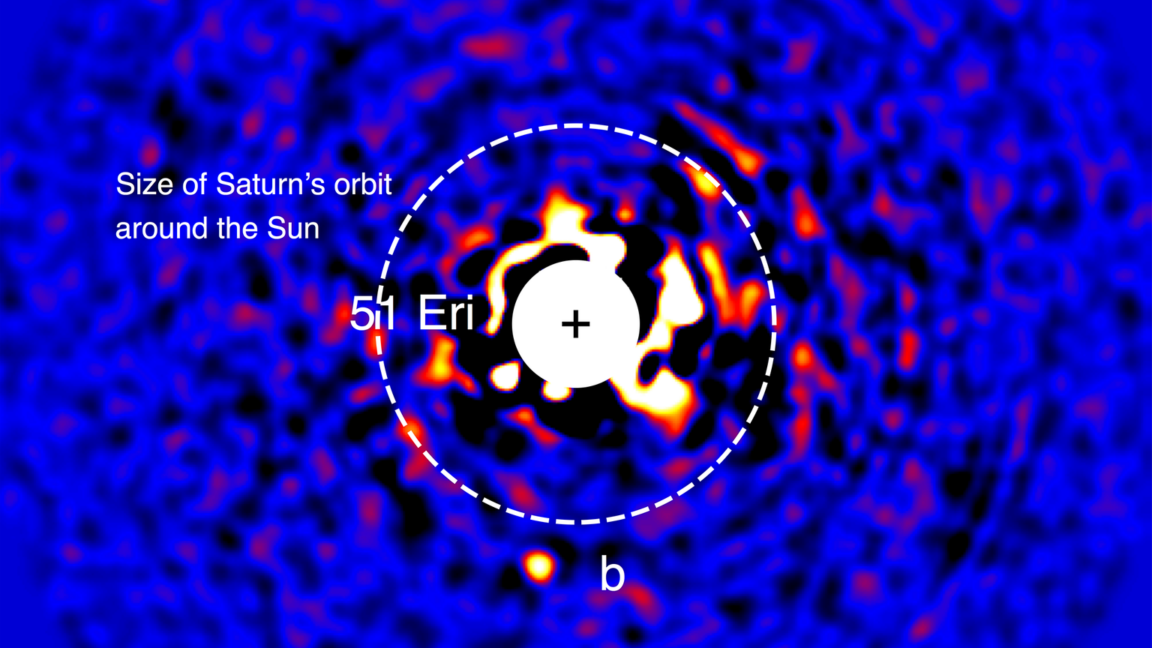
A research team has developed FLIP, a software process that uses a physical model of the NIRCam instrument on the James Webb Space Telescope to optimize imaging parameters. By employing gradient descent, similar to techniques used in AI neural network training, FLIP can boost the signal-to-noise ratio of Webb data. Testing on observations of HIP 65426 and 51 Eridani, which host young, warm exoplanets, the team achieved a 1.5 to 2 times improvement in signal clarity.
At a carbon dioxide-detecting wavelength, researchers successfully spotted a planet in Webb data for the first time. For the variable star TYC 5899, sensitivity improved by a factor of 15. The method lowers noise, potentially allowing the detection of dimmer, older, or lower-mass planets previously hidden in the data.
The researchers also suggest FLIP could identify dramatic model changes, offering insights into telescope hardware performance. Run on a current GPU, the optimization process takes just over half an hour. Nature, 2026.
DOI: 10.1038/s41586-026-11213-z.
Source: Ars Technica · Summarized by HeadlinesBriefing