
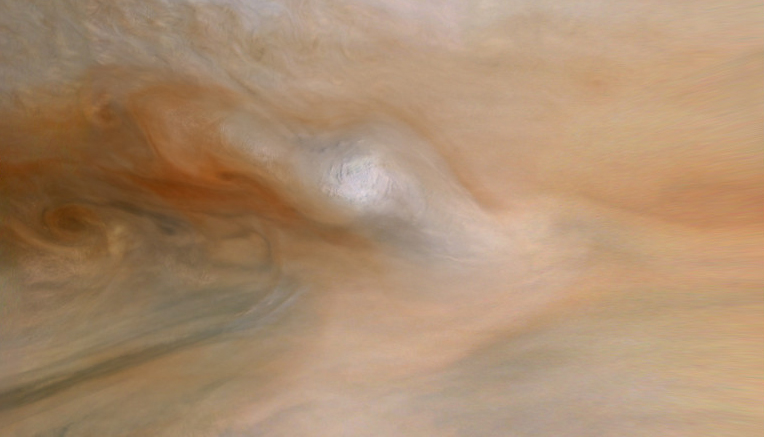
NASA's Juno spacecraft continues sending back fascinating data from Jupiter even as its future hangs in the balance. The probe has captured stunning images of Jupiter's North Equatorial Belt, including a stealth superstorm plume where lightning flashes are at least 100 times more powerful than Earth's. Scientists analyzing Juno data published findings in March showing these massive storms produce intense electrical activity that reveals new details about the gas giant's atmosphere.
However, budget constraints threaten Juno's continued operation. NASA's planetary science division faces a $220 million funding cut compared to last year, forcing officials to make "tough decisions" about which missions to keep alive. The Trump administration previously asked NASA to submit "closeout" plans for over a dozen missions, though Congress ultimately rejected most proposed cuts. Juno joins four Mars missions awaiting renewal decisions, with operating costs consuming about 10% of NASA's planetary science budget.
Louise Prockter, NASA's planetary science director, says the agency must balance extending successful missions against launching new ones. Ending Juno and similar missions could free up $260 million annually - enough for two Discovery-class missions over a decade. Yet Juno's ongoing discoveries, like revealing Jupiter's powerful lightning storms, demonstrate the scientific value of keeping functioning spacecraft operational. The decision on Juno's fate will come with NASA's annual operating plan to Congress.
Source: Ars Technica · Summarized by HeadlinesBriefing