
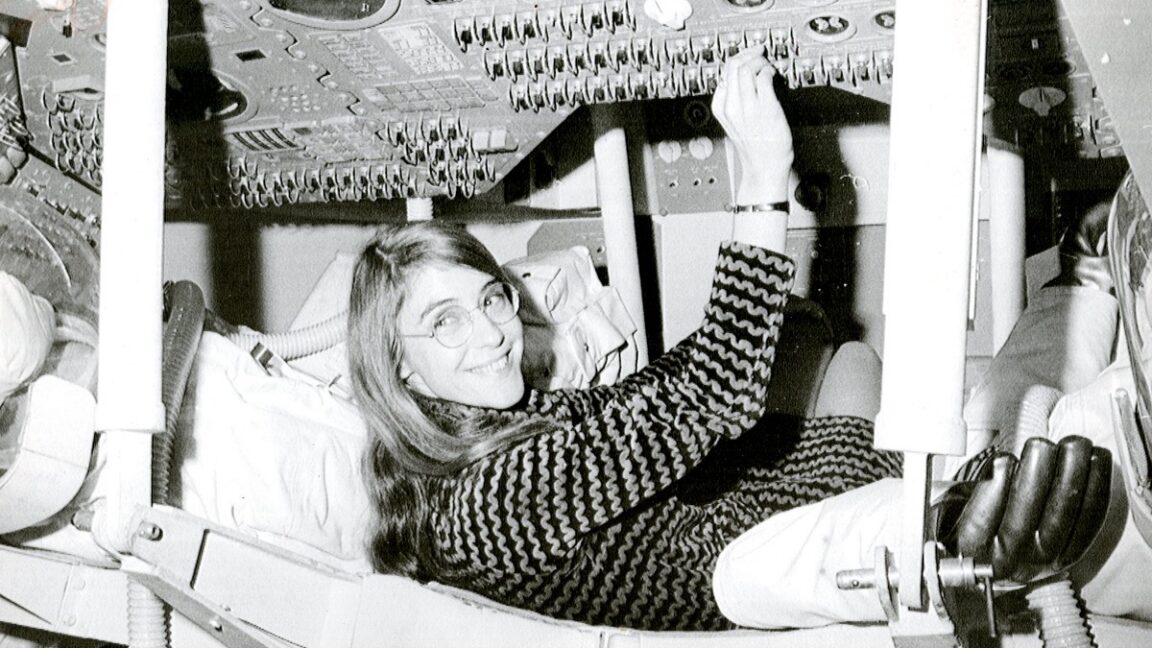
Margaret Hamilton, the pioneering software engineer who coined the term "software engineering" and led the development of onboard flight software for NASA’s Apollo program, has died at age 90. A recipient of the Presidential Medal of Freedom in 2016, Hamilton was instrumental in ensuring the success of six lunar landing missions between 1969 and 1972. Her work helped make the Apollo 11 Moon landing possible, and she is remembered as a foundational figure in computing history.
Born in 1936 in Paoli, Indiana, Hamilton graduated from Earlham College with a degree in mathematics. She began her career working under Edward Lorenz at MIT, where she programmed the LGP-30 computer to study weather patterns—an early experiment in chaos theory. She later moved to the SAGE project, where she tackled complex software reliability challenges.
In 1965, she joined MIT’s Instrumentation Lab as the first programmer hired for the Apollo program. Her innovative approaches to software development, including handling error recovery during critical missions, helped prevent potential failures. Hamilton also founded two successful software companies and was honored with a LEGO minifig in the "Women of NASA" set.
Her legacy endures as a symbol of ingenuity and perseverance in the face of technological uncertainty.
Source: Ars Technica · Summarized by HeadlinesBriefing