
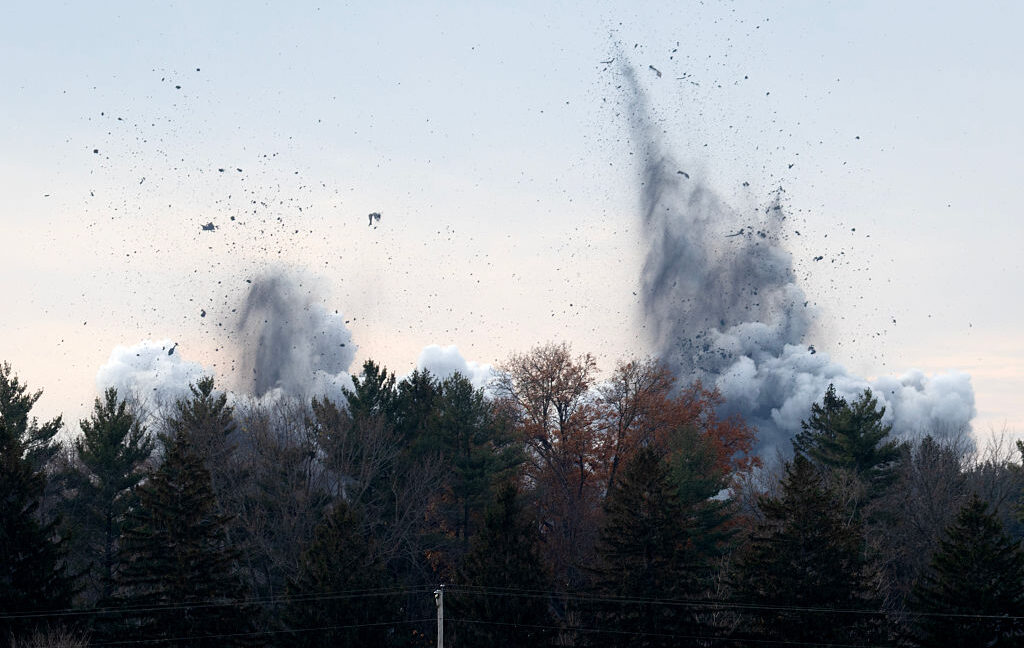
On Wednesday at about 9 am CT, the Army detonated 68 barrels containing 9,700 pounds of degraded lead azide at the Iowa Army Ammunition Plant in Middletown, Iowa. The controlled explosion launched gray-white clouds over the southeastern region, a necessary measure to prevent a spontaneous detonation of the highly unstable compound. Residents within a 5-mile radius were advised to evacuate, while those farther out were instructed to shelter in place, close openings, and set air systems to recirculate.
A journalist covering the event reported seeing and feeling the shockwave roll through nearby crop fields. Lead azide is a neurotoxin that does not break down in the environment, posing significant health risks, especially to young children and pregnant individuals. In the hours prior, the Army released maps modeling the plume's drift, indicating airborne lead would travel approximately 100 miles southwest and dust deposition would cover around 200 square miles.
Researchers have already collected air and soil samples as baseline readings for post-detonation analysis.
Source: Ars Technica · Summarized by HeadlinesBriefing