
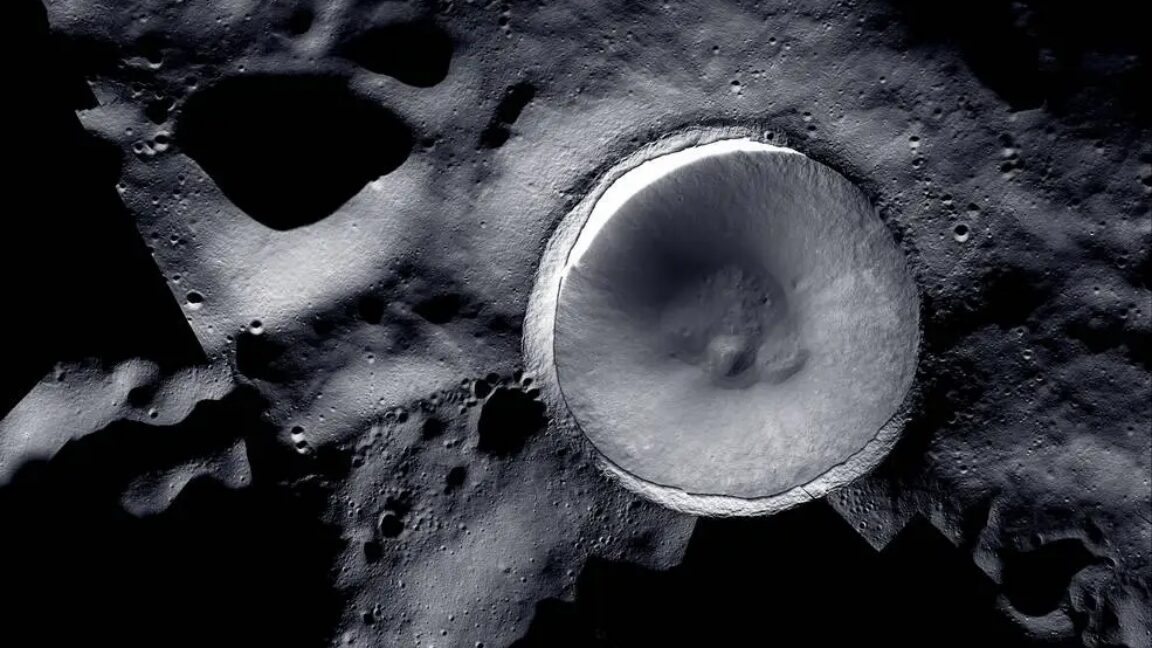
Blue Origin and China's Chang'e 7 are racing to land near the Moon's south pole at Shackleton Crater, a site rich in water ice. Blue Origin's Endurance lander, the largest ever built, aims to test lunar landings and engine-soil interactions, while China's mission includes an orbiter, rover, and a hopper drone to scout ice deposits. Both missions target the crater's rim for near-continuous sunlight and access to shadowed regions preserving ancient ice.
The U.S. and China plan to launch later this year, with Blue Origin's Blue Moon Mark 1 lander carrying NASA-funded instruments. China's mission, part of its broader lunar ambitions, seeks to directly confirm water ice existence and source. If successful, both missions could pave the way for future crewed landings and resource extraction, intensifying competition for lunar infrastructure.
Under the 1967 Outer Space Treaty, nations must act with "due regard" to others' interests on celestial bodies. However, the U.S. Artemis Accords, signed by 61 nations, propose "safety zones" to prevent interference. China, a key lunar player, has not joined these accords, raising questions about how overlapping operations will be managed.
NASA aims to return astronauts by 2028, while China targets 2030. Scientists warn that discoveries of valuable resources near Shackleton could trigger a scramble, testing legal frameworks and geopolitical strategies. The race underscores a pivotal moment in space exploration, where science, national pride, and resource rights collide.
Source: Ars Technica · Summarized by HeadlinesBriefing