
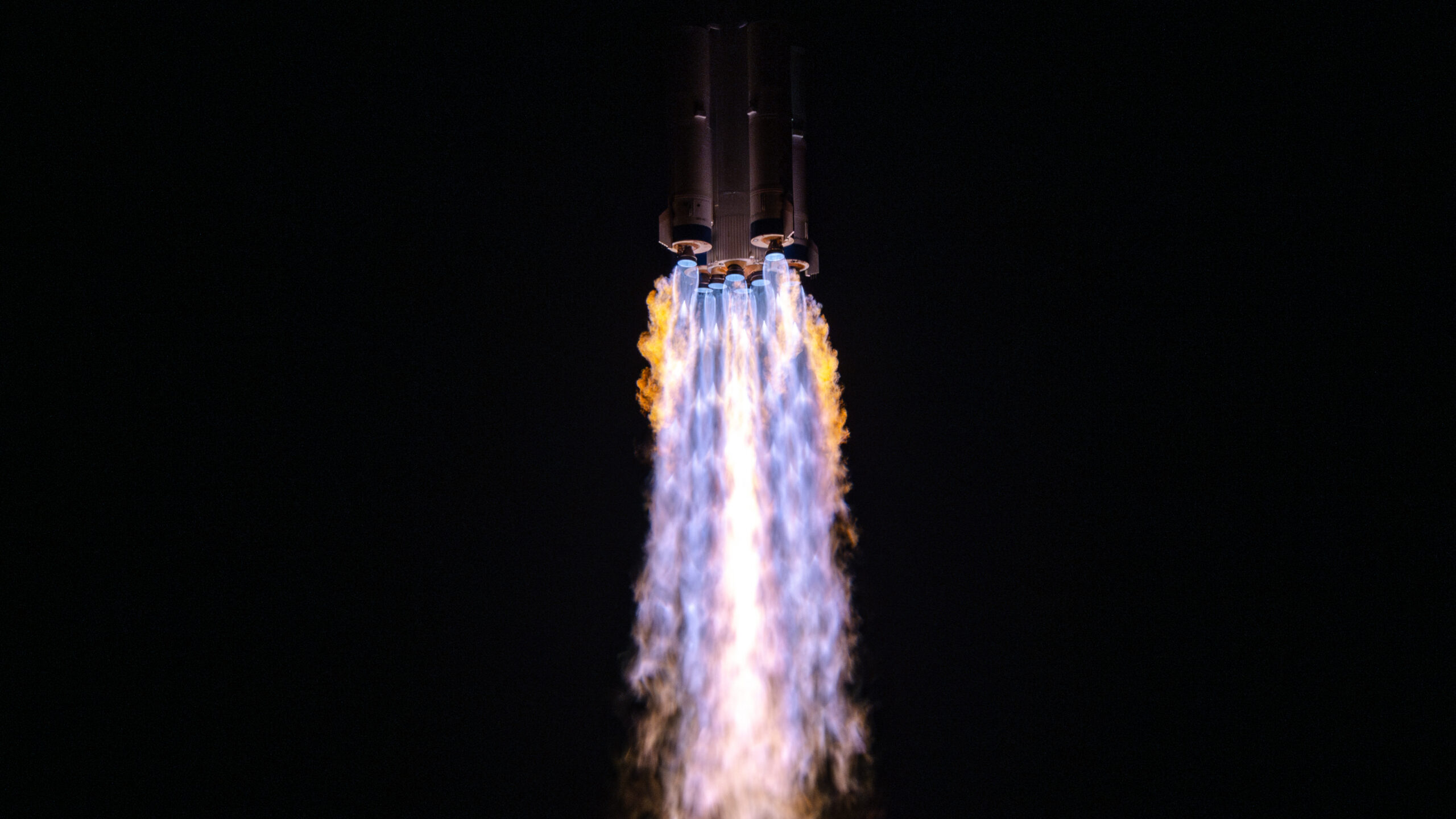
Blue Origin suffered a major setback Thursday when its New Glenn vehicle detonated on the launch pad at Cape Canaveral, destroying much of the sole orbital‑class pad and grounding the heavy‑lift rocket indefinitely. The incident leaves the company without a ready launch site and raises questions about its timeline to compete with SpaceX and ULA. The blast also damaged nearby infrastructure.
Meanwhile, China’s accelerating launch cadence is crowding low‑Earth orbit. In five years, upper‑stage mass in long‑lived orbits rose from under 100 t to 252 t, driven by megaconstellations like Guowang and Spacesail that will need up to 1,000 rockets this decade. At the same time, DARPA awarded Voyager Technologies $16.5 million to develop a propellant‑embedded thrust‑control system for solid rockets under its “Burn n’ Go” program.
Virgin Galactic returned its legacy VSS Unity to Spaceport America for a series of glide flights, giving pilots hands‑on experience before the Delta‑class vehicle’s first powered test later this year. In Europe, Rocket Factory Augsburg demonstrated a revamped Helix 2.0 engine that doubles thrust without added mass, positioning its RFA One launcher for higher‑payload missions once a launch license is granted.
Source: Ars Technica · Summarized by HeadlinesBriefing