
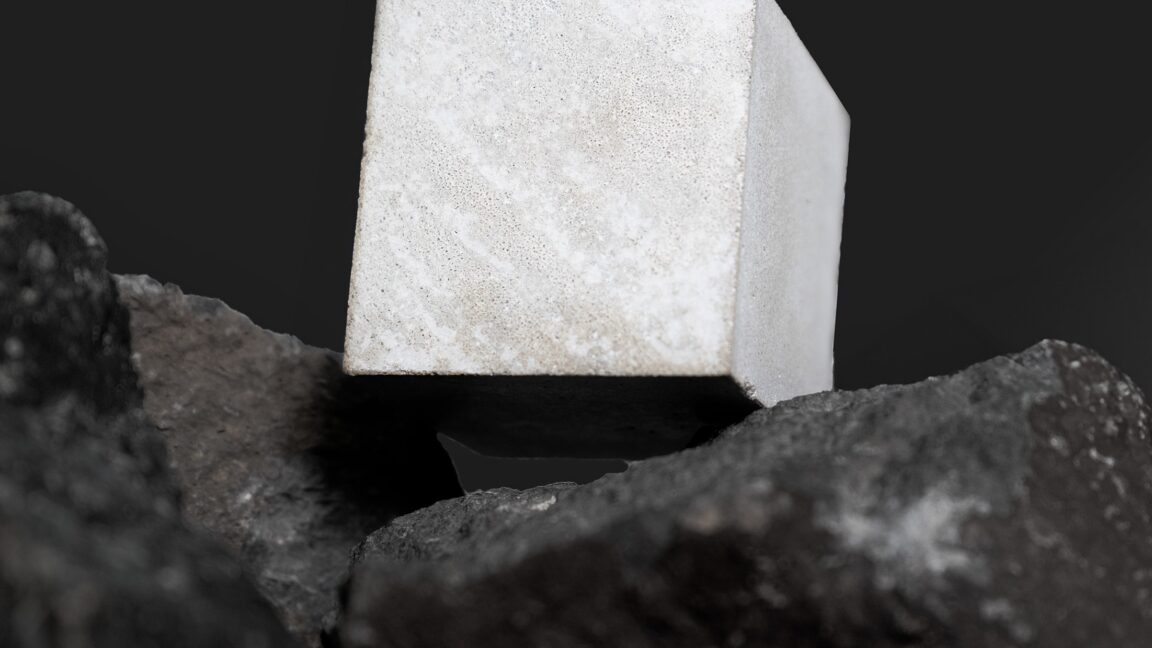
Researchers have mapped a route to make Portland cement from basalt rock rather than traditional limestone. Thermodynamic calculations show converting basalt minerals to calcium oxide needs roughly half the energy of the limestone pathway, but current lab techniques waste enough power that the overall process consumes just over twice the energy of conventional cement production. The extra cost stems from the additional chemical handling steps.
If the electricity powering the process comes from a fossil‑fuel‑heavy grid, the authors estimate emissions would drop by almost 30% compared with standard cement. Switching to renewable power would wipe out most of the remaining carbon output. Moreover, basalt contains iron, magnesium and aluminum that can be extracted as co‑products, while the leftover silicate could replace coal‑ash additives in the final mix.
The biggest hurdle remains economics: doubling energy input inflates production costs, and manufacturers will only adopt the method if the added revenue from recovered metals offsets that premium. Still, because cement accounts for a sizable share of global greenhouse gases, even a modest shift to basalt‑based Portland cement could meaningfully lower the industry’s carbon footprint.
Source: Ars Technica · Summarized by HeadlinesBriefing