
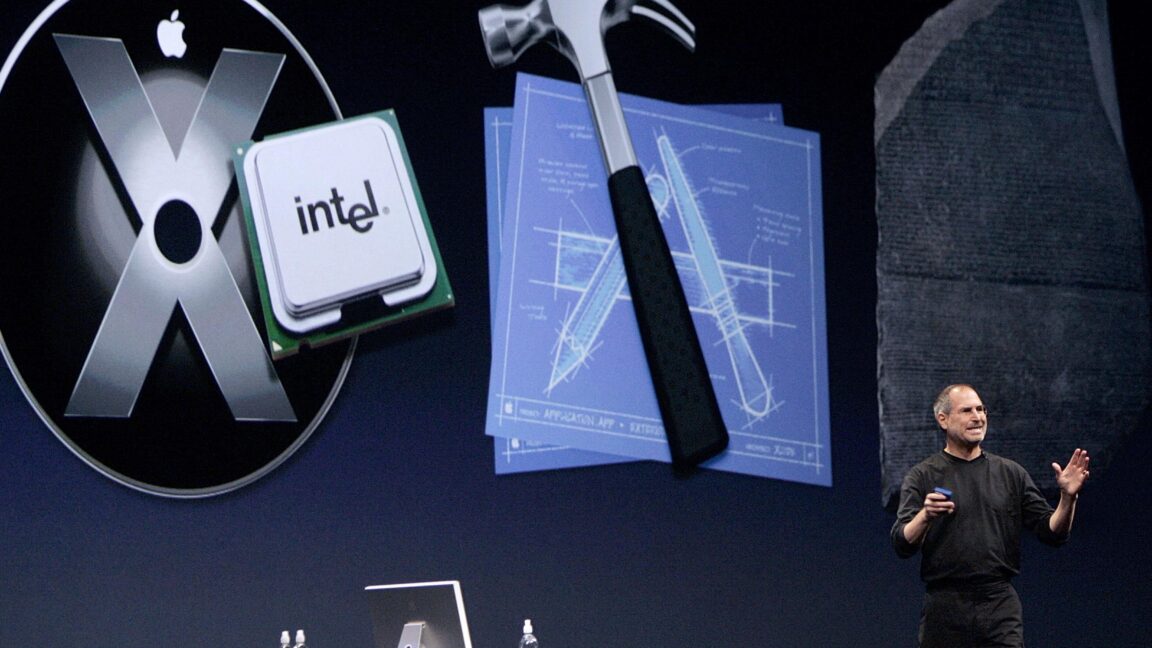
Apple’s pivot to Intel in 2005 reshaped the Mac line, ending PowerPC dominance. The shift began as a project called “Marklar,” sparked by engineer JK Scheinberg. By early 2002 Apple had assembled a team, and by August 2005 Jobs unveiled the first Intel‑based Mac OS X 10.4 at WWDC. The move cut reliance on a PowerPC supply chain and opened access to mainstream PC hardware.
Apple paired the 10.5 Leopard release with Rosetta, a compatibility layer that let most PowerPC apps run on Intel Macs. Developers shipped universal binaries, easing the transition. Boot Camp was officially supported, letting Windows run side‑by‑side and share partitions. The first retail Intel Macs appeared in January 2006—an iMac and a renamed MacBook Pro—blending familiar design with new internals.
macOS 26 Tahoe, released later this fall, will be the final chapter for Intel Macs. Models that support it will receive security and Safari updates for two more years, while Rosetta elements will linger in Apple Silicon Macs for an undefined period. After 26, the Intel era ends; future updates become a coda, solidifying Apple’s shift to its own silicon.
Source: Ars Technica · Summarized by HeadlinesBriefing