
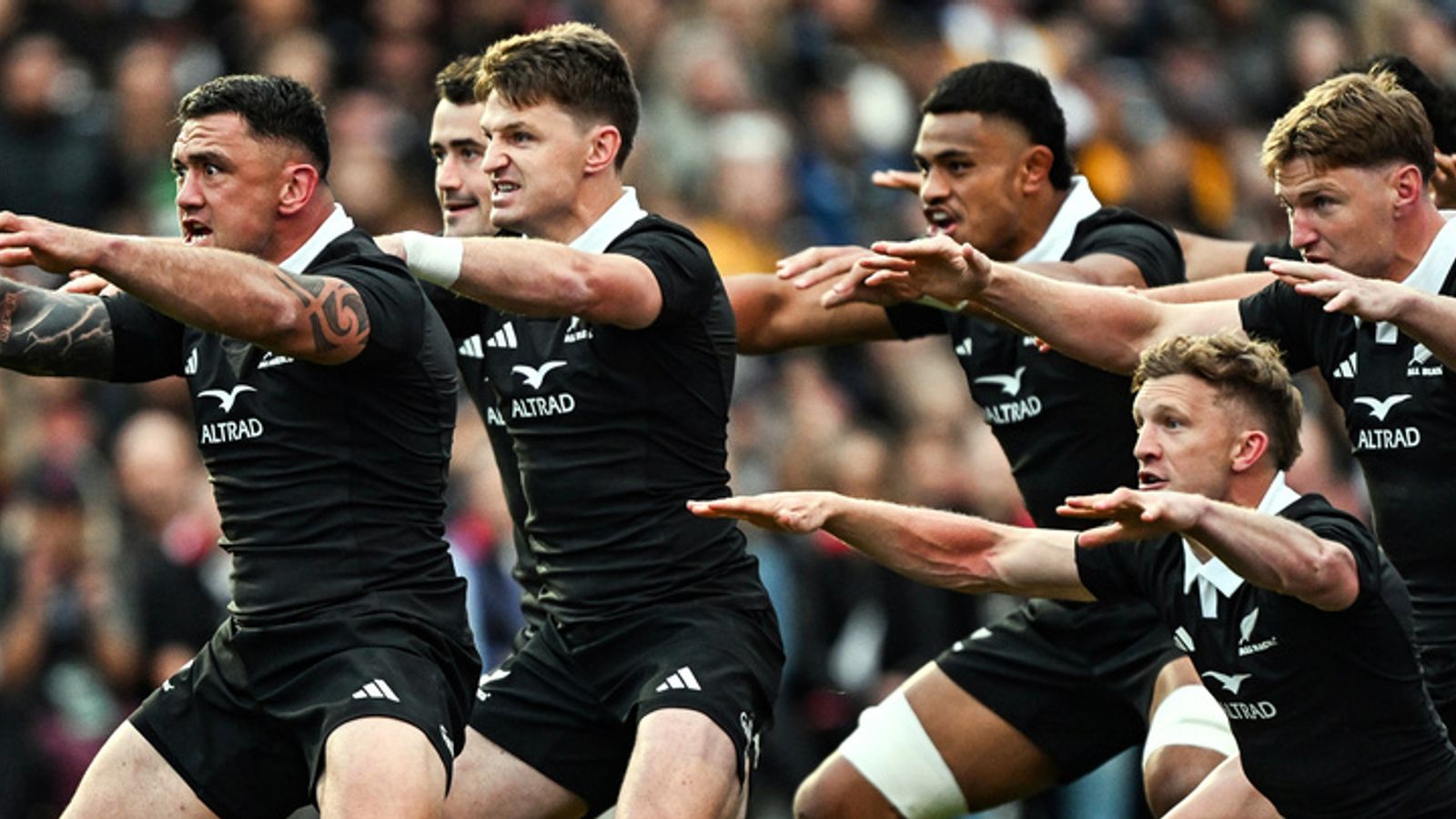
One of the most intriguing moments in rugby union is the sight of New Zealand's All Blacks performing their world-famous haka as the opposition stands before them. But how much do you know about the haka, and the three other ceremonial war dances in rugby: the Cibi, Siva Tau and Sipi Tau?
The haka is an ancient traditional Māori practice, and there is no single recorded date for its first performance. Indigenous Māori communities have practised it for centuries. The earliest recorded European account came in the 18th century, when Joseph Banks and James Cook, on their first voyage to New Zealand in 1769, described the haka as "vigorous and ferocious". Its introduction into sport came in 1884, when New Zealand's first rugby union side performed it during a visit to Sydney, Australia.
The All Blacks name was born in 1905, when the team toured Britain as 'The Originals'. Their famous "Ka Mate" haka, composed in 1820 by Māori chief Te Rauparaha, was performed before Tests against Scotland and Wales. The tradition of performing the haka before every Test on home soil only became custom in 1986. Ahead of the 1987 World Cup, All Black Buck Shelford worked to reform the haka so that pre-match performances were organised, in sync and executed properly.
In meaning, "Ka Mate" is the recitation of a traditional Māori poem about life, death and resilience. The more common haka performed by the All Blacks today is the 'Kapa o Pango', first performed in August 2005 before a Tri-Nations Test against South Africa in Dunedin, featuring an extended and aggressive introduction by captain Tana Umaga.
Source: Sky Sports Champions League · Summarized by HeadlinesBriefing