
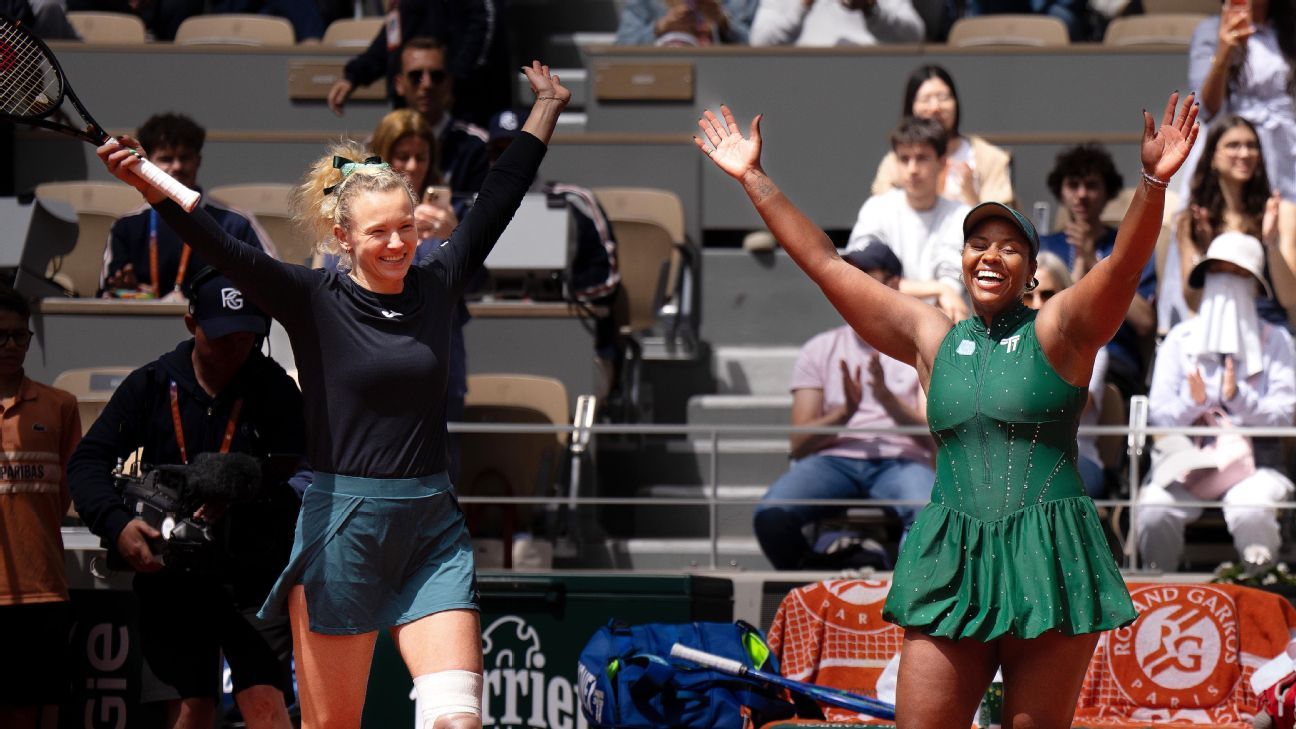
Katerina Siniakova and Taylor Townsend captured the French Open women's doubles crown with a 6-2, 7-5 victory over Anna Danilina and Aleksandra Krunic. The win marked their third Grand Slam title, completing a championship on each surface. Both players maintain top-100 singles rankings—Siniakova at No. 36 and Townsend at No. 79—while sitting at No. 1 and No. 2 in doubles respectively.
Wimbledon's women's doubles draw features several dual-draw competitors, including Jelena Ostapenko, Jasmine Paolini, and the Williams sisters. Serena and Venus Williams received a wild card but face uncertainty after Serena's knee injury. Players offer varied motivations for competing in both disciplines, from skill development to financial incentives.
Siniakova found that doubles improved her serve and return capabilities beyond singles practice. Ostapenko uses doubles to experiment with new shot angles without heavy pressure. The $350,003.81 Roland Garros prize money and Wimbledon's $500,000 payouts demonstrate the lucrative potential. Many top players choose this path because doubles develops an all-court game through additional repetitions and shared pressure.
Historically, legends like Martina Navratilova and Chris Evert dominated both formats. Modern stars like Aryna Sabalenka and Mirra Andreeva followed similar trajectories. The partnership dynamic offers learning opportunities—playing alongside legends provides insights into strategy and competition mindset. Doubles delivers more varied rallies and faster points, creating entertaining team-based tennis that many fans find compelling.
Source: ESPN General · Summarized by HeadlinesBriefing