
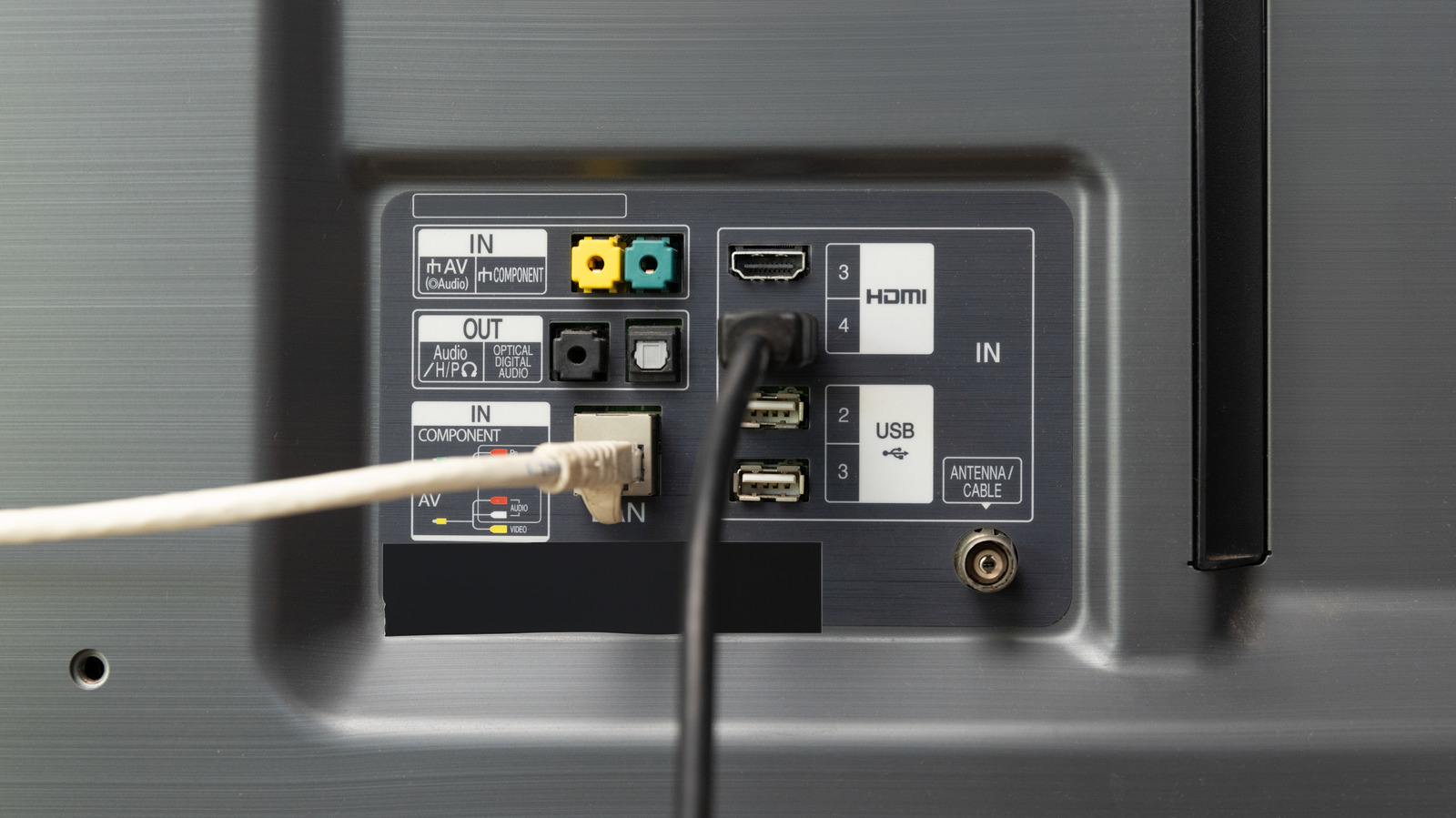
Ethernet is slow on TVs, but it doesn't have to compete with everything else for Wi-Fi bandwidth. Bandwidth matters a lot when streaming movies and TV shows. Services like Netflix and Disney+ typically recommend at least 5 Mbps for 1080p streaming. For 4K HDR content, that steps up to 25Mbps or better since 4K resolution is four times that of 1080p. Plus, subscriptions that include 4K HDR typically throw in Dolby Atmos, even if it's just the compressed version.
Wi-Fi leads on paper because many TVs are equipped with at least Wi-Fi 6, which can exceed gigabit speeds when paired with a compatible router in ideal conditions. Real-world speeds tend to be lower, naturally — even a gigabit internet plan still has to be split among all connecting devices in your home. But even half a gigabit is more than enough speed for most households. Even older or cheaper TVs with Wi-Fi 5 support speeds that are more than sufficient for streaming. Conversely, a lot of TVs and streaming devices aren't even capable of gigabit Ethernet. Their jacks are limited to 100Mbps, despite the fact that the gigabit option has existed for decades.
The major advantage to Ethernet, though, is stability. Within the average home, an Ethernet cable is effectively immune to range or interference issues, as long as it's decently shielded. A Cat 6 cable can deliver 1Gbps speeds up to 100 meters, whereas a Wi-Fi signal is going to peter out well before that distance unless it's boosted. Band congestion is a non-issue, since every Ethernet device gets its own lane. Stability matters, because if a stream is interrupted or loses enough signal quality, it can force an app to re-buffer the feed or else downgrade to a lower quality level. Meanwhile, you're not getting much extra out of a 500 Mbps or 1 Gbps Wi-Fi connection, except for faster app and software updates, which are uncommon and small on TVs.
Source: Engadget · Summarized by HeadlinesBriefing