
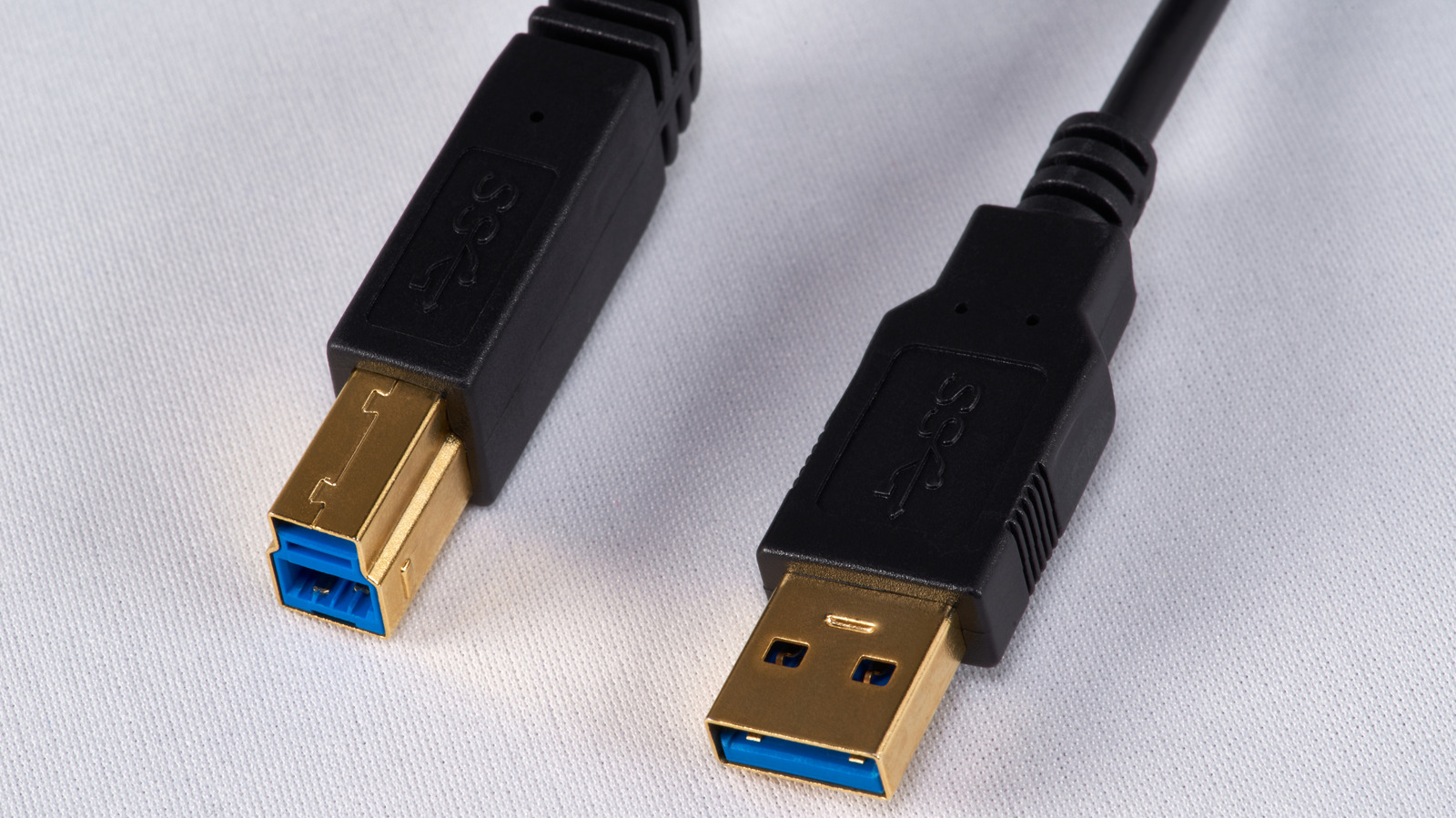
While USB-A is widely recognized, the USB-B connector, introduced alongside it in 1996, played a crucial role for decades, though it remained less familiar to many. The original USB standard aimed to simplify connections by differentiating host devices (USB-A) from peripheral devices (USB-B). This design prevented accidental connections between two hosts or two peripherals and ensured cables were used in the correct direction, with power flowing from host to peripheral.
USB-B's squarish, larger form factor was suitable for devices like printers and scanners but proved too bulky for portable electronics. This led to the development of smaller mini-USB and micro-USB connectors for compact gadgets. Despite the rise of the compact and reversible USB-C, USB-B persists, particularly in printers and musical equipment, due to its secure, non-easily dislodged physical connection and the benefit of backward compatibility for users accustomed to it.
While USB-C offers smaller size, reversibility, and greater capabilities like higher bandwidth and power delivery, USB-B remains a practical choice for peripherals prioritizing familiarity and existing workflows. As USB-C adoption grows, USB-B may eventually diminish, but for now, it continues to serve its purpose for devices that don't require the newest features.
Source: Engadget · Summarized by HeadlinesBriefing