
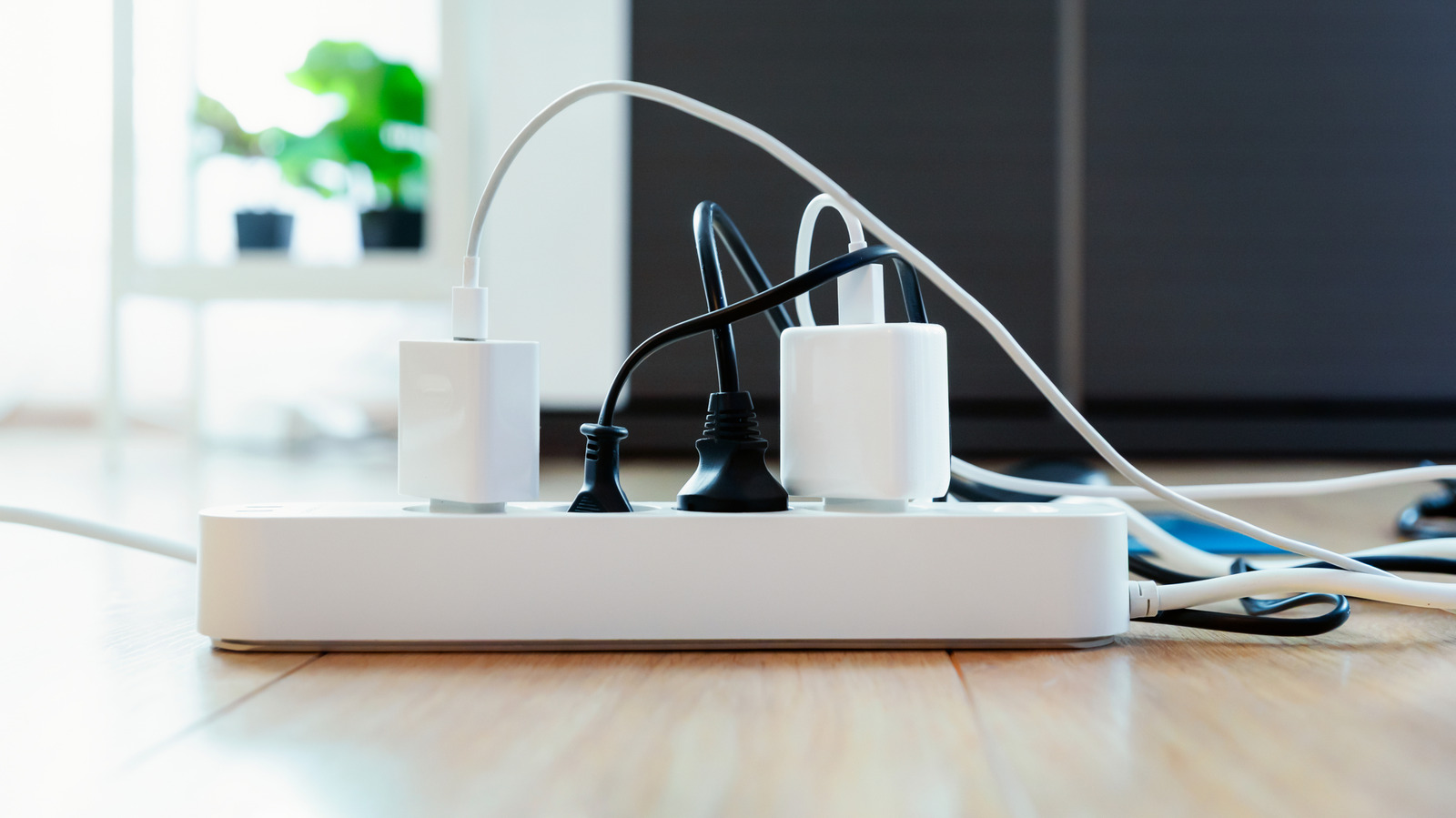
Time and spikes take a toll on a surge protector, even with no visible signs of damage. Most basic plug-in surge protectors use components called metal-oxide varistors (MOVs), which degrade over time, with or without voltage surges. Repeated spikes expedite an MOV surge protector's life cycle, and the wear and tear isn't obvious. Even if it mitigates two or three surges, it will usually look the same, and may continue powering devices even when internal MOV components no longer work.
First, determine if you're using a surge protector or just a power strip. On a surge protector, look for an indicator labeled "Protected" or "Protection Present." An unlit protection indicator often means the surge-suppression components have failed. Discard and replace it if the instructions say protection has failed. Also, avoid plugging space heaters into surge protector strips, as they can overheat or degrade faster.
How long a surge protector lasts depends on its design and the number of surges it's handled. Some manufacturers suggest replacement every three to five years, but this is not a guarantee. If you don't know the age or protection status, replacing it is smart. Mark down the purchase date and look for clear protection indicators. No standard surge protector can handle a direct lightning strike, so learn about your model and replace it when instructions say to.
Source: Engadget · Summarized by HeadlinesBriefing