
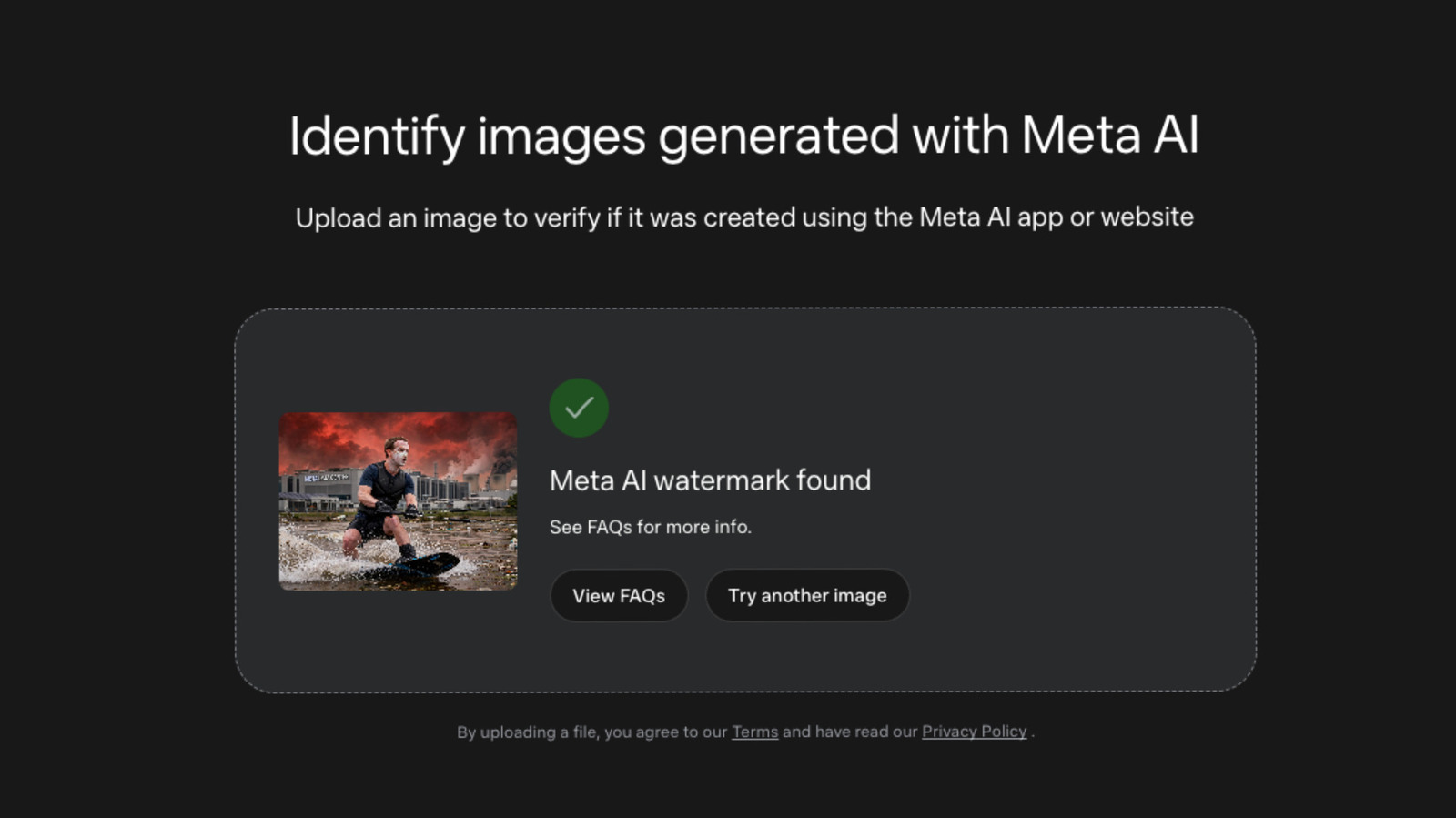
Meta has previewed a web-based detection tool that identifies images and videos created with its new Muse Image model through an invisible watermarking system called Content Seal. The watermarks persist through cropping, compression, resizing, and screenshots, offering a more durable solution than the visible logos Meta previously applied to AI-generated content. The tool successfully flagged both fully generated images and edited photos in testing, including screenshots of those images.
The detection feature currently works only on content produced or modified by Muse Image, though Meta plans to extend Content Seal to its upcoming Muse Video model. Notably, the capability remains absent from the Meta AI app itself — when asked about an image the web tool identified as AI-made, the in-app assistant stated it lacked any detection ability. This disconnect highlights a fragmented rollout across Meta's platforms.
The launch follows criticism from Meta's Oversight Board earlier this year over inconsistent watermarking practices. However, Content Seal is incompatible with established standards like Synth ID and C2PA Content Credentials, limiting cross-platform interoperability. The tool also fails to recognize images from older Meta AI models and enforces unexplained daily rate limits on identification checks.
Meta's proprietary approach risks fragmenting the AI watermarking ecosystem just as industry standards gain traction. Until Content Seal integrates with the main app and supports broader compatibility, its utility for average users remains constrained.
Source: Engadget · Summarized by HeadlinesBriefing