
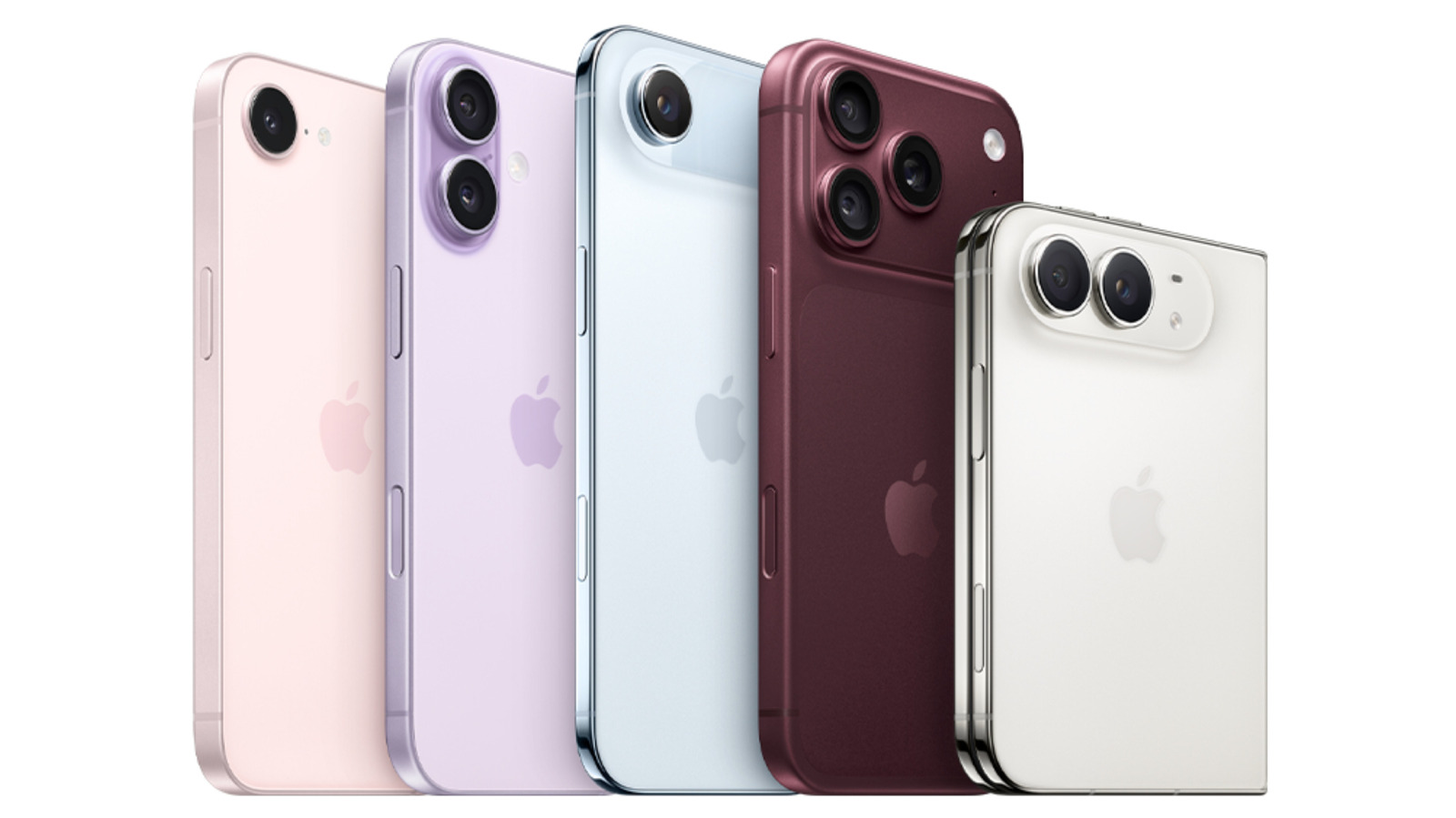
Switching to a foldable requires some sacrifices. Smartphone users eyeing the new iPhone Duo may be enraptured by its matte-finish inner folding display and slick software redesigned around that experience. It's certainly the most exciting Apple device in a decade or more, but Apple's first foldable phone is not without its compromises. On the Android side of the fence, foldable owners have spent years adapting to the sacrifices that come with a bleeding edge device, and it turns out Apple wasn't able to fully overcome any of them. Of course, the Duo is less durable than the more traditional iPhone 18 Pro that was released alongside it, but that's far from the only way it falls short.
The biggest loss you'll feel when switching from a traditional iPhone to the Duo is the latter's lack of a Face ID array for facial recognition. You'll authenticate with fingerprints or passwords only. Apple placed the Duo's Touch ID sensor in the power button, a similar implementation to that found on foldables from Samsung and other vendors. A feature some may not miss on the iPhone Duo is the Camera Control button found on the side rail of other iPhones. It's a neat piece of kit, with a two-stage shutter and a capacitive control that allows you to change camera settings on the fly, but it seems to have gone over with some users about as well as the infamous butterfly keyboard on late 2010s MacBooks.
Other major losses can be found in the iPhone Duo's camera department, ironic for a phone with so many cameras. There are three camera arrays on the iPhone Duo: the main pair of shooters on the back, the Dynamic Island selfie shooter on the front display and the under-display camera on the folding interior display which Apple is branding a FaceTime camera. Starting with the main camera array, the Duo is aptly fitted with two lenses on its back platter. It carries the two 48-megapixel wide and ultrawide modules found on its slab-shaped siblings, but lacks the periscope telephoto lens they offer. And that incredibly cool-looking mechanical aperture, icing on the iPhone 18 Pro's cake, won't be found here, nor will its LiDAR scanner for better nighttime photography. The selfie camera on the cover display is a 12-megapixel letdown compared to the iPhone 18 Pro's aptly implemented 18-megapixel...
Source: Engadget · Summarized by HeadlinesBriefing