
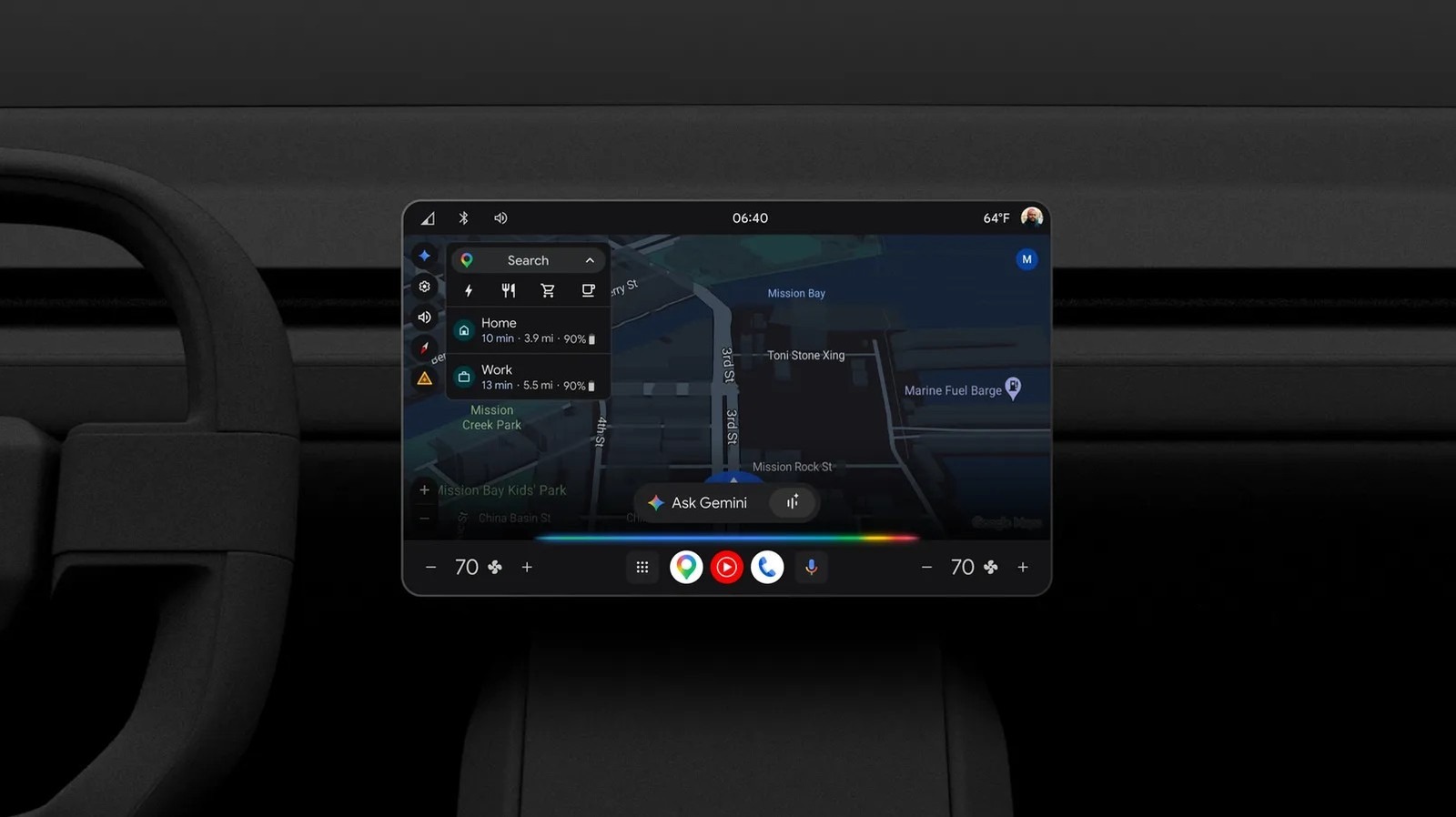
One is a full software stack while the other bundles licensed apps. Despite the popularity of Apple CarPlay and Android Auto, car manufacturers are moving away from phone mirroring applications in favor of native infotainment systems. Google supports this transition through Android Automotive and Google Built-in, two software stacks placing Android into vehicles.
Since 2023, GM has shifted from Android Auto to a Google Built-in solution. Both are independent operating systems running without a phone, though connecting to the same Google account may increase compatibility. However, neither requires an Android phone.
Android Automotive is a full-stack solution that manufacturers integrate to operate radio, climate control, cameras, and more. It is open source and highly customizable. Rivian uses Android Automotive without Google-specific branding.
Google Built-in is a group of licensed applications, debuted in 2020, granting access to Google Maps, Gemini, and the Google Play Store. Sixteen brands have access, including Honda, Volvo, Chevy, Nissan, Ford, BYD, and Renault. As Google accelerates AI integration, the distinction between these systems will shape the customer experience and infotainment operation.
Gemini is replacing Google Assistant as the infotainment chatbot, bringing voice-activated AI features into the cockpit.
Source: Engadget · Summarized by HeadlinesBriefing