
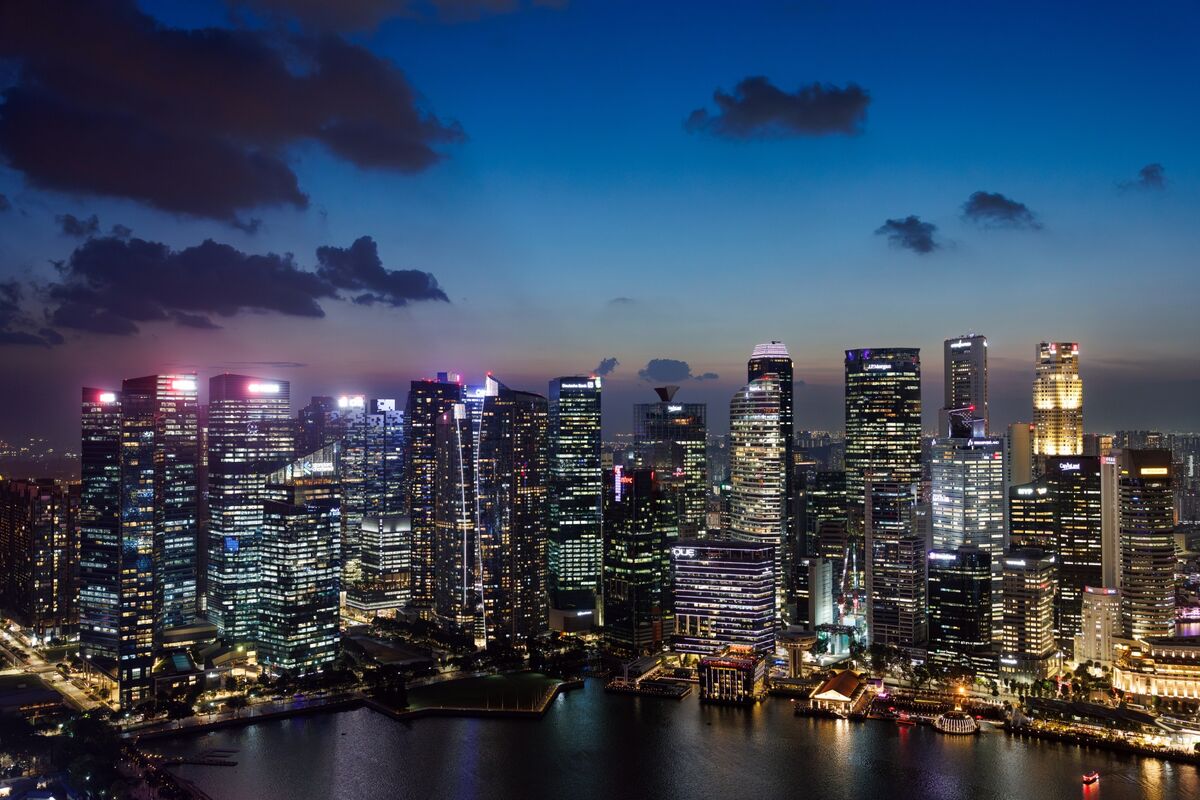
A selloff in Singapore bank shares driven by fears of earnings downgrades is threatening one of Asia’s best-performing major stock benchmarks this year, putting the city-state’s safe haven status to the test. The Straits Times Index has slid 6.6% from its peak more than five weeks ago, dragged lower by DBS Group Holdings Ltd., Oversea-Chinese Banking Corp. and United Overseas Bank Ltd. The lenders account for more than half of the benchmark and shed a combined $22.4 billion in market value last week alone.
The selloff reflects growing concern that local banks are entering a tougher phase ahead. Elevated bond yields are eroding the appeal of their dividend payouts, while the lenders will also have to account for losses on their holdings. That’s prompted Wall Street brokers to warn of downside risks to earnings released next month. "The risk is a longer selloff that spreads beyond the banks, or earnings and capital returns that start to weaken," said Alex Ho, a sales trader at CMC Markets Singapore. "November’s results will be the first real test."
Prior to the recent slump, Singapore stocks had hit a string of highs as earnings growth and market stability attracted institutional investors seeking shelter from gyrations tied to the escalating Iran war and AI trade. Investors are now backing away, with analysts increasingly wary about expectations remaining too optimistic into year end. JPMorgan Chase & Co. warned on Wednesday that rising long bond yields will result in high mark-to-market losses on banks’ trading books and hurt capital activity for Southeast Asian banks. Separately, Citigroup Inc. downgraded OCBC to sell and iterated its sell on UOB last week. HSBC Holdings Plc. has also cut Singapore stocks to neutral as valuations become stretched and financial conditions weigh on the real estate sector.
Source: Bloomberg Markets · Summarized by HeadlinesBriefing