
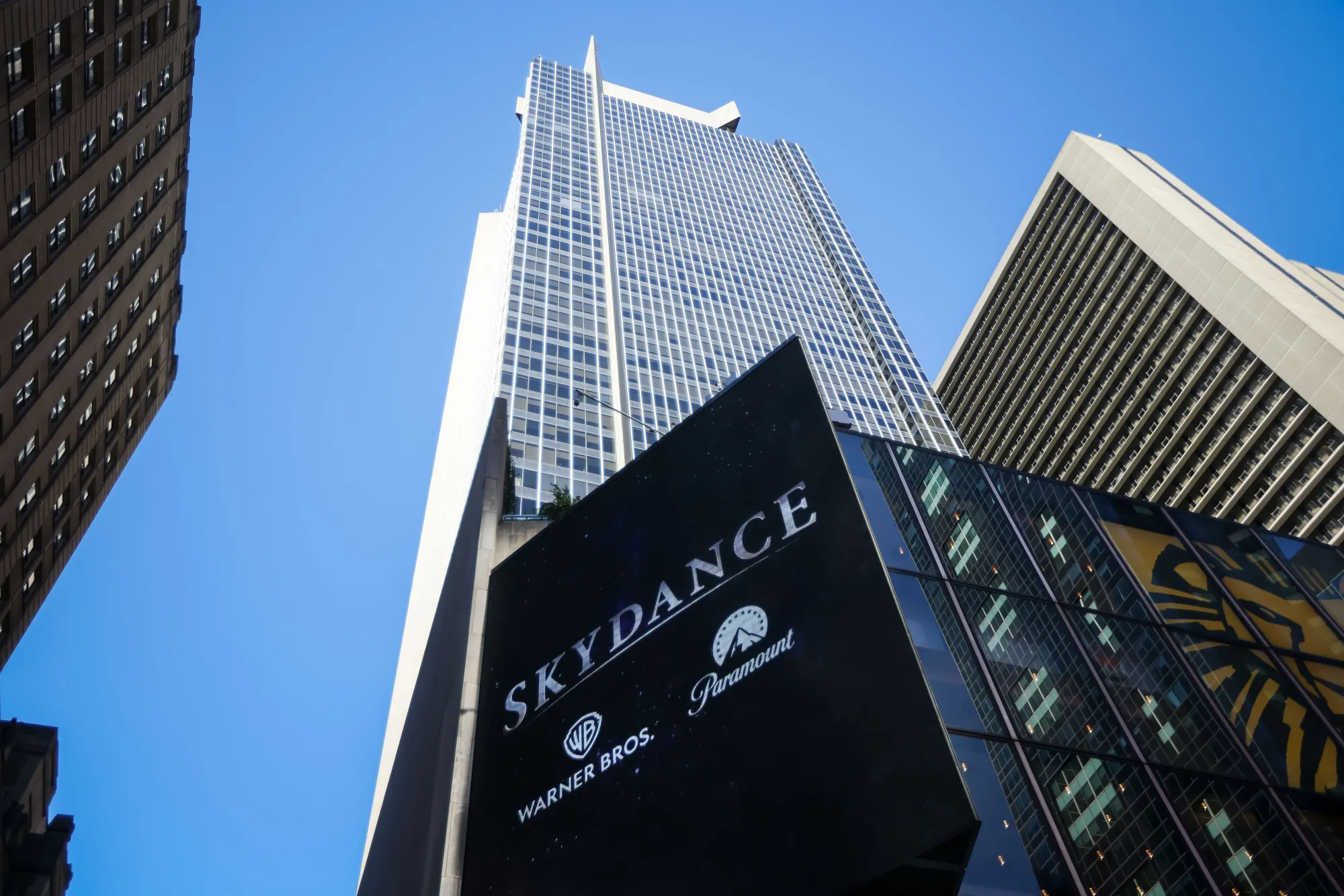
Paramount’s Monster Debt Deal Offers Few Safeguards to Investors Eleanor Duncan, Reshmi Basu and Katherine Schwartz Bond investors backing David Ellison’s audacious $110 billion takeover of Warner Bros. Discovery Inc. are making a bold bet of their own — lending tens of billions of dollars while forgoing many of the legal safeguards typical in debt-laden buyouts. The risk stems from how Ellison’s Paramount Skydance Corp. structured its $52 billion funding package.
It took the unusual step of issuing investment-grade debt, including $30 billion of bonds, alongside the riskier speculative-grade paper that often backs big buyouts. The safer debt won stronger ratings because it leads the queue for repayment, with a first-lien claim over Paramount’s assets in a default. But the high-grade bonds lack the debt terms, or covenants, widely used in the junk-bond market as another form of protection. “What stands out is that the first-lien notes come with an investment-grade covenant package,” said Sabrina Fox, the founder of Fox Legal Training and a specialist in analyzing these terms.
Among other things, Fox said, that means no limits on the borrower taking on more debt, buying back stock, paying dividends or striking deals with affiliated companies. There are some curbs, for example on asset sales or mergers. A separate batch of investment-grade term loans and revolving credit facilities — forms of debt that are typically held by banks — has tighter covenants, according to debt documents seen by Bloomberg.
That could indirectly benefit bondholders by imposing restrictions on the company. When credit investors buy junk bonds issued to fund debt-heavy takeovers, they usually demand far more covenant protection. That’s because highly leveraged borrowers are at much higher risk of falling into financial distress than blue-chip corporations with investment-grade credit ratings.
The deal isn’t a typical leveraged buyout by a private equity firm. Paramount has targeted rapid debt cuts and improving the company’s creditworthiness. The company is also supported by the Ellison family, who led a $47 billion equity funding package, and David Ellison has privately said they would step in to tame leverage following the Warner merger if needed.
Still, the limited covenants here could leave lenders to one of the largest deals in Hollywood history on the back foot if the union doesn’t go to plan. Representatives for Citigroup and Paramount declined to comment, while those for Bank of America didn’t respond to a request for comment. The Paramount debt was sold in just a week and found plenty of prospective buyers, curbing investors’ ability to demand better terms.
Orders for the $30 billion of high-grade bonds hit $109 billion at one point, and the strong demand meant almost no pushback on covenants, said people familiar with the matter, who spoke on condition of anonymity. On calls with Ellison, who is Paramount’s chairman and chief executive, and other executives, many investors mainly focused on the heavy post-acquisition debt load and ambitious cost-cutting plans, the people said. Some investors asked about covenants but only a couple of firms really pushed back on the covenant package, they said.
S&P Global Ratings and Fitch Ratings gave the first-lien bonds investment-grade ratings, while Moody’s Ratings placed them one notch into junk territory. The second-lien debt carries sub-investment-grade ratings from all three firms. The combined company starts life with nearly $79 billion of net debt.
In a note, Moody’s said the company’s debt ratios “resemble those of highly speculative issuers with very low single-B ratings,” or deep within junk territory, and warned of “significant governance risk.” Covenants have broadly weakened in junk-bond markets in recent years, though investors at times have successfully pushed back. Creditors worry the terms of the high-grade debt allow Paramount to split the businesses into separate entities — a risk if executi...
Source: Bloomberg Markets · Summarized by HeadlinesBriefing