
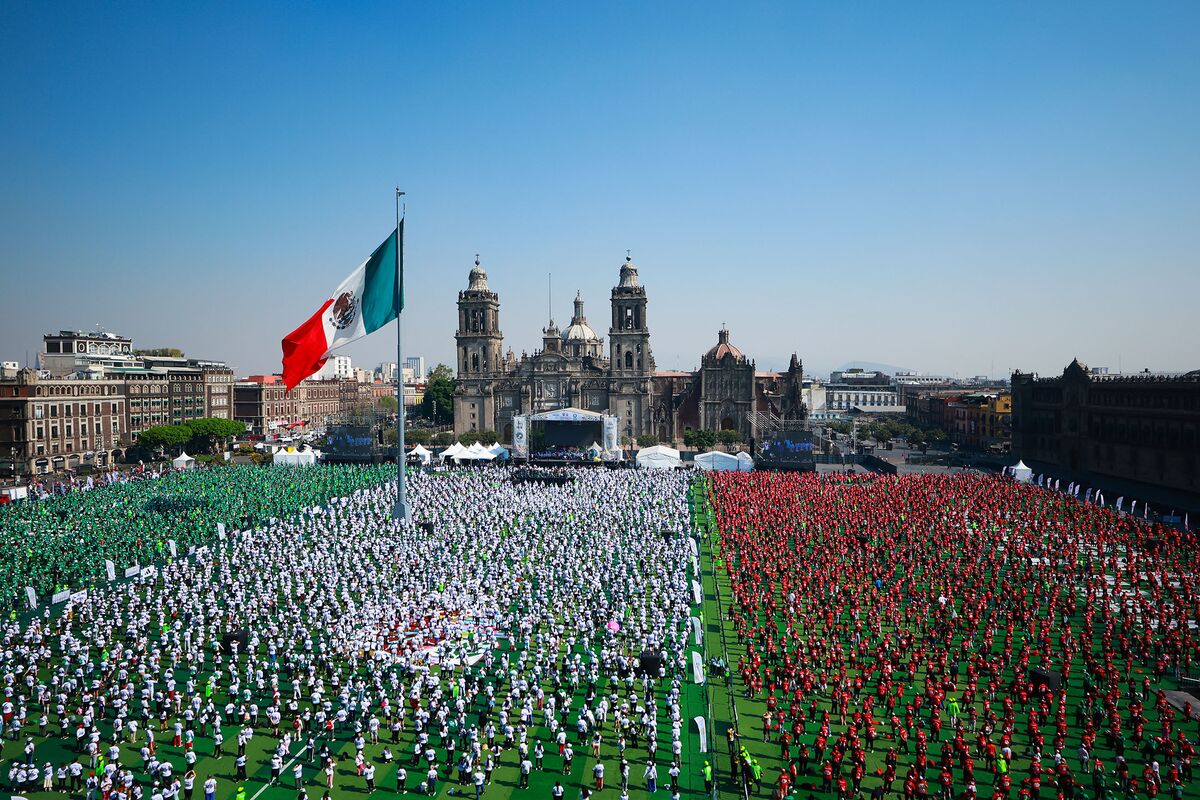
Mexico successfully staged the world's largest soccer class in Mexico City's Zocalo on Sunday, uniting thousands of participants in preparation for its upcoming FIFA World Cup co-hosting duties. The event, held in the nation's capital main square, demonstrated Mexico's organizational capabilities ahead of the June 2026 tournament. Officials emphasized the record-breaking gathering as proof of readiness to manage massive crowds during the global sporting event. The session featured professional coaching clinics, equipment demonstrations, and simultaneously conducted drills across multiple fields.
The record-setting initiative likely serves dual purposes: testing crowd management systems and promoting soccer grassroots development. By mobilizing such large numbers, organizers can refine logistical frameworks for World Cup match days. This practical exercise precedes Mexico's co-hosting announcement with the US and Canada, which will welcome over 3 million visitors. The Zocalo venue's capacity to handle coordinated activities at scale suggests effective infrastructure planning.
Mexico's record-breaking effort aligns with FIFA's requirements for World Cup hosts to demonstrate proven organizational capacity. The unprecedented scale of Sunday's event - potentially exceeding 10,000 participants according to preliminary reports - establishes a new benchmark for public engagement initiatives. Local businesses may benefit from increased visibility during preparation phases, while tourism sectors could leverage the momentum ahead of the quadrennial event. The exercise precedes FIFA's final host inspections scheduled for early 2024.
This strategic demonstration positions Mexico as a frontrunner in World Cup readiness metrics. By showcasing ability to organize massive sporting events, the nation strengthens its bid credibility. The record class also provides valuable data on participant flow management, security protocols, and emergency response systems. Organizers will likely use these insights to optimize stadium operations and fan experiences during the actual tournament.
Source: Bloomberg Markets · Summarized by HeadlinesBriefing