
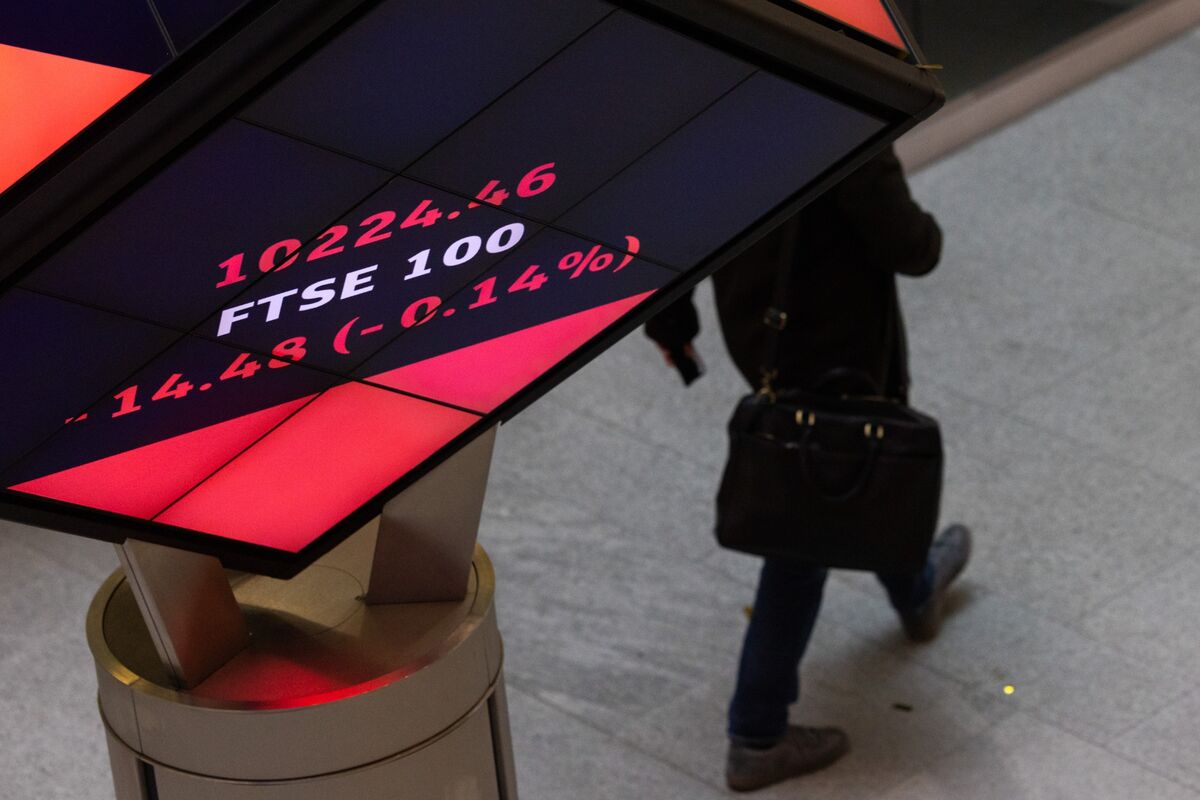
A tentative recovery in UK stocks has hit a major roadblock as the country's bonds suffer from a global selloff. The FTSE 100 and FTSE 250 have risen 5% and 7.44% this year, respectively. However, gains trail most major regional benchmarks.
Long-term borrowing costs for the country hit 6% for the first time in almost three decades, making it the first major economy to pay such a rate since the 2012 euro crisis. The surge in bond yields detracts from encouraging economic news, including stronger-than-expected business activity growth. UBS Group AG strategists noted the UK has delivered better growth outcomes but lacks the usual easier market conditions.
The UK's macro-economic resilience is offset by a higher price of capital and renewed fiscal scrutiny. Political instability and deteriorating finances add to investor worries. The swap market prices four Bank of England interest rate increases by July's end.
FTSE 100 companies have only 25% revenue exposure to the UK, making them relatively immune to domestic policies. However, mid-caps are typically at higher risk, making their recent outperformance look unwarranted. The Autumn budget on Oct. 28 will be closely scrutinized.
HSBC data shows fund flows have rotated away from France to the UK, but confidence is now in question. Goldman Sachs strategists note foreign investors have dominated UK flows, but overall sentiment remains cautious. The surge in yields makes bonds attractive, putting stock allocation at risk.
Cumulative flows into UK equities are negative despite recent improvement, driven by foreign investors. The FTSE 100 benefits from commodity exposure, with earnings growth expected at 22% this year, the highest since 2022. The UK market remains among the cheapest globally, trading at a 30% discount to peers.
Public deal value reached £75 billion year-to-date, driven by foreign buyers. Investors face a complex path forward amid lingering challenges.
Source: Bloomberg Markets · Summarized by HeadlinesBriefing