
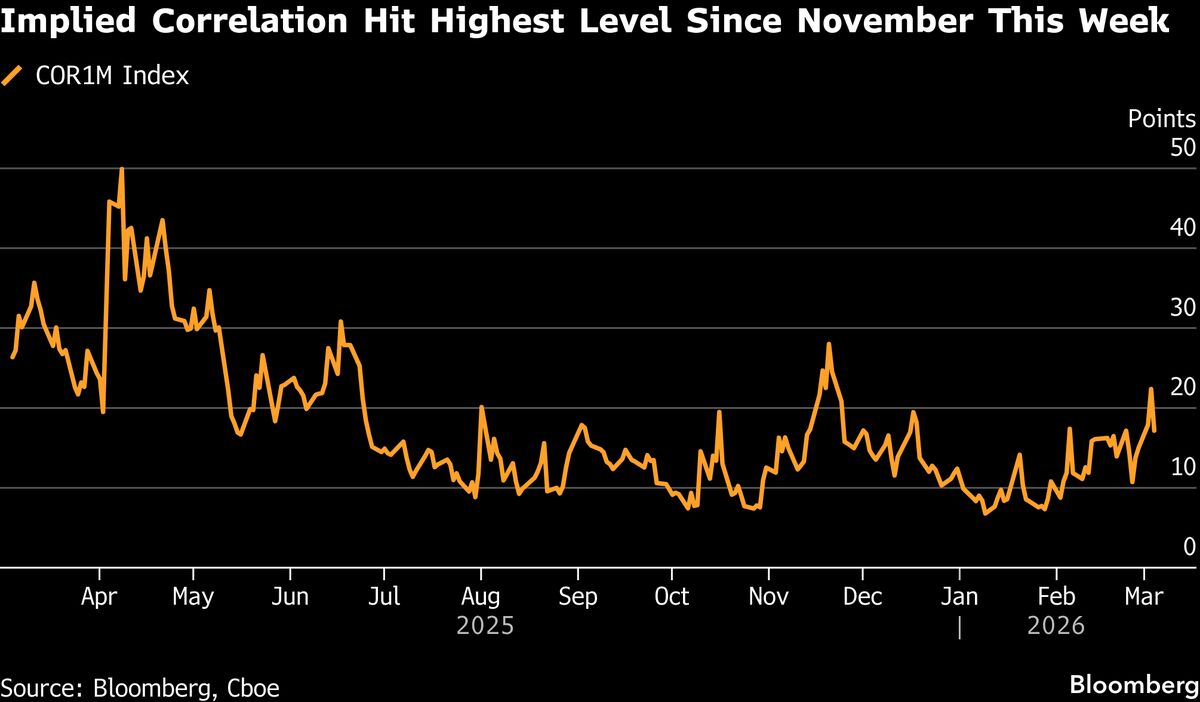
Middle‑East tensions have shaken a once‑reliable hedge‑fund play. The dispersion trade, which profits from a widening gap between S&P 500 index volatility and that of its constituents, relied on a steady climb in the index while individual stocks bobbed. Iran’s recent strike sparked a sudden surge in market correlation, rattling the strategy.
RBC Capital Markets’ derivatives chief Amy Wu Silverman warned that geopolitical shocks can push correlation to its highest since November. Little Harbor’s Matthew Thompson sees “crowded positioning” in the trade, meaning a coordinated unwind could amplify index declines. He noted an inverted VIX futures curve on Tuesday, signalling heightened demand for near‑term hedges.
The VIX slipped to just above 21 after peaking at 28 earlier in the week, reflecting a brief calm despite the Iran war. Yet credit‑market strains—withdrawals from private‑credit managers like Blue Owl and Blackstone—could reignite volatility. Adapt’s Alexis Maubourguet called the U.S. dispersion bet a “ticking bomb,” though it remains un‑triggered.
Investors eyeing the dispersion play must monitor correlation spikes and credit‑fund liquidity, as a rapid unwind could drag the S&P 500 lower. With geopolitical risk and private‑credit stress converging, the trade’s profitability hinges on volatility staying subdued; any breach may force a swift reallocation across equity options.
Source: Bloomberg Markets · Summarized by HeadlinesBriefing