
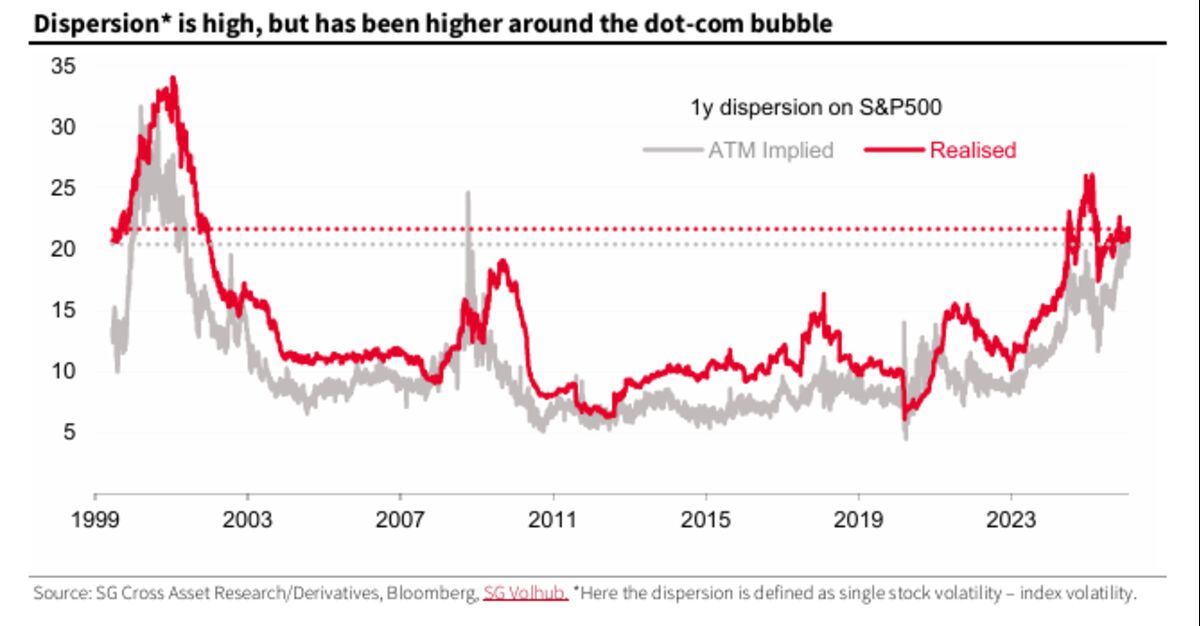
Equity-options investors are increasingly turning to relative value trades between indexes as dispersion strategies—once a staple for profiting from market divergences—grow scarce. The shift reflects a broader search for alpha-generating opportunities in a low-volatility environment where traditional arbitrage edges have narrowed. Index versus index comparisons, such as the S&P 500 versus the Nasdaq 100, are gaining traction as traders seek mispricings across correlated assets. Capital flows into these strategies suggest optimism about short-term market dislocation despite broader equity market stability.
This pivot underscores the challenge of executing dispersion trades in an era of convergent pricing. With volatility compression limiting traditional options premium harvesting, traders are retooling portfolios to exploit inter-index imbalances. For instance, algorithmic systems may identify statistical arbitrage opportunities when one index underperforms its peer despite similar macroeconomic drivers. Liquidity providers are likely adjusting market-making strategies to accommodate this new demand, potentially tightening bid-ask spreads in equity-index options.
The move highlights systemic risks in relative value trading. Execution costs—such as bid-ask spreads and transaction fees—could erode profits if market correlations suddenly break. Additionally, regulatory scrutiny over index composition changes (e.g., rebalancing events) may introduce unexpected volatility. Institutional traders must weigh these factors against the potential for swift exits if mispricings reverse. Risk management frameworks will need to evolve to address asymmetric outcomes in index-versus-index positions.
Ultimately, this trend signals a maturing options market where innovation in strategy design is critical. Traders must balance the allure of relative value with the complexity of cross-market execution. Sustainable alpha may hinge on real-time data analytics and dynamic hedging to navigate interconnected global indexes. The coming months will test whether these trades can deliver consistent returns without overexposure to unforeseen tail risks.
Source: Bloomberg Markets · Summarized by HeadlinesBriefing