
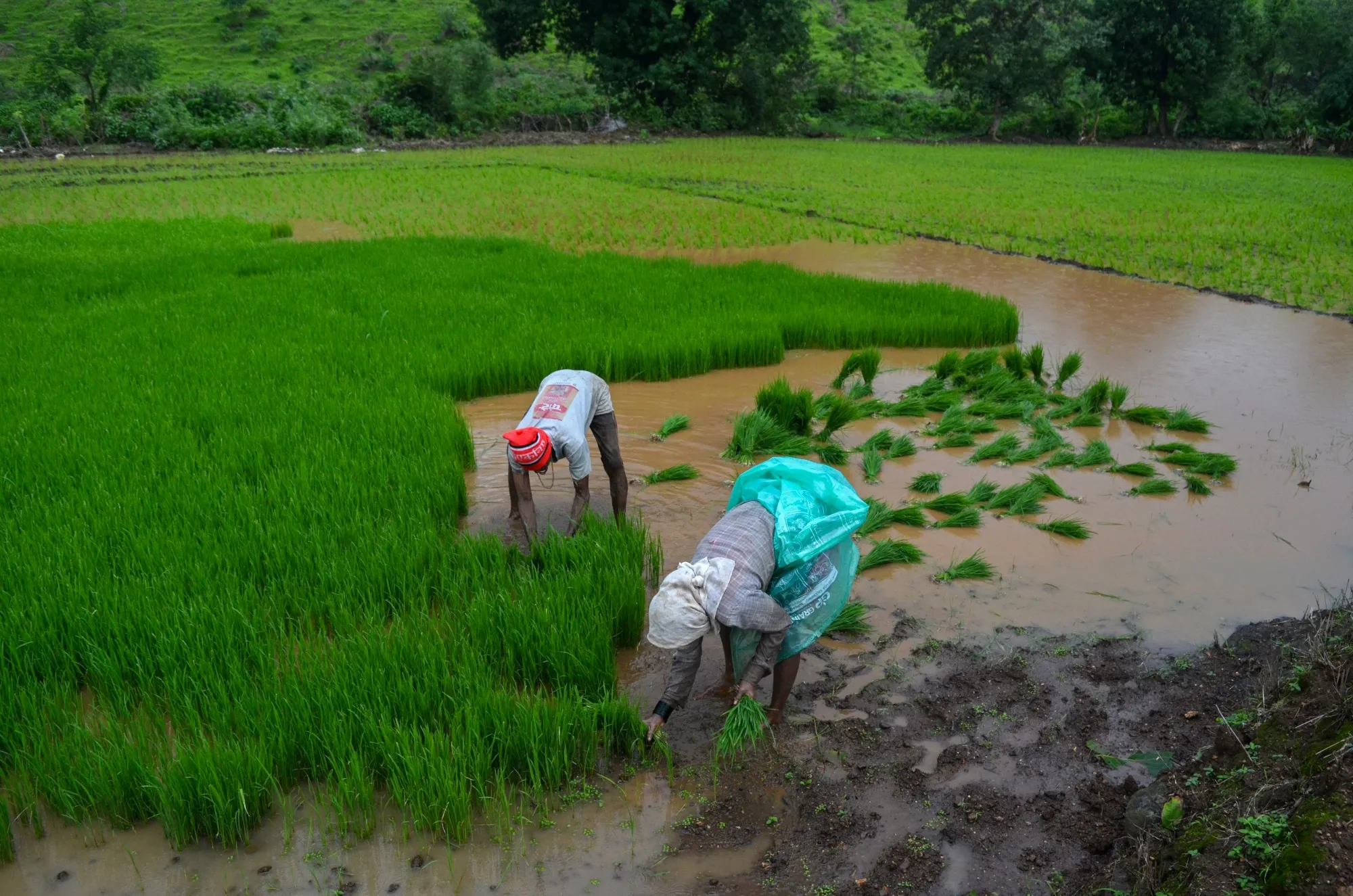
A powerful El Niño has left India with its weakest monsoon in more than a decade, threatening crops, draining reservoirs and raising food-price risks in the world’s most populous nation. Rainfall during the June to September monsoon season was 12.6% below the long-term average, according to the India Meteorological Department. The shortfall was the worst since 2015, when precipitation was 12.7% below normal.
The deficit and uneven distribution of rainfall threaten both the current harvest and the next crop cycle, increasing pressure on already accelerating prices of staples. Food inflation accelerated for a seventh straight month to 5.95% in August, the highest this year, and weak rains have threatened production of crops from rice to sugar cane and soybeans. Rainfall was normal in about 42% of districts, while 38% were deficient, said Mrutyunjay Mohapatra, director general of IMD.
Strong El Niño conditions are prevailing over the equatorial Pacific Ocean and will strengthen, peaking in November, with rainfall seen below normal across most of the country through December. Emerging supply concerns have prompted the government to slash import taxes on edible oils and allow duty-free raw sugar purchases to curb domestic prices ahead of the festival season. Rising inflation could push the central bank to raise policy rates for the first time since February 2023.
The monsoon is a lifeline for hundreds of millions of Indian farmers, delivering most of the country’s annual rainfall. Dry weather has depleted reservoirs, putting hydropower generation on course for a fifth straight monthly decline in September and forcing coal plants to run harder. Lower stored-water levels could threaten the next harvest.