
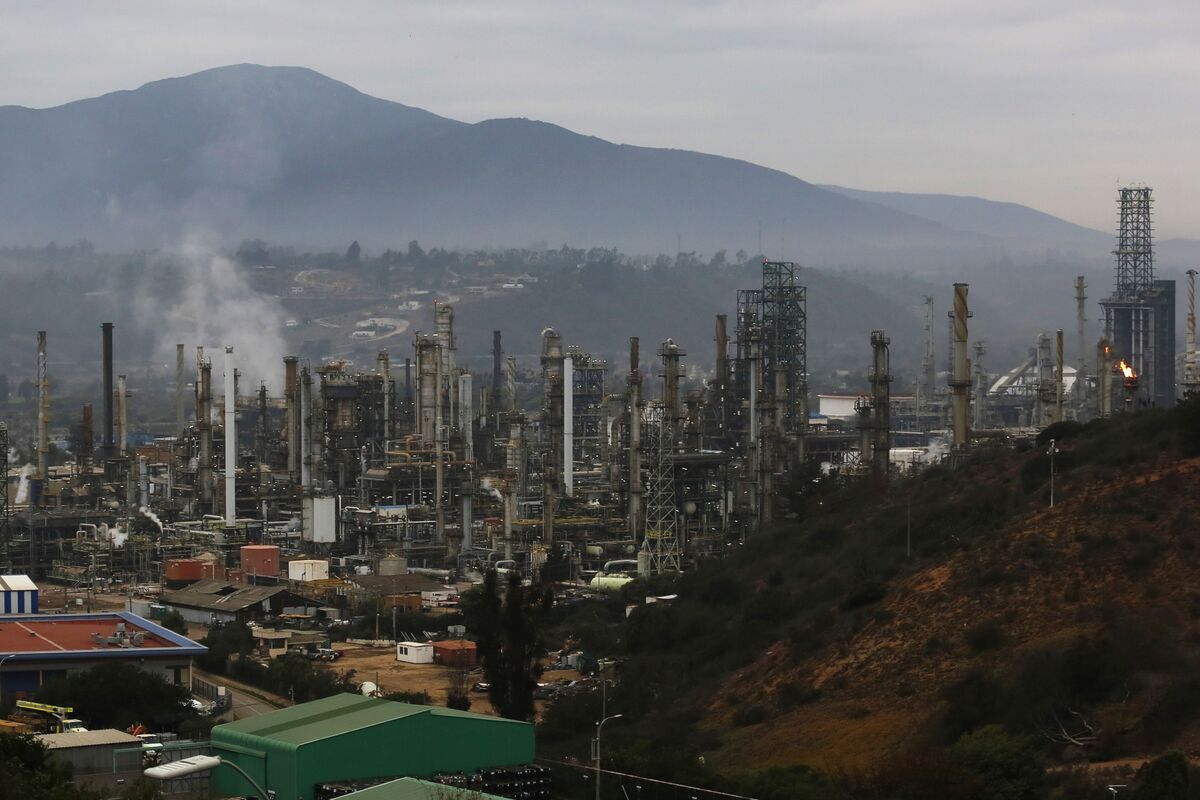
Chile’s state oil company will shut part of the country’s largest oil refinery for maintenance, threatening to worsen the diesel crunch with global fuel markets never tighter. Empresa Nacional del Petroleo is set to carry out a 40-day maintenance at the Bio Bio refinery starting on Oct. 1, Alejandro Ochoa, general secretary at refinery contractors federation Fetracon, told Bloomberg. Work will involve the smaller of two crude units and plants that produce and upgrade diesel to meet road-fuel standards. Bio Bio produces about a third of all fuels consumed in Chile.
The work comes as the US, Chile’s top supplier, weighs imposing a ban on diesel exports to combat high prices ushered in by the Iran war and Ukrainian strikes on Russian refineries. The supply squeeze has driven retail prices higher across the globe, prompting governments to announce subsidies and tax cuts to cushion the impact on consumers. The Bio Bio refinery will carry out preventive work at seven plants starting in October, a spokeswoman said in response to questions. Units that are not involved in the maintenance program will operate normally, she said.
In Chile, private importers of diesel have started reaching out to traders looking for non-US supplies from Japan and South Korea, according to people with knowledge of the situation. The two countries have free-trade agreements with Chile, giving them an advantage over other suppliers, said the people, asking not to be named discussing private information. Chile, along with Brazil and Mexico, are the largest diesel importers in Latin America.
Last week, Chile’s Energy Minister Ximena Rincon told Radio Bio Bio that the government is in talks with fuel distributors about the possibility of buying diesel from places like Japan and China in case the US imposes a ban on exports. Enap produces enough diesel to meet about half of the country’s domestic consumption, with most of the remainder imported from the US, according to data from maritime intelligence firm Kpler Ltd. Most of it is consumed by Chile’s copper mining industry, which is the backbone of the country’s economy.