
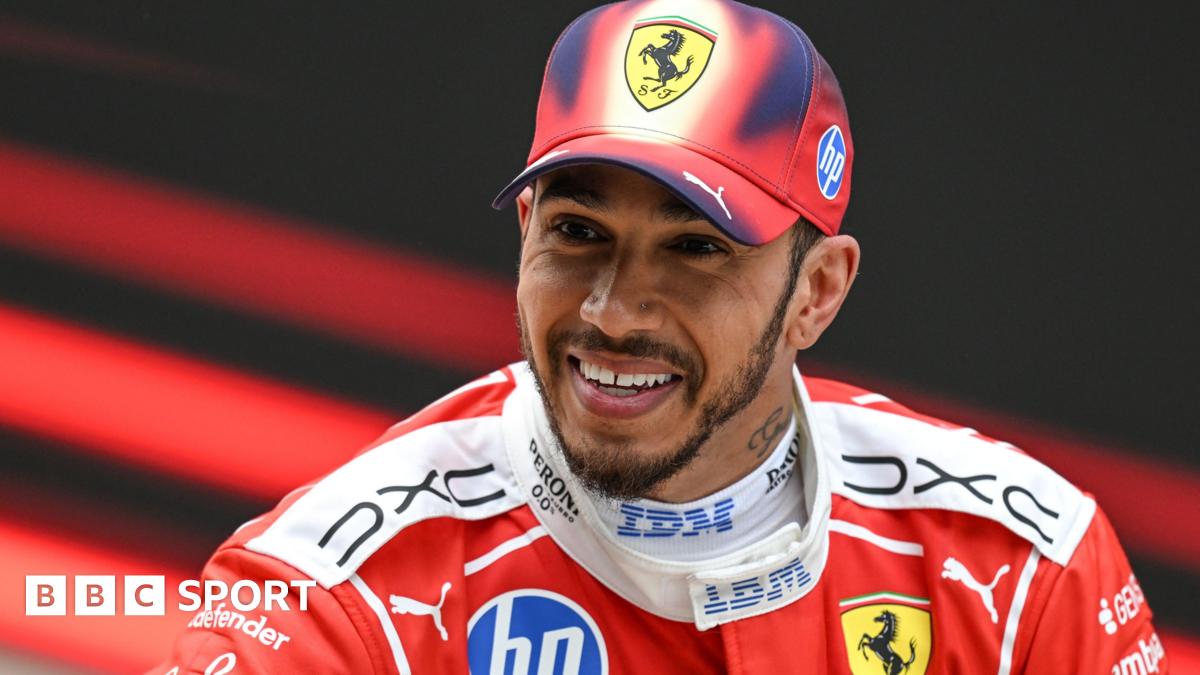
Lewis Hamilton has shown a remarkable turnaround this season, crediting intense off-season training and a renewed mental focus. The seven-time champion, who struggled with last year's car dynamics, now praises the 2025 Ferrari's responsiveness, saying, "I feel back to my best, mentally and physically." Analysts suggest the car's aerodynamic design better aligns with Hamilton's aggressive driving style, allowing him to leverage late braking and rotational techniques he'd been forced to suppress in previous seasons.
Ferrari's dominance in race starts stems from technical adjustments to their power unit. Unlike rivals, Ferrari opted for a smaller turbocharger, prioritizing low-speed responsiveness over peak power. This design choice enables quicker acceleration out of the grid, a critical edge in the turbo-limited 2025 regulations. Mercedes, by contrast, relies on a larger turbo that struggles to spool up rapidly, forcing drivers into slower starts. The rules prohibiting MGU-K assistance until mid-race have amplified these disparities.
The 2025 F1 regulations have sparked heated debates over energy management and driver experience. While racing spectacle has improved - with Toto Wolff calling recent races "good" - energy constraints remain problematic. Current rules cap energy recovery at 250kW during flat-out driving but allow 350kW during deceleration. Proposals to equalize recovery rates could materialize at the Miami GP, though deeper changes to the hybrid power split may wait until 2026. Critics argue the focus on electrical systems has diluted the sport's mechanical purity.
Hamilton's resurgence and Ferrari's technical gambits highlight the ongoing tension between innovation and tradition in F1. As the season progresses, teams will continue refining strategies around the hybrid powertrain's limitations. For now, the 2025 cars have delivered thrilling midfield battles and strategic complexity, even as purists question the hybrid era's long-term viability.
Source: BBC Sport · Summarized by HeadlinesBriefing