
French government bonds dropped after a weekend of violent unrest, highlighting tension between protesters over the cost of living and a government unable to pay to keep the peace. The nation's debt underperformed European peers, sending the spread between the French 10-year yield and its German equivalent wider by as much as eight basis points, to 146 basis points -- the highest in two weeks. The gap to Italian yields reached a fresh record.
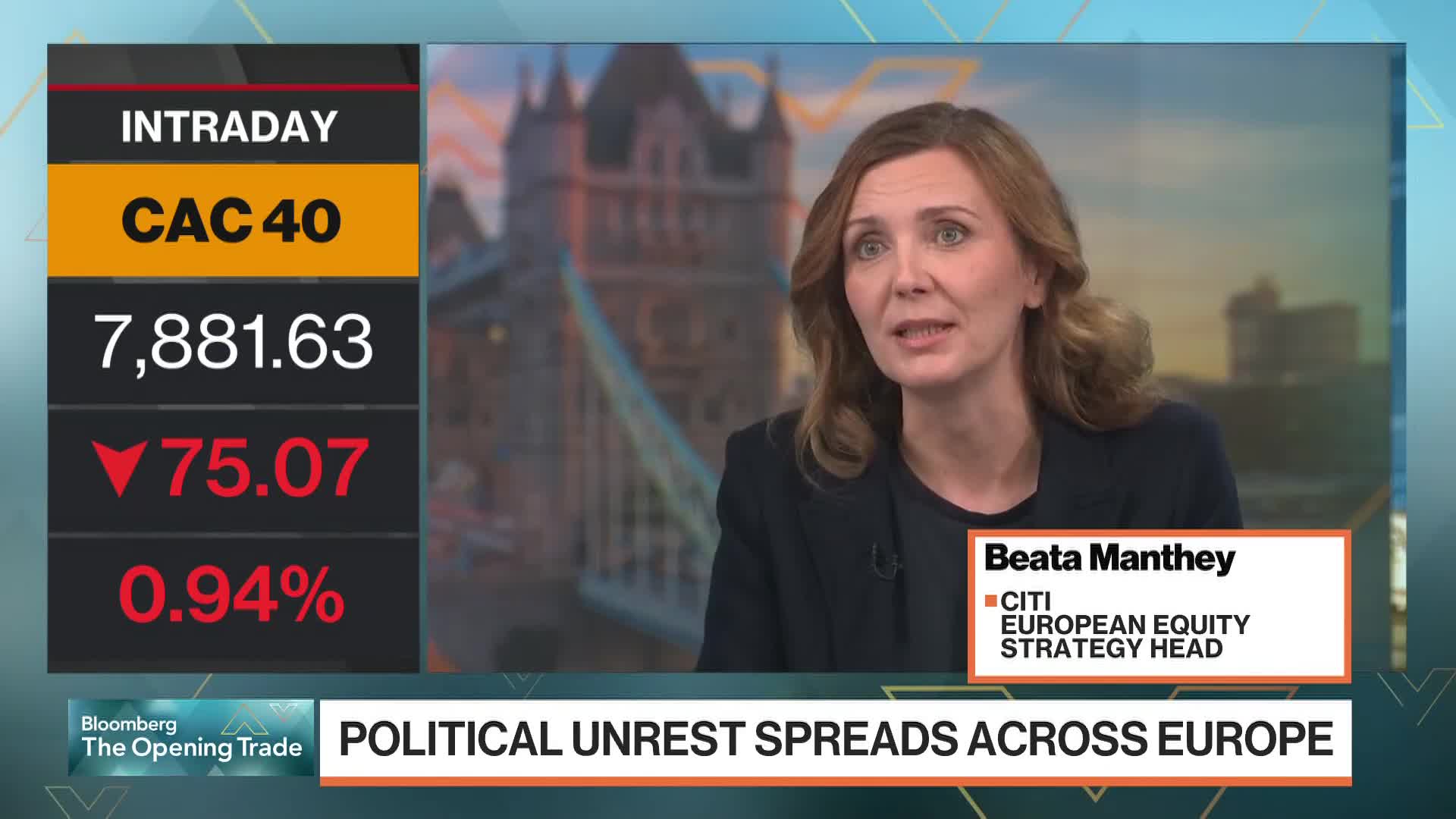
The euro weakened and the CAC 40 stocks index fell 1.2%. France was gripped over the weekend by attacks on public buildings, shops and restaurants. Yet a debt mountain and a budget deficit among the largest in the euro area mean the government cannot simply increase spending to appease the public. "France today is confronting a social crisis, an immigration crisis, an energy crisis, an economic crisis and a fiscal crisis," said Louis-Vincent Gave at Gavekal Research. "All this at a time when the French president is in office, but not in power.
Nothing that occurred this weekend seems to point the way toward a higher euro, or lower French bond yields." Investors see French government bonds as riskier than Germany's. The French-German yield spread is approaching 150 basis points, pushing into territory associated with the euro-area debt crisis. The protests come as French politicians debate the proposed budget for 2027, featuring 43 billion euros in measures to bring down the deficit.
Reaching a compromise appears difficult in a deeply divided parliament, and could prove harder with a presidential election six months away. The euro fell as much as 0.5% to $1.1183. Moody's review of France's sovereign rating on Friday will provide another signpost for the country's fiscal health, with a downgrade seen as the more likely next move.
Source: Bloomberg Markets · Résumé par HeadlinesBriefing