
Nine promotion histories, a Python replay, and a four-variant prompt with an UNKNOWN option test whether a release assistant tracks state or just reads the last line. The post How to Test LLM State Tracking With a StateBench-Style Deployment Log appeared first on Towards Data Science. Jackson Petty, William Merrill, and Ashish Sabharwal describe State Bench in their November 2, 2026 preprint.
The authors present a sequence of updates to named variables and derive simpler sequences while keeping the number of variables, the number of distinct values and the positions of the updates fixed. Updates in the same positions in two sequences may require different work from a reader (or model) interpreting the sequences. Four frontier models generated the final values of the variables.
On accuracy, each model scored 13% or less on the longest sequences in the most general class of the researchers' synthetic benchmark. The same deployment may be logged in two ways. The entry set production to b17 gives the build ID.
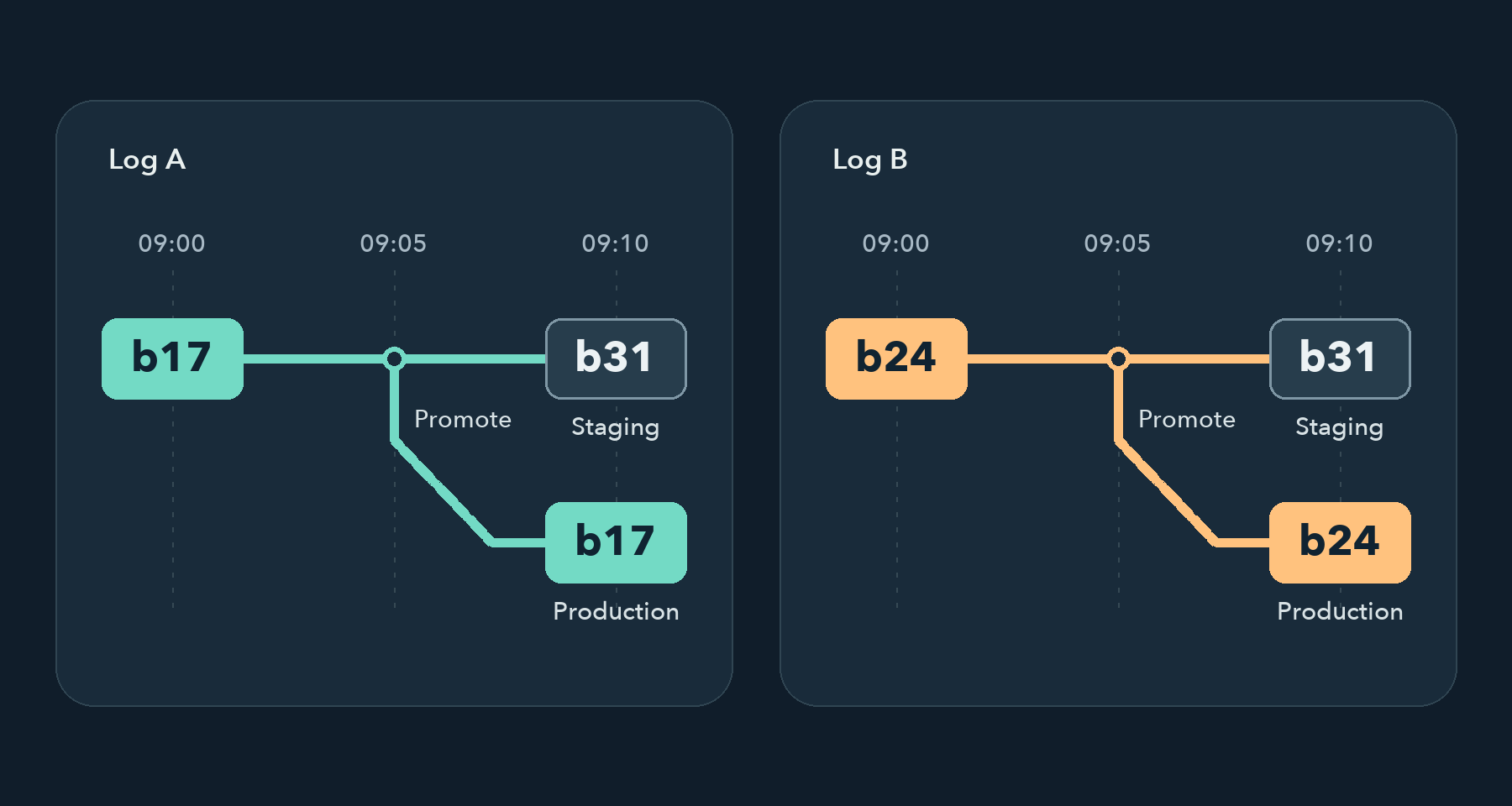
The entry promote staging tells us to look for the build in staging and states when to stop looking. Using the builds b17, b24, and b31, form nine ordered pairs. Both methods score 9 out of 9 on explicit writes.
Replaying the copy scores 9 out of 9. Looking up staging at question time scores 3 out of 9 on copies. In each of those three histories, staging finishes on the build that went live.
In all six cases where staging changes after the copy, the shortcut fails to score any points.
Source: Towards Data Science · Summarized by HeadlinesBriefing