
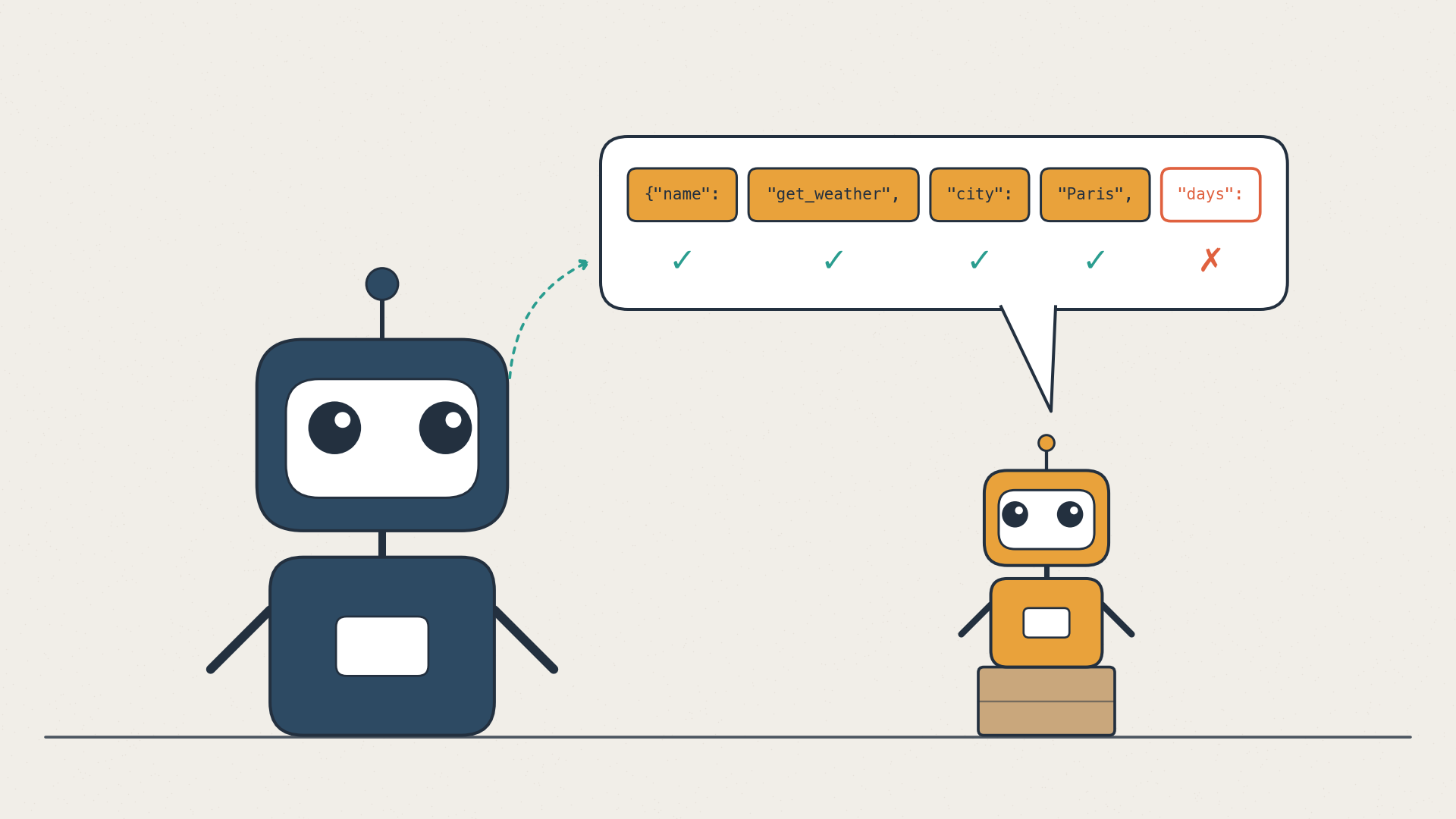
On my laptop, adding a small draft model made tool calls, JSON, and code 1.4 to 1.7 times faster end to end. It made replayed multi-turn agent steps with 4,000-token contexts 6% slower. The difference is prefill versus decode: speculative decoding only speeds up decode, while those agent steps spent 77% of their time in prefill.
If you run a local model behind an agent framework, loading a draft model is one flag on llama-server. For agent loops, acceptance rate is the wrong number to watch. Once I turned on the prompt cache, the same draft model made agent steps 10% faster instead of slower, though the cache did most of the work.
A large target model produces one token per forward pass. A small draft model guesses the next k tokens, and the target checks all k in one pass. Gains depend on acceptance rate and verification cost. Everything below comes from 29,854 timed requests across Qwen3, Llama, llama.cpp, and MLX, plus 832 from the prompt-cache follow-up. The mean W5 prompt is 4,085 tokens; the mean answer is 48.
Source: Towards Data Science · Summarized by HeadlinesBriefing