
In Roman mythology, Janus, the god of gates and transitions, is shown with two faces: one looking backward at past lessons and patterns, the other forward to future change. This double vision matters when building software with AI coding assistants. Today, a working prototype can be created in a few hours, and code is cheaper to generate and easier to modify. But this speed creates a new risk: when code is produced quickly without clear structure, projects become difficult to understand, maintain, and extend.
For data scientists, this shift is significant. Applications that once required substantial software engineering support can now be prototyped through natural language and coding agents, making the move from notebooks to APIs and deployed applications more accessible. Generating a working application, however, is not the same as engineering a system that can evolve. A coding agent may place logic wherever it is easiest in the moment, inside an endpoint, a framework-specific object, or a helper function, without regard for responsibility.
The author argues that AI projects need this Janus-like perspective. Looking backward, teams should capture hard-earned lessons: separate responsibilities, avoid duplicated setup, keep contracts clear, test core logic, and stop external tools from leaking into every part of the application. Looking forward, projects need flexibility to accommodate new requirements, technologies, and capabilities without a full redesign.
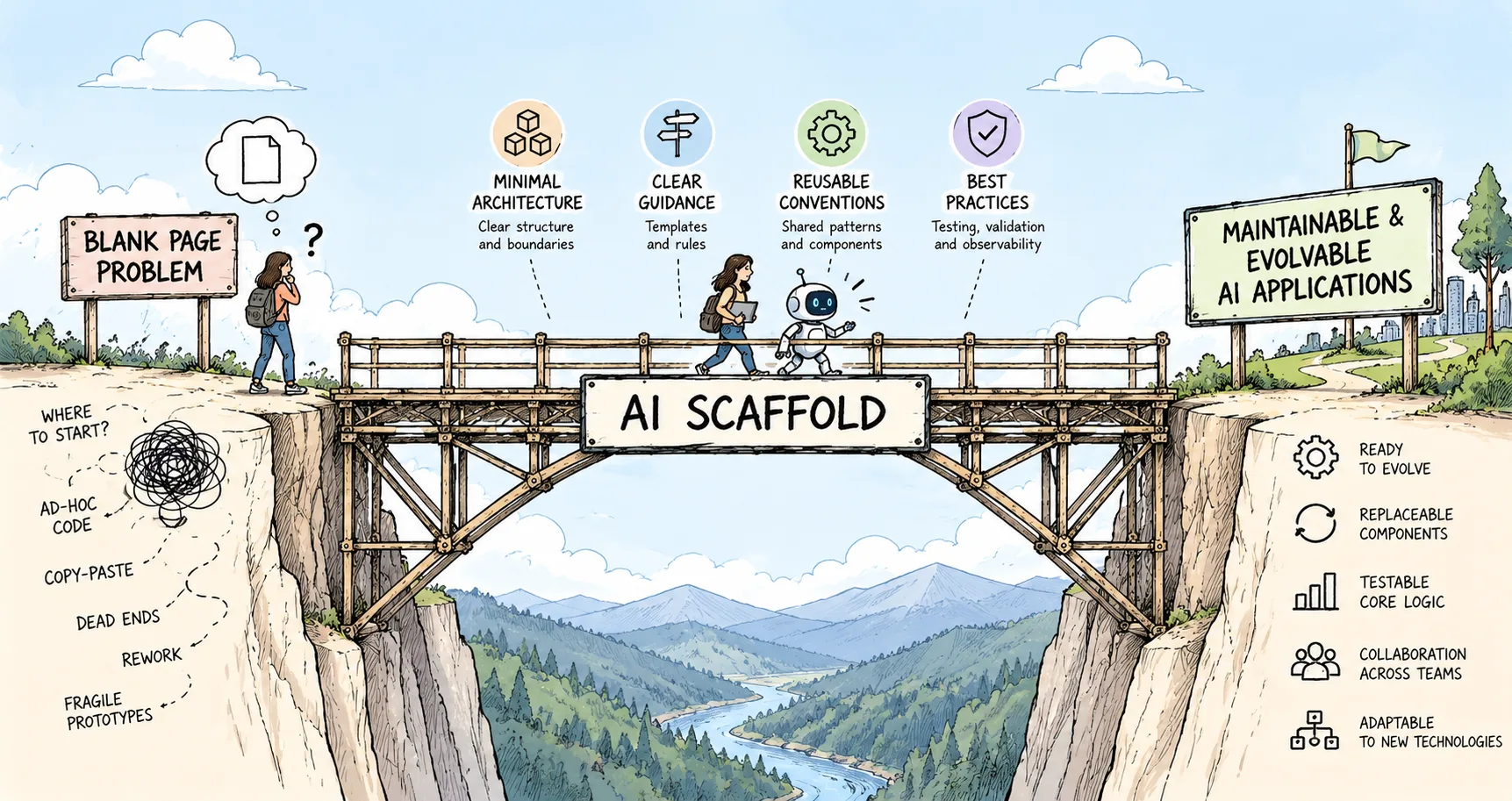
The goal is not architecture for its own sake but making fast development safer and more repeatable. A baseline defines the minimum architectural decisions that should not be reinvented in every project, including tool-agnostic code, replaceable infrastructure, and testable core logic. When packaged as a reusable template, this baseline becomes a scaffold, giving teams a practical starting point and helping them move faster without creating a one-off structure each time.
Source: Towards Data Science · Summarized by HeadlinesBriefing