
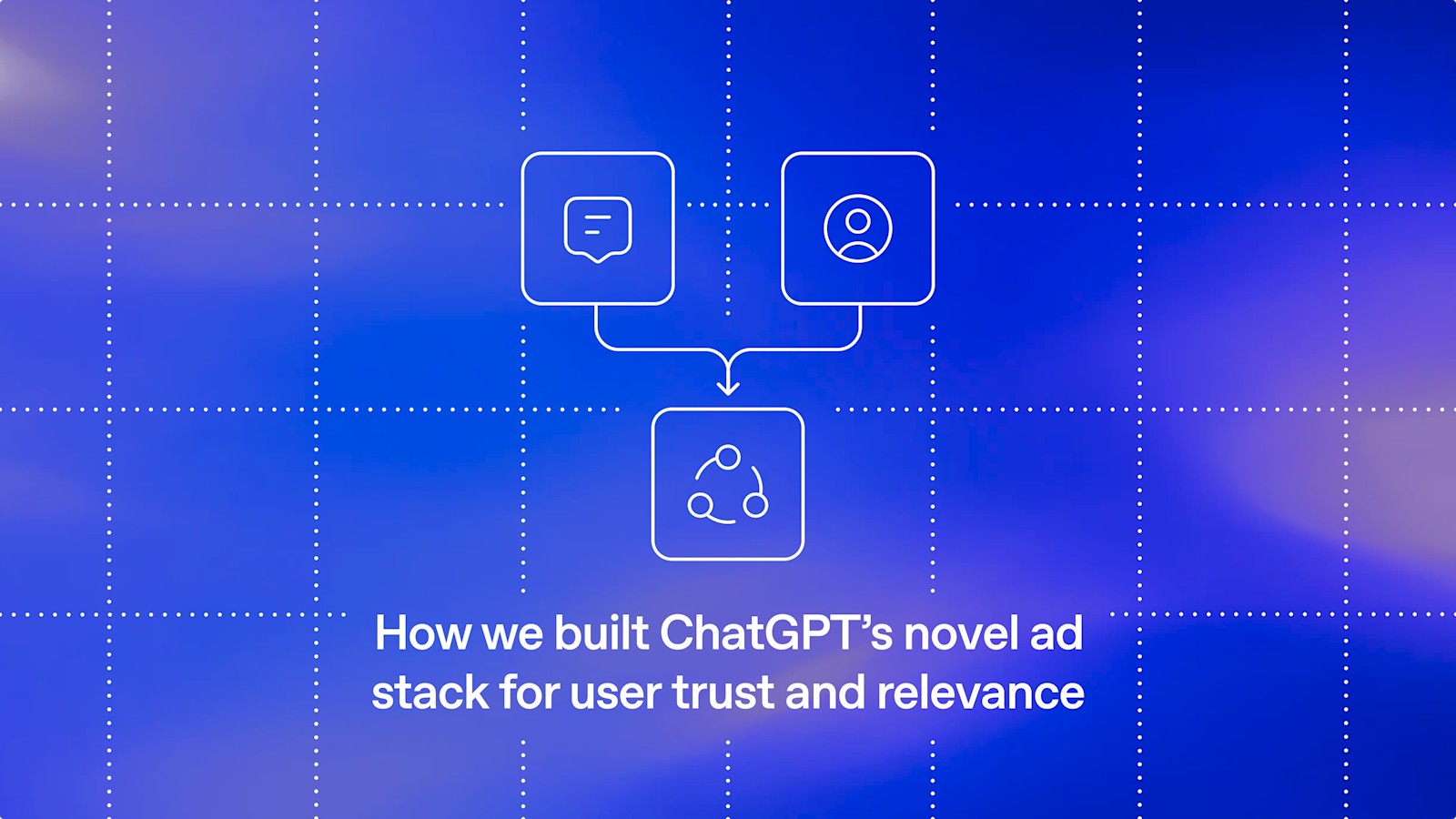
Traditional advertising systems respond to discrete units of user intent, such as a search query or page view. ChatGPT conversations work differently. User intent develops across multiple turns, often without a clear moment for an ad, so OpenAI built a bespoke ads delivery system to handle this new paradigm.
The new ad stack is powered by a custom, post-trained frontier LLM that uses tool calls for retrieval, ranking, relevance evaluation, and auctions. OpenAI made three key design decisions. First, it implemented stateful ad sessions that remember information across turns and conversations. Second, it relies on the LLM's tool call architecture to interpret context and underlying intent before selecting and ranking ads. Third, it runs ad selection in a separate service from ChatGPT's answer generation, so ads do not influence answers and ChatGPT keeps its neutral voice.
The design reflects the way people use ChatGPT. Users arrive with goals such as planning a trip, choosing business software, or learning a hobby. For example, a conversation about running may later turn to shoes, and the commercial meaning shifts with each constraint. Acting on the first message could match the wrong intent and hurt the user experience.
OpenAI says the system delivers results at scale. ChatGPT Ads reached $1 billion in annualized revenue run rate less than 200 days after launch, and more than 100,000 advertisers have run ads on the platform since then.
Source: OpenAI Blog · Summarized by HeadlinesBriefing