
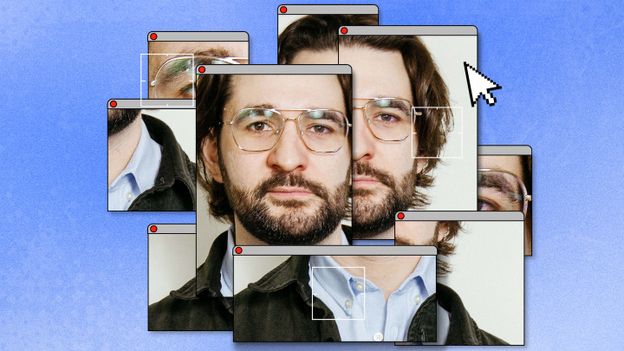
Senior technology journalist Tom Germain conducted an experiment to see if his aunt could distinguish him from an AI deepfake during a video call. His aunt initially suspected AI, noting his voice lacked expected inflection, but hesitated, giving him about 90% certainty he was real. This mirrors the struggle of Israeli Prime Minister Benjamin Netanyahu, who recently tried to prove his humanity after internet rumors falsely claimed he was dead due to an AI-generated glitch in a video showing a sixth finger. Experts, including digital forensics professor Hany Farid, analyzed Netanyahu's follow-up videos and confirmed they were real, attributing the initial glitch to light reflection. However, Netanyahu's attempts ultimately failed to convince skeptics, highlighting the difficulty of proving authenticity.
Farid, who also examined the author's call, concluded there's no foolproof method to definitively prove one's humanity during a video chat. He stated that even with careful observation of background shadows or note-taking habits, the distance between caller and expert (Berkeley vs. New York) means the caller could be faking it. This isn't just a theoretical concern; AI-powered deepfake scams have surged, with AARP reporting a 20-fold increase in such frauds between 2023 and 2025. High-profile victims include the British engineering firm Arup, which lost $25 million (£18.7 million) when attackers used a deepfaked CFO to trick an employee. Experts warn the problem is escalating rapidly.
The only practical solution proposed by experts like Farid is the adoption of secret codewords between trusted individuals. Families, business partners, and colleagues should establish a shared, unique phrase used only in emergencies to verify identities. While this method isn't foolproof, it provides a basic layer of authentication against AI impersonation, a necessary step in the face of increasingly convincing AI fakery.
Source: Hacker News · Summarized by HeadlinesBriefing