
PowerPC didn’t die when Apple switched to Intel in 2006. Motorola spun off its chip business as Freescale, which put PowerPC cores into systems on chips for routers and cars. A decade after NXP bought Freescale, those chips are still in production in automotive, networking and aerospace hardware. If discontinued, tens of thousands sit at surplus suppliers.
The author believed a new Mac could be built from an MPC83xx chip, which has a PowerPC 603e core in the same family as pre-iMac Power Macs. A datasheet read showed nothing stopping Mac OS from running. Late-90s Mac architecture is surprisingly hackable; people have run Mac OS 9 on a Nintendo Wii. The only obstacle was finding an old Freescale development kit on eBay. A saved search hit, and it works.
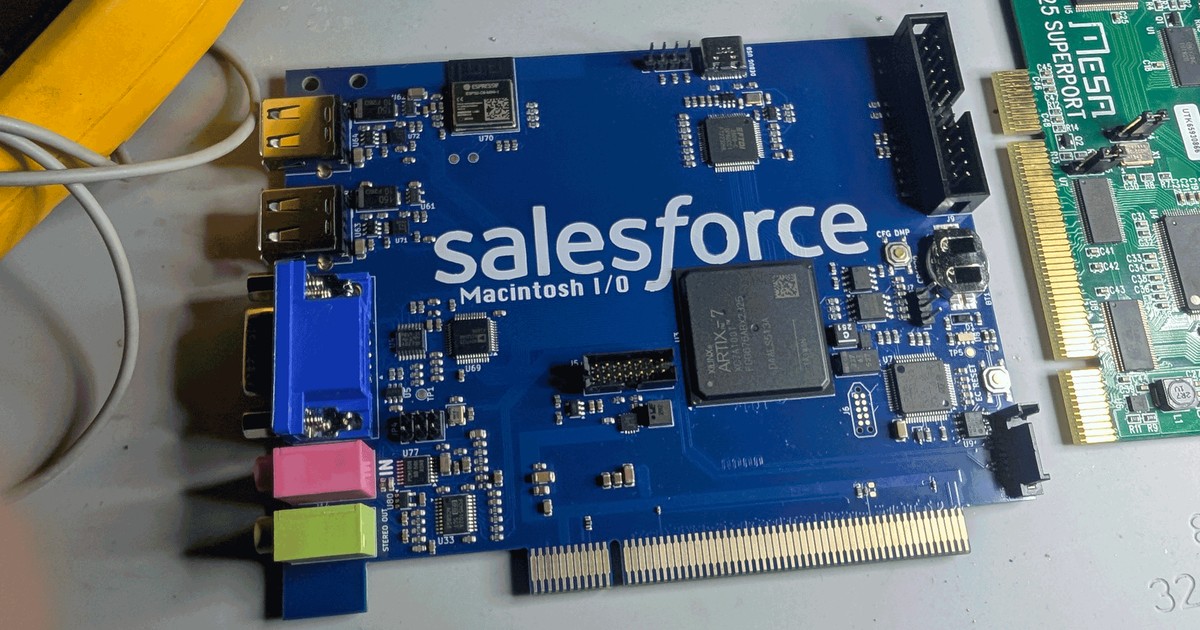
The project is a Mac I/O controller: Apple-specific functions rebuilt in an FPGA on a PCI card, called Salesforce. Apple named I/O chips after transit centers, and Salesforce is technically a transit center. The Freescale chip already handles CPU and northbridge duties; the FPGA supplies what’s missing.
A New World ROM Mac boots through Open Firmware, which tests hardware, builds a device tree and reads the Mac OS ROM file’s boot script. The Trampoline bridges Open Firmware and Mac OS; booting 9.2.2 takes about 2,100 questions before jumping into the Nano Kernel.
Source: Hacker News · Summarized by HeadlinesBriefing