
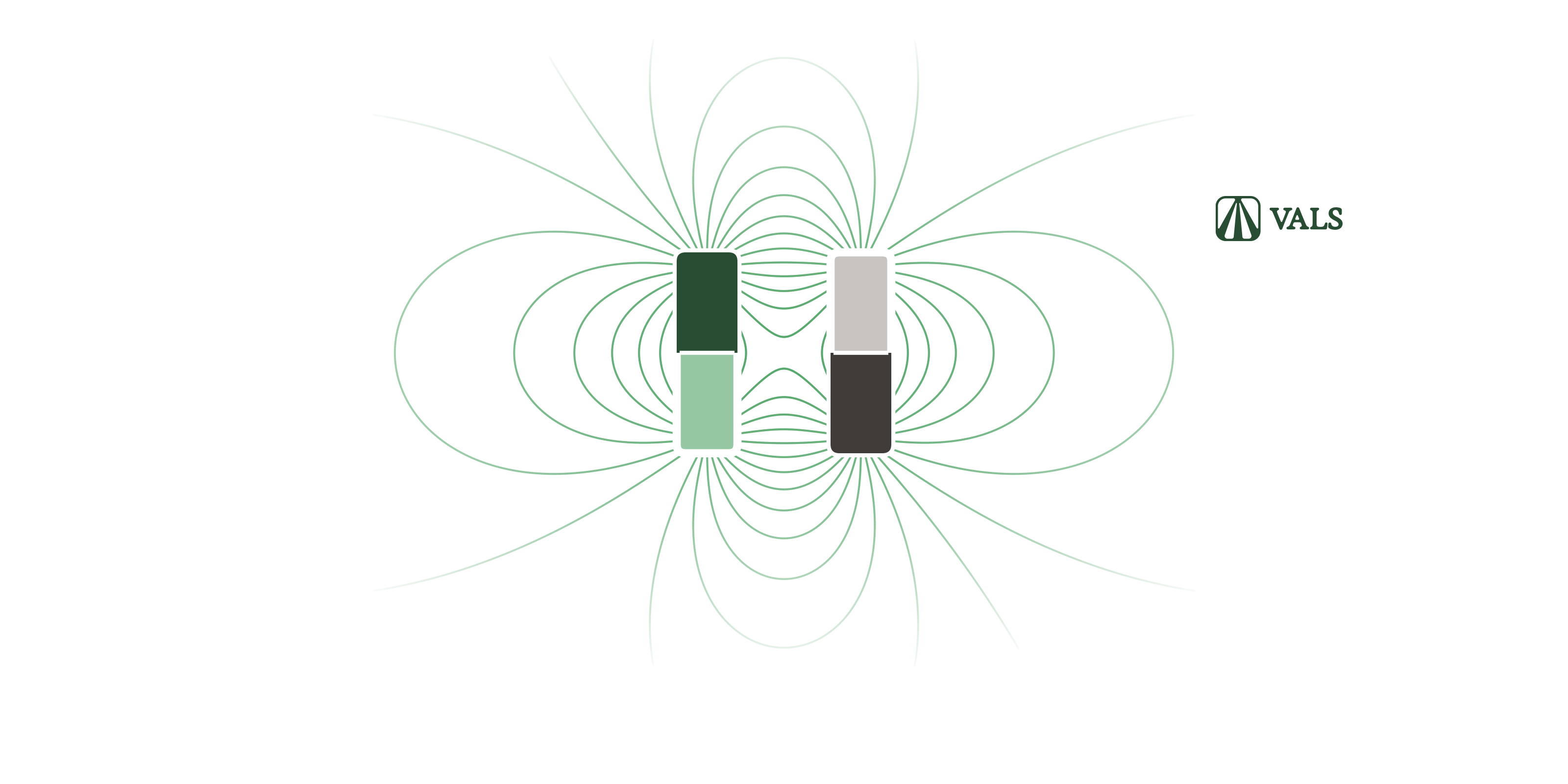
We’re all used to two types of magnet. The common one, the fridge magnet, is ferromagnetic — its atomic magnets all point the same way (up or down), adding their magnetic effects. The less well known one, the antiferromagnet (AF), has neighbouring atomic magnets that point opposite ways and exactly cancel out magnetically. For a long time, there’s been an intense drive in computer memory research to create materials in between these two extremes. Today, I’ll share what we found. A team of AI agents and I designed one candidate magnet and found another, first made in 1999, that our calculations predict has the properties we were after.
But before diving into the details, let me first lay out a magnet primer that takes all of 90 seconds. Each electron has a quantum mechanical property called ‘spin’, which is responsible for its magnetic moment. We use spin for storage in spintronics. The most prominent example is the hard drive read head. MRAM is another type of spintronics that stores binary information in a non-volatile way.
Ferromagnetic materials have a macroscopic magnetic field that leaks out from the surface, which interferes with nearby materials and is difficult to control. Switching them is relatively slow and consumes a lot of power. In antiferromagnets, the lack of macroscopic field allows us to pack materials closer together, enabling higher performance. AF materials are also about a thousand times faster to switch.
This brings us to a third type, Luttinger compensated (LC). LC materials are antiferromagnets where spin-up and spin-down atoms have the same magnetism, making net spin moment zero. However, the up and down atoms sit in inequivalent environments, such as different elements or the same element in two different kinds of site. The name comes from Luttinger’s theorem.
Source: Hacker News · Summarized by HeadlinesBriefing