
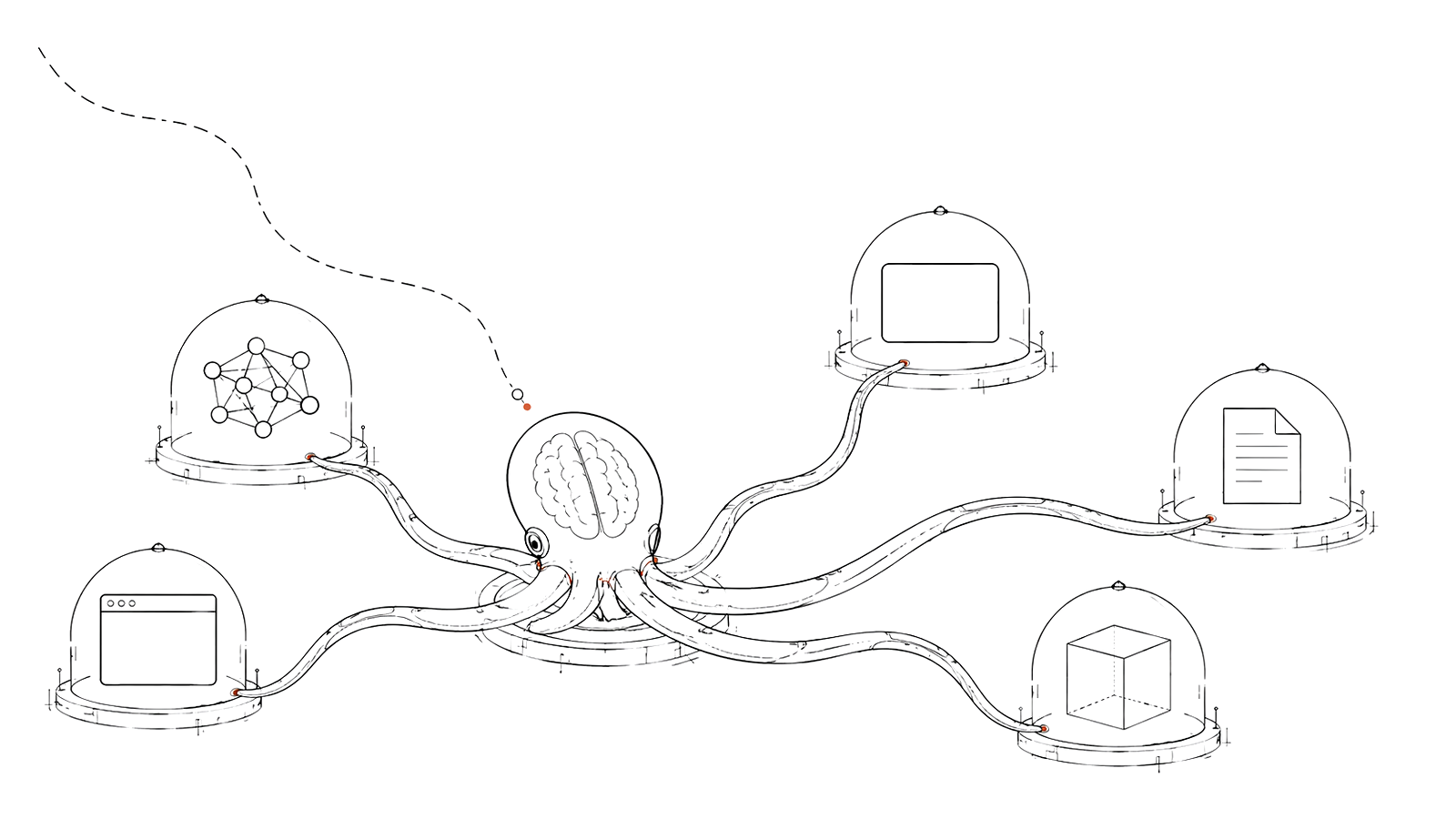
Geoff Goodman introduces the 'octopus architecture' for AI agents through his Tork Bot project. The system features a central coordinating brain that dispatches work to semi-autonomous sub-brains, or 'appendages,' each managing their own context. These appendages include static lanes like Curator, plugin-contributed lanes such as Google Workspace integration, and sandbox snapshots for isolated workflows.
Goodman identified three competing pressures driving this design: responsiveness to user interactions, capability for complex tasks, and continuity of personality. The architecture collapses all platform activity—threads, channels, and surfaces—into a single foreground conversation. This controversial bet aims to enable cross-platform intuition, allowing agents to seamlessly continue work across Slack and GitHub without artificial boundaries.
Each appendage receives its own context and communicates inter-lane through text messages or shared filesystem references. The foreground lane stays lightweight with stable prompts, while appendages handle the messy work of tool calls, I/O operations, and complex workflows. Asynchronous compaction prevents context bloat, with curator promoting durable elements into memory.
The approach delivers faster mean-time-to-interaction by keeping the central brain available while appendages process lengthy tasks. Better API cache hits and reduced cognitive overhead emerge from this separation of concerns, making multi-agent systems both more efficient and more intuitive.
Source: Hacker News · Summarized by HeadlinesBriefing