
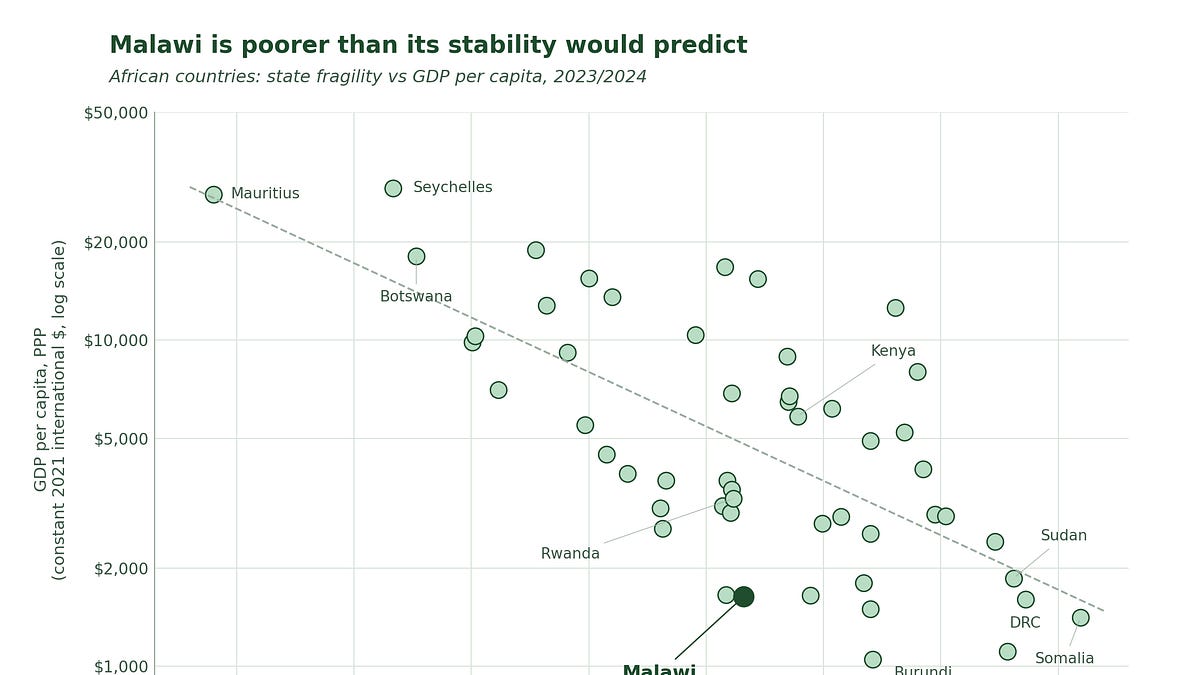
In 1994, Rwanda's post-genocide GDP per capita was $5,751 while Malawi's stood at $976. Fast-forward thirty years, and the comparison tells a stark story: Rwanda's economy reached $3,265 per capita while Malawi's contracted to just $1,634. The country's GDP has fallen for three consecutive years despite receiving aid per capita 2.5 times the global average.
Malawi presents a unique development puzzle. Unlike many African nations, it has enjoyed peaceful multiparty elections since 1994, avoided civil conflict, and maintained stable democratic transitions. Yet 70% of Malawians live on less than $2.15 daily, and only 15% have electricity access. Around 80% work in subsistence agriculture on plots smaller than one hectare. The country receives substantial donor funding but struggles to translate aid into sustained growth.
Traditional explanations fall short. Colonial history, geography, and institutional quality all play roles, but Malawi's relative stability and democratic credentials exceed many faster-growing neighbors. Agricultural productivity remains low, manufacturing barely exists, and exports concentrate in declining tobacco markets. The real mystery isn't why Malawi is poor, but why decades of peace, aid, and democratic governance haven't sparked the transformation seen elsewhere.
Compare this to Rwanda's remarkable recovery from genocide—now achieving 4.5% annual growth despite its traumatic past. Malawi's case challenges conventional development wisdom, suggesting that peace and aid alone cannot overcome deeper structural barriers to industrialization and economic diversification.
Source: Hacker News · Summarized by HeadlinesBriefing