
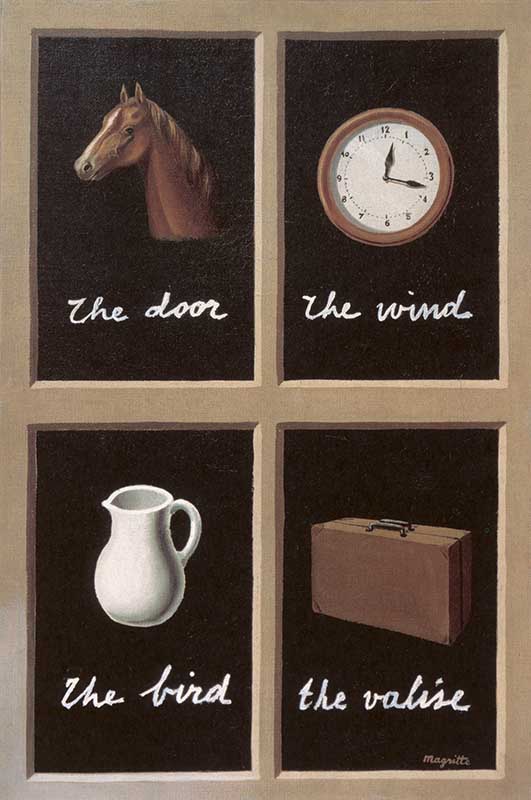
John Berger opens *Ways of Seeing* with a foundational argument: seeing precedes language. A child recognizes the world visually before speaking, and vision establishes our place in it. Words explain but never fully capture what we see — the sunset we witness contradicts the knowledge that Earth rotates. Berger cites Magritte's *The Key of Dreams* to illustrate the permanent gap between perception and language.
Belief shapes sight. Medieval fire carried theological weight tied to Hell; today it means something else. Love, too, reveals vision's completeness beyond words or embrace. Seeing is not passive stimulus-response; it is an active choice. To look is to select, bringing the world within reach. Vision is reciprocal — we see and know we are seen — making dialogue an attempt to verbalize this mutual visibility.
All images are man-made reproductions detached from their original time and place. Even photographs reflect the photographer's choice among infinite sights. Images first conjured absent presences, then outlasted them, preserving how things looked and how they were seen. Every image embodies a way of seeing, yet our own perception filters that embodiment.
Source: Hacker News · Summarized by HeadlinesBriefing