
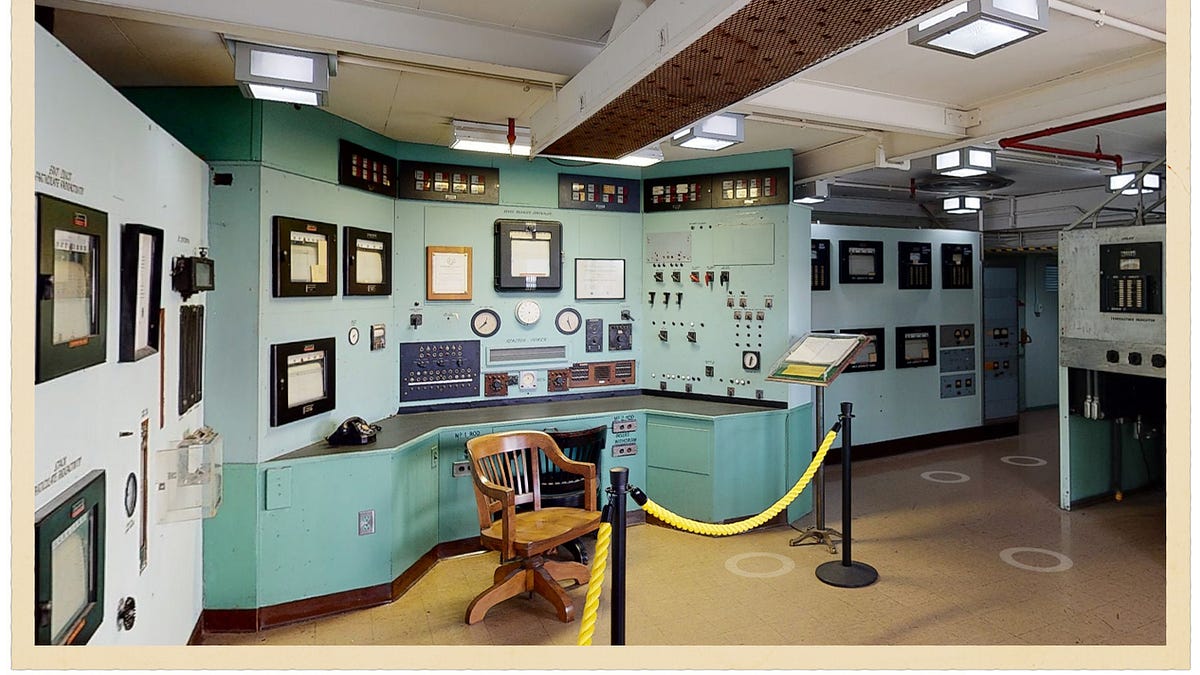
The seafoam green color in Manhattan Project control rooms wasn't arbitrary but stemmed from industrial color theory developed by Faber Birren during WWII. Working with DuPont, Birren created a master color safety code approved by the National Safety Council in 1944 to reduce accidents and increase efficiency in wartime production facilities.
The specific light green shade served a practical purpose - reducing visual fatigue for workers handling dangerous materials. Birren's research demonstrated that proper color application could lower accident rates and improve labor morale in industrial settings. His color codes assigned specific meanings: red for fire protection, yellow for caution, green for safety features, and light green for walls.
This systematic approach to color became internationally recognized and mandatory by 1948. The Hanford Site's B Reactor control room exemplifies these principles with medium green lower walls, gray machinery, and red fire devices. The design created non-distracting environments where precision and safety were paramount during the high-stakes Manhattan Project.
Source: Hacker News · Summarized by HeadlinesBriefing