
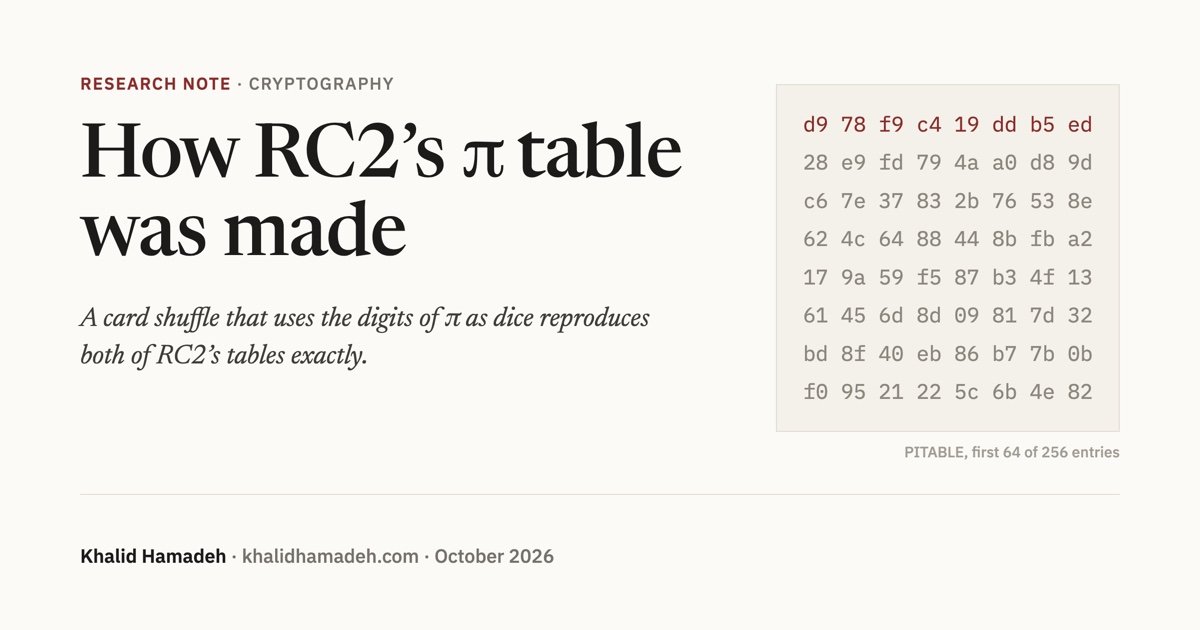
Research note · Cryptography The 256 numbers in the key schedule of Ron Rivest’s RC2 cipher were said to come from π, but the method was never published. A card shuffle that uses π’s digits as dice reproduces both of RC2’s tables exactly. Summary RFC 2268 says the 256-byte table PITABLE in RC2’s key schedule is “based on the digits of PI”, but gives no method, and a second table in the same document is given no origin at all.
Both are reproduced exactly by the Fisher–Yates shuffle, using the decimal digits of π as its source of randomness: each draw reads exactly three digits, and draws that would bias the result are discarded. PITABLE starts at the leading 3; the second table starts four digits later. Rivest’s MD2 hash uses the same shuffle but reads a varying number of digits per draw, which may be why the connection went unnoticed.
This is very likely how the tables were originally made, though how Rivest arrived at the rule is not documented. The question was raised in public by an engineer at RSA Data Security in 1996; an extensive search found no earlier public answer. The result has no bearing on RC2’s security.
Source: Hacker News · Summarized by HeadlinesBriefing