
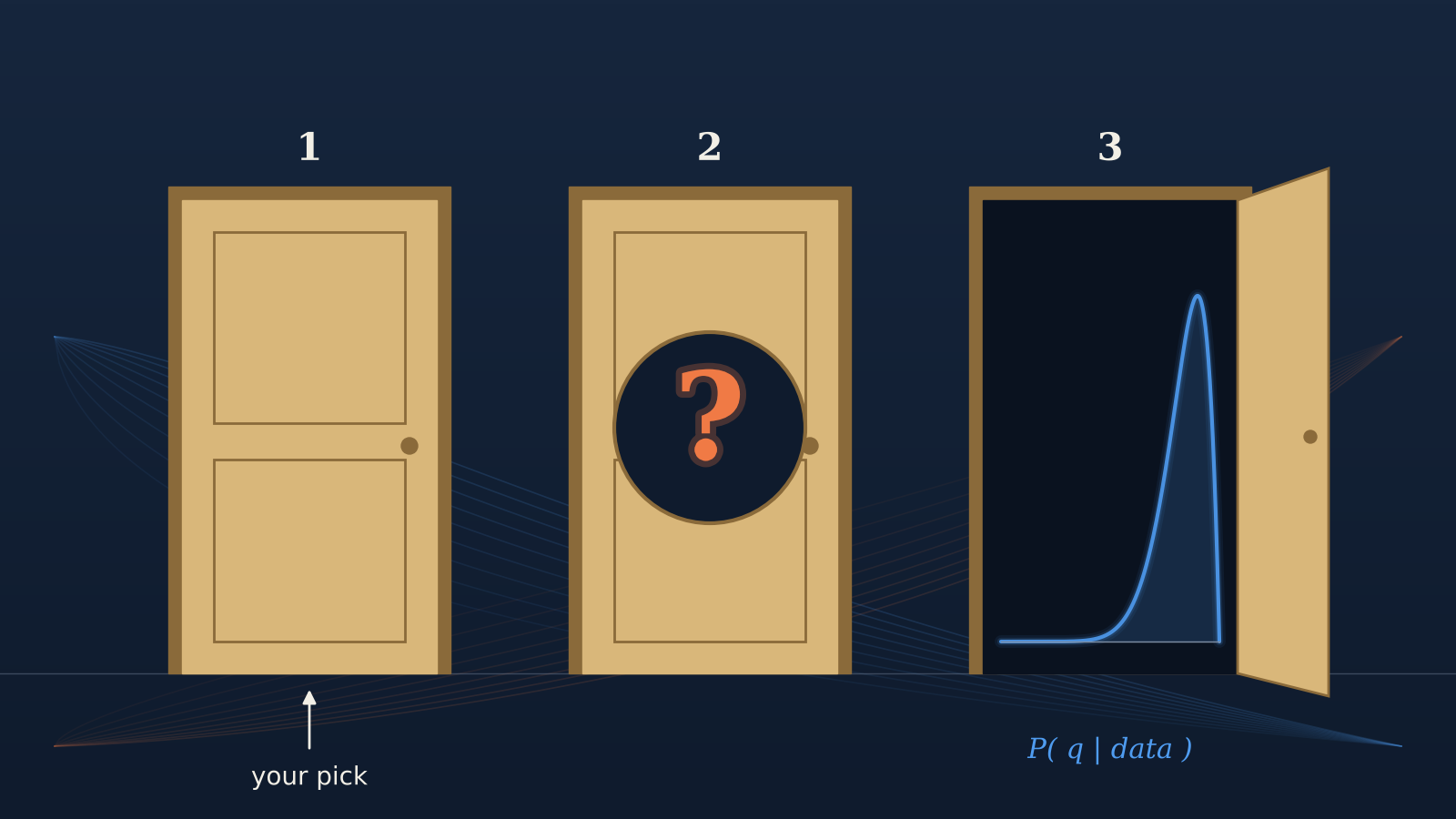
The standard Monty Hall solution—always switch for a 2/3 win chance—depends on a key assumption: the host knows where the car is and deliberately reveals a goat. This article argues that without verifying host behavior, the classic answer may not hold. It explores variants like the 'clumsy host' who opens a door at random, showing that if the car is accidentally revealed, those games are discarded, skewing results.
Using Bayesian reasoning, the author treats the host as an unknown, inferring their behavior from past episodes. The analysis shows that the 2/3 advantage arises not from prior probabilities but from the likelihood column, which encodes unverified assumptions about host actions. The piece connects this to broader issues in empirical research, such as selection bias, citing work by Richard Gill, Jeffrey Rosenthal, Andrew Gelman, and Miller and Sanjurjo, who frame Monty Hall as a modeling problem rather than a pure probability puzzle.
Source: Towards Data Science · Summarized by HeadlinesBriefing