
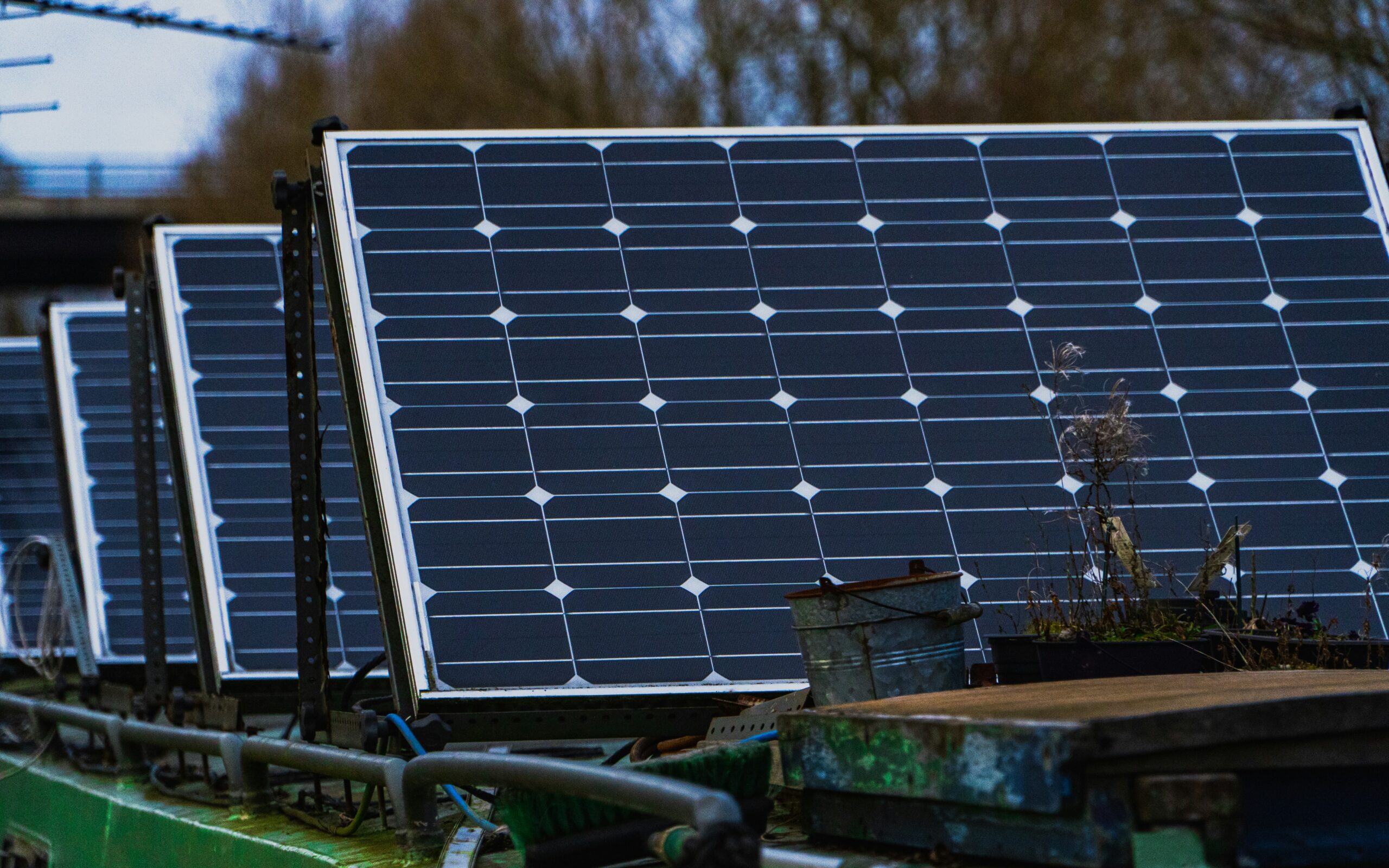
When Russian air strikes knocked out Ukrainian power plants across the country earlier this year, most of the Black Sea port city of Mykolaiv in southeastern Ukraine was unable to pump fresh water to the city’s housing blocs. But in an easterly suburb of Mykolaiv, drinking water flowed from kitchen taps thanks to a small off-grid solar field tucked inconspicuously into its midst. Paul Hockenos reports.
The two sets of elevated arrays and battery, funded by the Danish government, run the underground pump on its premises. ‘There’s just enough sun to make it work,’ says Olena Kondratiuk, project manager of Ecoclub. The city of Mykolaiv, only 60 kilometres from Russian-occupied territory, had been battered in 2022 when the Russian army launched its full invasion. The bombardment also impaired the central water supply system.
Five solar-powered desalination systems turn saline or polluted water into drinking water. The system, one of the largest of its kind in Europe, can supply 250,000 residents with 1.2 million litres of drinking water a day. Economists estimate that total damage to Ukraine’s energy sector now exceeds $56 billion.
US environmentalist Bill Mc Kibben argues that Ukraine’s autonomous power sources are ‘comparatively invulnerable to attack’. Smaller, ‘scattered’ generation sources with batteries and independent transmission grids, like the Mykolaiv fields, are not only harder for Russia to strafe, but they’re much more quickly repaired, too.
Source: Hacker News · Summarized by HeadlinesBriefing