
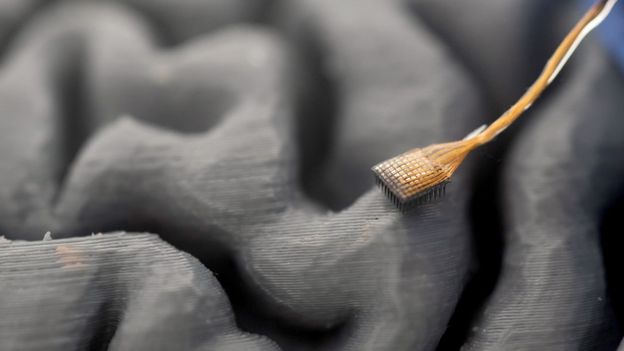
A paralyzed woman has regained the ability to communicate through thought alone, marking a breakthrough in brain-computer interface technology. The 52-year-old participant, identified as T16, used an AI-powered system to translate her imagined words into text on a screen after being unable to speak for 19 years following a stroke.
Stanford University researchers achieved this by surgically implanting tiny electrode arrays in her brain's motor cortex. The system decodes neural patterns associated with speech, achieving up to 74% accuracy for inner speech tasks. Similar studies at UC Davis have demonstrated real-time translation of attempted speech with 97.5% accuracy at 32 words per minute.
These advances build on decades of BCI research, from monkey neuron experiments in 1969 to recent commercial efforts by companies like Neuralink. While current technology cannot perfectly capture unfiltered inner speech, the progress represents the closest scientists have come to 'mind reading.' Researchers emphasize that practical applications for paralyzed patients are emerging, though challenges remain in achieving natural conversation speeds.
Source: Hacker News · Summarized by HeadlinesBriefing